Inflammation is one of those medical buzzwords everyone seems to know — but not everyone truly understands. Is it always bad? Or is it something your body actually needs to function properly? In this article, we’ll unpack inflammation from its deep biological roots to what it looks like in everyday life. We’ll also explore why this ancient defense mechanism is both a healer and, when mismanaged, a hidden source of disease.
Let’s journey inside the human body to discover what inflammation really is, how it works, and why it matters — without losing the humanity and meaning behind the science.
1. What Is Inflammation? A Natural Defender
Imagine your body as a bustling city. Whenever there’s a fire, disaster team sirens wail, water pumps start, smoke detectors go off — all to stop the damage and restore peace. Inflammation is your body’s internal “emergency response team” that acts in pretty much the same way. It’s the first line of defense — your immune system reacting to harmful stimuli like injuries, infections, or toxins. (Encyclopedia Britannica)
Medically, inflammation is defined as the body’s reaction to something that disturbs normal function. This could be an invading pathogen (like a bacterium or virus), a chemical irritant, or even physical trauma like a sprain. The goal is always the same: stop the damage, clear out dead cells or germs, and begin healing. If inflammation does its job well, it restores balance and health. (Encyclopedia Britannica)
Without inflammation, small injuries could become serious infections, and wounds might never heal properly. In that sense, it’s less a “fault” and more a feature of our immune system — one that has evolved over millions of years as a vital survival tool. (Thermo Fisher Scientific)
2. The Classic Signs of Inflammation: What You See and Feel
For centuries, doctors have described inflammation by its classic visible signs. The ancient Romans gave us these memorable terms:
- Rubor (redness)
- Calor (heat)
- Tumor (swelling)
- Dolor (pain)
Later, a fifth sign was added: loss of function — meaning the inflamed area doesn’t work quite as well as it should. (Encyclopedia Britannica)
Let’s break that down into something relatable:
🔥 Redness and Heat
When tissues are injured or infected, blood vessels near the area widen, allowing more blood to flow through. That extra blood brings warmth and creates the flushed look we associate with inflammation. (Wikipedia)
💦 Swelling
Inflammation makes blood vessels more “leaky” so immune cells, proteins, and fluid can exit the bloodstream and enter the damaged tissue. That fluid buildup = swelling. (Wikipedia)
😣 Pain and Loss of Function
Chemical signals released during inflammation make nerve endings more sensitive — so the area hurts. Pain and swelling together often make it hard to move a joint or use that part normally. (Encyclopedia Britannica)
So while these signs can feel uncomfortable — even alarming — they’re a reflection of your body working hard to protect you. (Harvard Health)
3. Acute vs. Chronic Inflammation: Friend or Foe?
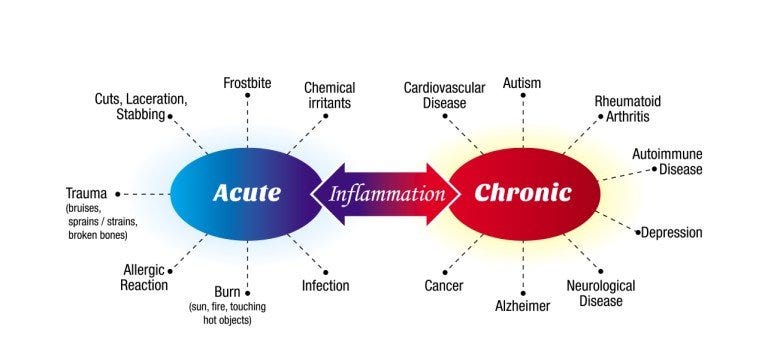
Inflammation isn’t a one-size-fits-all process. In fact, it has two major forms, and they couldn’t be more different:
🛡️ Acute Inflammation
This is the short-lived, rapid response that kicks in when you get a cut, a bug bite, or a sore throat. Within minutes to hours, blood vessels widen, immune cells rush to the site, and the classic signs flare up. It usually resolves on its own in a few days. (Harvard Health)
🔄 Chronic Inflammation
Now here’s where things get tricky. If inflammation persists beyond its useful job — if the immune system can’t “switch off” — it becomes chronic. This silent, low-grade response can simmer for months or years and is linked to many modern diseases, including heart disease, diabetes, and autoimmune disorders. (Harvard Health)
To use a metaphor, acute inflammation is like calling the fire department for a candle flame — helpful and controlled. Chronic inflammation is like leaving the water running for months: it doesn’t put out any fire, but it destroys the house anyway.
4. What Actually Triggers Inflammation? The Causes Behind the Reaction
If inflammation is the response, what starts it? There’s a surprising range of triggers — some obvious, some subtle.
🦠 External Causes
Harmful germs like bacteria, viruses, or fungi frequently trigger inflammation when they invade tissues. But so can physical injuries like cuts, burns, or sprains — even a bite from a rogue mosquito can spark an inflammatory response. (Encyclopedia Britannica)
⚠️ Internal and Lifestyle Factors
Inflammation isn’t just about cuts or infections. Modern lifestyle things can create chronic inflammation:
- A diet high in processed foods
- Being inactive
- Stress and poor sleep
- Smoking and environmental toxins
- Obesity and metabolic stress (Harvard Health)
These triggers don’t create dramatic swelling like stepping on a nail, but they keep the immune system on alert in ways your body doesn’t need — and that’s where the trouble begins.
5. What Goes On Inside: The Immune Science Behind Inflammation
When something harmful disturbs your tissues, the body’s immune “sensors” detect the trouble and send out chemical signals. Two key groups of molecules are involved:
- PAMPs (Pathogen-Associated Molecular Patterns) — parts of viruses and bacteria that immune cells recognize as foreign.
- DAMPs (Damage-Associated Molecular Patterns) — molecules released by injured or dying cells. (Wikipedia)
These signals activate receptors on immune cells like macrophages and mast cells, prompting them to release inflammatory mediators — chemicals like cytokines, histamine, and prostaglandins that orchestrate the whole response. (Wikipedia)
Next, white blood cells — the immune system’s warriors — rush from the bloodstream into tissues through a process called extravasation. Think of it like emergency responders squeezing through crowded city streets to reach the scene. (Wikipedia)
These cells fight off invaders and clean up debris. Then, when the job’s done, the body begins rebuilding tissue and restoring balance. This transition from attack mode back to peace — regulation — is essential for health.
6. When Inflammation Becomes Harmful
While inflammation is vital for healing, it can also turn against us when it goes on too long.
Chronic inflammation isn’t dramatic like a sprained ankle — its effects are subtle and slow. It’s linked with many major health issues:
- Cardiovascular diseases
- Diabetes
- Autoimmune conditions
- Some cancers
- Degenerative diseases like Alzheimer’s (Harvard Health)
These aren’t just “old age” problems — they’re tied to immune systems constantly nudged into alert mode by stress, poor diet, or environmental factors.
7. How Inflammation Is Diagnosed and Treated
Doctors don’t just look for redness and swelling inside the body. They use tests that measure how active the immune system is, like:
- C-reactive protein (CRP) levels
- White blood cell counts
- Erythrocyte sedimentation rate (ESR) (NCBI)
Treatment depends on the cause:
- Anti-inflammatory medications
- Lifestyle changes (diet, exercise, sleep)
- Treating underlying infections or injuries
Reducing chronic inflammation often means getting back to basics: eating whole foods, staying active, and managing stress.
8. A Quick Look: Acute vs. Chronic Inflammation Table
| Feature | Acute Inflammation | Chronic Inflammation |
|---|---|---|
| Duration | Hours to days | Weeks to years |
| Causes | Injury, infection | Lifestyle factors, prolonged immune triggers |
| Signs | Redness, heat, swelling, pain | Often subtle, fatigue, internal damage |
| Purpose | Healing & defense | Can contribute to disease |
| Treatment | Rest & healing | Lifestyle + medical care |
9. Bringing It All Together
Inflammation isn’t some villain lurking in your body — it’s a reflective mirror of how your immune system responds to trouble. Acute inflammation kicks off healing and defense; chronic inflammation is a sign that your body’s alarm system may be stuck in the “on” position.
By understanding what inflammation is and how it works, you can make better choices that support your immune system rather than overwhelm it. A cut heals with inflammation just fine on its own — but your lifestyle choices matter for the inflammation that never goes away.
Feel free to share this article to help others understand inflammation, and comment below with your questions or experiences — your body’s defense story is more interesting than you think!