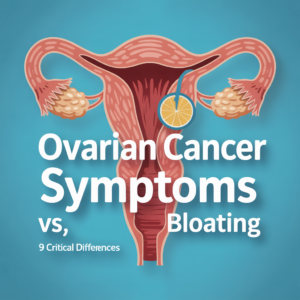
You’ve felt bloated for weeks now, perhaps months. Your trousers feel tighter by evening, and you’ve gone up a dress size despite eating normally. When you mentioned it to your GP during a routine appointment, they suggested it was probably stress, perhaps irritable bowel syndrome, or just part of getting older. You left with a prescription for peppermint capsules and a vague recommendation to reduce dairy. But the bloating persists, and now you’re experiencing a nagging discomfort in your pelvis that comes and goes. Late at night, you’ve found yourself Googling “persistent bloating ovarian cancer,” terrified by what you’re reading yet unsure whether you’re overreacting.
I understand this fear, and I want to give you clarity. Bloating is extraordinarily common, experienced by most women regularly for completely benign reasons. Ovarian cancer, whilst serious, is relatively uncommon and highly treatable when caught early. The challenge lies in distinguishing between the two because ovarian cancer’s early symptoms are frustratingly vague and overlap significantly with digestive complaints. What you need is specific, practical knowledge about the critical differences in symptom patterns, persistence, and associated features that should prompt immediate investigation rather than watchful waiting.
Understanding Why Ovarian Cancer Symptoms Are So Easily Missed
Ovarian cancer develops when cells in the ovaries, the small almond-sized organs that produce eggs and hormones, begin growing abnormally and uncontrollably. These malignant cells can form tumours that enlarge the ovary itself or spread to surrounding structures in the pelvis and abdomen. Unlike breast cancer, which often announces itself through a discrete lump you can feel, or cervical cancer, which is detectable through routine screening, ovarian cancer typically produces only subtle, non-specific symptoms until it has grown considerably or spread beyond the ovaries.
Think of your abdominal cavity as a contained space where multiple organs, your intestines, stomach, liver, bladder, uterus, and ovaries, exist in close proximity. When something grows abnormally in this space, whether it’s an ovarian tumour, a large benign cyst, or simply trapped gas distending your bowel, the sensation you experience can be remarkably similar: a feeling of fullness, pressure, or bloating. Your body doesn’t have finely tuned sensory receptors that can distinguish between these different causes based on sensation alone.
Ovarian cancer symptoms versus normal bloating differ primarily in their persistence, progression, and pattern of associated symptoms. Normal bloating typically fluctuates with your menstrual cycle, dietary choices, or bowel movements, improving and worsening predictably. Ovarian cancer-related abdominal distension tends to be persistent, progressive, and accompanied by other symptoms including pelvic pain, urinary urgency, early satiety, and unexplained changes in bowel habits. This constellation of symptoms occurring together, particularly when new for you and persistent beyond two to three weeks, warrants urgent gynaecological evaluation.
Here’s what makes ovarian cancer particularly insidious: there’s no effective routine screening test comparable to mammography for breast cancer or smear tests for cervical cancer. CA-125 blood tests and transvaginal ultrasounds can be useful diagnostically when symptoms are present, but they lack the sensitivity and specificity needed for population-wide screening. This means symptom awareness and appropriate investigation when concerning patterns emerge become critically important for early detection.
The healthcare system compounds this problem. Brief GP appointments, often just ten minutes, rarely allow time for detailed symptom exploration. When a woman presents with bloating, a common symptom with numerous possible causes, it’s easy for a time-pressed clinician to assume the most likely diagnosis, typically IBS or dietary intolerance, without thoroughly exploring the symptom’s characteristics, timing, and associated features that might suggest something more serious.
9 Critical Differences Between Ovarian Cancer Symptoms and Normal Bloating
1. Persistence Despite Dietary Modification and Lifestyle Changes
Normal bloating responds, at least partially, to changes in diet, stress management, or treatment of underlying digestive issues. You might notice improvement when you reduce certain foods, increase fibre, manage stress better, or take probiotics. Ovarian cancer-related bloating, by contrast, persists regardless of what you eat, how you eat, or any digestive remedies you try. If you’ve eliminated common trigger foods like dairy, gluten, or high-FODMAP items, tried multiple over-the-counter remedies, yet your abdominal distension continues unchanged or worsens over weeks, this persistence despite appropriate interventions is a red flag requiring investigation.
2. Progressive Worsening Rather Than Fluctuation
Benign bloating tends to fluctuate. You might feel bloated after certain meals, during specific times in your menstrual cycle, or during particularly stressful periods, but it improves at other times. You have good days and bad days. Ovarian cancer-related symptoms typically demonstrate a pattern of progressive worsening. The bloating that started as occasional discomfort becomes daily. The abdominal distension that was barely noticeable three months ago is now visible and measurable, requiring you to size up in clothing. This steady progression, where symptoms build cumulatively rather than coming and going, should always prompt medical evaluation.
3. Concurrent Pelvic or Abdominal Pain That’s New and Persistent
Whilst bloating alone can occur with both benign conditions and ovarian cancer, the presence of accompanying pelvic or lower abdominal pain changes the clinical picture significantly. This pain might be a dull ache, a feeling of pressure or fullness, or occasionally sharp twinges. It’s typically located low in your abdomen or pelvis, may be one-sided or generalised, and crucially, it’s new for you and persistent rather than clearly cyclical with your periods. According to comprehensive guidelines from the National Health Service, persistent pelvic pain alongside bloating requires prompt gynaecological assessment to exclude ovarian pathology.
4. Urinary Symptoms Without Evidence of Infection
You’re needing to urinate more frequently than usual, feeling urgency even when your bladder isn’t particularly full, or experiencing a sensation of incomplete emptying. You might initially attribute this to a urinary tract infection, but when tested, no infection is found. These urinary symptoms occur because an enlarging ovarian mass can press on your bladder, reducing its effective capacity and creating sensations of urgency. If you’re experiencing new urinary frequency or urgency that persists for more than two weeks, particularly if accompanied by bloating or pelvic discomfort, and urine tests show no infection, this warrants gynaecological rather than just urological investigation.
5. Early Satiety and Inability to Finish Normal Portions
You sit down to eat a meal you’d normally enjoy and find yourself feeling uncomfortably full after just a few bites. This early satiety, the medical term for feeling full quickly when eating, happens because an enlarged ovary or accumulating ascitic fluid, the protein-rich fluid that can accumulate in the abdomen with ovarian cancer, takes up space in your abdominal cavity, leaving less room for your stomach to expand normally during meals. If you’ve noticed a significant change in your ability to eat normal portion sizes over several weeks, feeling full or uncomfortable much sooner than usual, particularly if accompanied by other symptoms on this list, this requires investigation.
6. Unexplained Weight Changes Despite Stable Eating Habits
Interestingly, ovarian cancer can cause either weight loss or weight gain, sometimes simultaneously in different parts of your body. You might lose weight overall due to early satiety and reduced food intake, yet your abdomen becomes increasingly distended due to tumour growth or ascites. Alternatively, you might notice unexplained weight loss of more than 5 percent of your body weight over two to three months without intentionally changing your diet or exercise. Normal bloating causes temporary water retention that might add a pound or two that fluctuates daily, but it doesn’t cause sustained, progressive abdominal enlargement coupled with overall weight loss. This discordance between abdominal distension and body weight should raise concern.
7. Changes in Bowel Habits That Are New and Persistent
Whilst IBS certainly causes altered bowel habits, these changes typically have a longer history, may have been present for years, and often show clear relationships to stress, specific foods, or your menstrual cycle. New-onset changes in bowel function, such as constipation that doesn’t respond to increased fibre and fluids, alternating constipation and diarrhoea, or a persistent feeling of incomplete evacuation after bowel movements, particularly when these changes have developed over recent weeks or months and are accompanied by bloating and pelvic discomfort, can indicate pelvic masses affecting bowel function. The key word here is “new.” Longstanding IBS doesn’t typically transform into ovarian cancer, but new digestive symptoms in your forties or fifties require more thorough investigation.
8. Visible Abdominal Distension That Doesn’t Correlate With Eating
Normal bloating tends to worsen after eating, particularly after large meals or foods you don’t tolerate well, and often improves overnight or first thing in the morning before eating. Ovarian cancer-related distension may be present constantly, often appearing worse in the morning despite an empty stomach, or remaining visibly distended even when you haven’t eaten. You might notice your abdomen looks noticeably larger on one side, or you can actually see the distension when lying flat, neither of which is typical of functional bloating. If you’re waking up with a distended abdomen that remains unchanged regardless of when or what you’ve eaten, this pattern warrants investigation.
9. Fatigue That Feels Disproportionate and Unexplained
Everyone experiences tiredness, particularly when juggling work, family, and the general demands of adult life. The fatigue associated with ovarian cancer feels different: it’s more profound, less responsive to adequate sleep, and often described as feeling completely depleted or unusually weak. This occurs partly because cancer cells consume significant energy and nutrients, partly because of the body’s inflammatory response to malignancy, and sometimes because of anaemia if the cancer is causing internal bleeding. If you’re experiencing overwhelming fatigue that’s new, persistent for several weeks, doesn’t improve with rest, and is accompanied by other symptoms particularly bloating, pelvic pain, or urinary changes, this combination requires medical evaluation.
What Nearly Two Decades of Practice Has Taught Me
In my 19 years of clinical practice, what I’ve seen most often is women apologising for “probably overreacting” when they finally come in with concerns about persistent symptoms. They’ve waited weeks, sometimes months, convincing themselves it’s nothing, not wanting to waste anyone’s time, worried about seeming dramatic or anxious. When investigation reveals an ovarian mass or, in the worst cases, advanced ovarian cancer, they almost always say some version of “I should have come in sooner, but I didn’t want to make a fuss.”
This breaks my heart because it represents a fundamental failure in how we’ve educated women about their bodies and about what constitutes an appropriate reason to seek medical attention. Persistent symptoms that are new for you, that represent a change in your normal pattern, and that don’t respond to reasonable first-line interventions are always valid reasons for thorough medical investigation. You’re not overreacting. You’re being appropriately attentive to your body.
The other pattern I observe, as I’ve seen with many patients, is that ovarian cancer symptoms rarely occur in isolation. It’s almost never just bloating or just fatigue or just urinary frequency. It’s the constellation, the combination of multiple symptoms occurring together, that creates the clinical picture requiring investigation. A single symptom, bloating alone, might reasonably be observed for a few weeks whilst trying dietary modification. But bloating plus pelvic pain, or bloating plus early satiety plus urinary urgency, this combination should prompt immediate gynaecological referral regardless of your age.
What also concerns me is how often these symptoms are attributed to stress, anxiety, or psychosomatic causes, particularly in younger women or those with a history of anxiety. Yes, stress absolutely can cause digestive symptoms. But stress doesn’t cause a pelvic mass. Anxiety doesn’t create ascites. When physical symptoms are present, they warrant physical investigation, regardless of your mental health history. The two can coexist, stress and physical pathology, and assuming symptoms are purely psychological without appropriate examination and testing is a form of medical negligence.
When You Need Urgent Gynaecological Assessment
If you’re experiencing persistent bloating or abdominal distension that has continued daily or nearly daily for more than three weeks, particularly if it’s accompanied by pelvic pain, changes in bowel or bladder habits, or difficulty eating normal portions, contact your GP immediately and specifically request urgent gynaecological referral. Don’t accept reassurance without examination and appropriate testing. In the UK, this presentation should trigger a two-week wait referral under cancer pathway guidelines.
If you can feel a mass or firmness in your lower abdomen or pelvis, particularly if it’s growing or changing over days to weeks, this requires same-day or next-day gynaecological evaluation. Whilst many pelvic masses are benign ovarian cysts or fibroids, any palpable mass needs imaging and often tissue diagnosis to determine its nature. Don’t wait for your next routine appointment.
If you’re experiencing any combination of three or more symptoms from the list above, persistent bloating, pelvic pain, urinary changes, early satiety, bowel habit changes, unexplained weight loss, or severe fatigue, occurring together over a period of several weeks, insist on comprehensive evaluation including pelvic examination, CA-125 blood test, and transvaginal ultrasound from a gynaecologist, not just your GP. Research from leading cancer centres confirms that symptom combinations significantly increase diagnostic likelihood and warrant thorough investigation.
If you’re over 50, postmenopausal, and developing new-onset bloating and pelvic symptoms, the threshold for investigation should be even lower because your risk of ovarian cancer increases with age and after menopause. Any persistent pelvic symptoms in postmenopausal women warrant prompt gynaecological assessment as a matter of clinical urgency.
If you have a family history of ovarian cancer, particularly in first-degree relatives like your mother or sister, or known BRCA gene mutations, and you develop any concerning pelvic or abdominal symptoms, seek specialist gynaecological oncology evaluation rather than routine gynaecology. Your baseline risk is higher, and you may benefit from more sophisticated imaging and closer monitoring.
Moving Forward With Knowledge, Not Fear
Understanding the difference between ovarian cancer symptoms and normal bloating isn’t about creating anxiety or making you hyper-vigilant about every digestive complaint. It’s about equipping you with the specific knowledge to recognise patterns that warrant medical attention and to advocate effectively for yourself when those patterns emerge. Most women experiencing bloating don’t have ovarian cancer. Most pelvic masses are benign. But early detection dramatically improves outcomes when cancer is present, and that requires both symptom awareness and timely, appropriate investigation.
The single most important message is this: persistent symptoms that are new for you, that represent a change in your normal pattern, and particularly combinations of symptoms occurring together, deserve thorough medical investigation regardless of your age. Trust your instinct when something feels wrong. You know your body better than anyone else, and when you’re experiencing changes that concern you, that concern is valid.
Your next step is straightforward: if you’re currently experiencing symptoms that concern you after reading this article, contact your GP this week and request a face-to-face appointment specifically to discuss your pelvic and abdominal symptoms. Write down your symptoms before the appointment, when they started, how they’ve changed over time, and what makes them better or worse. This preparation helps ensure you communicate effectively during what may be a brief consultation.
Share this article with the women in your life, particularly those over 40, because symptom awareness saves lives. The more women understand what ovarian cancer symptoms actually look like and feel like, the more likely we are to catch this disease at earlier, more treatable stages.
Read next: Understanding ovarian cysts versus ovarian cancer, and what different types of pelvic masses mean for your health and fertility.
Medical Disclaimer
This article is for informational purposes only and does not constitute medical advice. Always consult a qualified healthcare provider before making any changes to your health or treatment plan.