Tag

women’s health

Browsing

How to Do a Breast Self-Exam the Right Way (And What You’re Actually Feeling For)

Most women have been told to “check their breasts” at some point. Far fewer have been shown exactly how, or told what they’re actually supposed to be feeling for.

That gap matters. A lot.

Why a Monthly Breast Self-Exam Is Still Worth Your Time

Let’s address the elephant in the room first. You may have heard that medical organizations no longer officially “recommend” breast self-exams as a formal screening tool. That’s partially true. The nuance is that experts stopped recommending it as a replacement for mammograms, not as something worthless.

Here’s the number that should make you sit up: according to the National Breast Cancer Foundation, 40% of diagnosed breast cancers are detected by women who feel a lump themselves. That statistic belongs in lights.

A breast self-exam (BSE) is not about diagnosing cancer at home. It’s about becoming so familiar with your own body that when something changes, even slightly, you notice it immediately. Think of it like knowing your car well enough to hear when the engine starts sounding different. You won’t know what’s wrong, but you’ll know something is. That awareness is priceless.

Done monthly, a breast self-exam takes about 10 minutes. It costs nothing. It requires no appointment, no gown that ties at the back, and no waiting room. And it can absolutely save your life when combined with regular clinical screenings.

This guide will walk you through every step of a thorough breast self-exam, explain what different textures and changes actually mean, and help you build the kind of body literacy that most women never get taught.

Self-Exam


When Is the Best Time to Do Your Breast Self-Exam?

Timing your breast self-exam correctly makes a real difference in what you feel, and how clearly you feel it.

Breast tissue changes throughout the month in response to hormone fluctuations. Right before your period, breasts are often swollen, tender, and lumpier than usual. Examining yourself then is like trying to read a map in a windstorm. Messy, confusing, and not particularly useful.

The ideal timing:

  • If you still have periods: Perform your breast self-exam 3 to 5 days after your period ends. At this point, hormone levels have leveled off, swelling has gone down, and your breast tissue is at its calmest and most readable.
  • If you are postmenopausal or do not menstruate: Choose a consistent calendar date each month, such as the 1st or 15th. Consistency matters more than the specific date.
  • If you are pregnant or breastfeeding: Your breasts will feel different than usual, but self-exams are still worth doing. Talk to your midwife or OB about what to watch for during this period.

The whole point of doing this monthly is to build a baseline. You’re not looking for anything alarming on day one. You’re learning what your normal is, so that anything new stands out clearly.


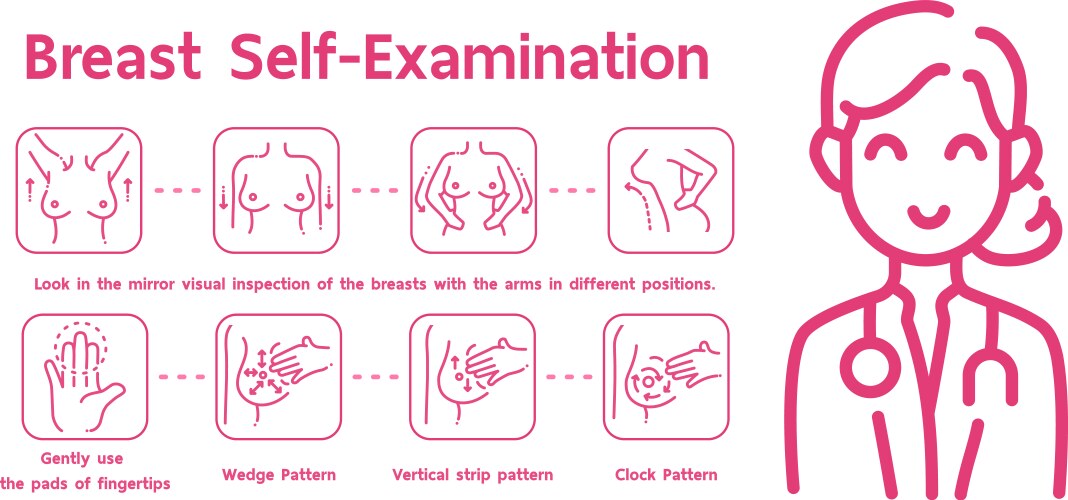
Step One: The Mirror Check (Visual Breast Self-Exam)

Before your hands ever touch your skin, your eyes do the first round of the breast self-exam. Visual inspection catches things that feel-based exams can miss entirely, including skin changes, shape asymmetry, and nipple position shifts.

Stand comfortably in front of a full-length or bathroom mirror in good lighting, with your shirt and bra removed.

Position 1: Arms at your sides

Look at both breasts directly. You’re not looking for perfection or symmetry. Most women’s breasts are naturally slightly different in size or shape, and that’s completely normal. What you’re looking for is change from your own baseline.

Examine for:

  • Any new dimpling, puckering, or indentations in the skin
  • Areas where the skin looks thickened or has an orange-peel texture (called peau d’orange)
  • Visible swelling in one breast but not the other
  • Redness, rash, or unusual warmth on the skin
  • A nipple that has newly turned inward (inverted) when it wasn’t before
  • Any visible lump or bulge under the skin

Position 2: Arms raised overhead

Lift both arms above your head and look again. This changes the tension on the breast tissue and can reveal dimpling or skin tethering that wasn’t visible before. Check the underside and outer edges of each breast carefully.

Position 3: Hands on hips, chest flexed

Press your hands firmly into your hips and flex your chest muscles slightly. This position can make subtle contour changes more visible. Look for any difference in how the two breasts move or hold their shape.

Take your time with each position. This is not a race.


Step Two: The Lying-Down Palpation (The Most Thorough Breast Self-Exam Position)

Once the visual check is done, the hands-on portion of your breast self-exam begins. The lying-down position is considered the gold standard for palpation because it spreads breast tissue evenly across the chest wall, making it thinner and easier to examine thoroughly.

Lie flat on your back on a bed or firm surface. Place a small pillow or folded towel under your right shoulder to tilt your chest slightly. This shifts the right breast tissue toward the center of your chest, flattening it for easier access.

Raise your right arm and place your right hand behind your head.

Now use the pads of the three middle fingers of your left hand to examine the right breast. This is a subtle but important distinction: use the flat, fleshy pads of your fingers, not the tips, and definitely not your palm. The pads have far more nerve sensitivity and will pick up subtle changes that fingertips miss.

Apply pressure in three layers:

  • Light pressure to feel the tissue just under the skin
  • Medium pressure to feel the middle layers of breast tissue
  • Firm pressure to feel the deeper tissue near the chest wall and ribs

You need all three pressure levels to examine the full depth of the breast. Using only one level means you’re missing entire layers.


Step Three: Choosing Your Search Pattern for the Breast Self-Exam

This is where most women go wrong. They squeeze, poke, and prod in no particular order and then wonder if they’ve missed something. The answer is: probably yes.

A systematic search pattern ensures you cover every square centimeter of breast tissue. There are three widely used patterns. Choose one and stick with it every month. Consistency matters more than which pattern you pick.

The Vertical Strip (Lawn Mower) Pattern — Most Recommended

Move your fingers up and down in vertical lines, like mowing a lawn. Start in the armpit area and move across the entire breast toward the sternum (breastbone). Each strip should slightly overlap the previous one. This method has the best evidence for full coverage.

The Circular (Spiral) Pattern

Begin at the outer edge of the breast and move in increasingly smaller circles toward the nipple. Some women find this pattern more intuitive, though it requires care to ensure complete coverage.

The Wedge (Pie Slice) Pattern

Divide the breast mentally into wedge-shaped sections, like pizza slices. Examine each wedge by moving from the outer edge toward the nipple, then back out again.

Whichever pattern you use, cover this entire territory:

  • From the collarbone down to the bottom of the ribcage
  • From the sternum (center of chest) all the way out to the armpit
  • Including the armpit itself, where breast tissue extends and where lymph nodes live

The breast does not stop at the visible boundary. Breast tissue extends into the armpit, toward the collarbone, and down toward the abdomen. Many women skip the axilla (armpit) entirely, and that’s a mistake. It needs the same thorough examination.

Once you’ve finished the right breast, reposition the pillow under your left shoulder, place your left hand behind your head, and repeat the entire process on the left side using your right hand.


Step Four: The Standing or Shower Breast Self-Exam

Many women find it easiest to include part of their breast self-exam in the shower, and there’s good reason for that. Wet, soapy skin reduces friction and allows fingers to glide more smoothly over breast tissue, which can make it easier to feel subtle changes.

Stand in the shower with your arm raised. Use the same finger-pad technique and vertical strip pattern described above. This position works well for the upper and outer portions of the breast. However, it’s worth noting that the lying-down exam is generally more thorough, so the shower exam works best as a complement, not a replacement.

If you prefer to do your standing check outside the shower, lean forward slightly at the waist. Gravity pulls the breast tissue downward and outward, which can help you feel the lower half of the breast more clearly.


Step Five: Checking the Nipple and Areola

The nipple and areola (the darker skin surrounding the nipple) deserve their own focused examination during every breast self-exam. Changes in this area can be among the earliest signs of certain breast conditions.

Look carefully at the nipple during your mirror inspection:

  • Has it changed direction or newly turned inward?
  • Is there any scaling, flaking, or crusting on the nipple skin?
  • Is there redness or rash around the areola?

Then, gently squeeze each nipple between your thumb and forefinger. You’re checking for discharge. A small amount of discharge when squeezed is common and usually harmless, but the character of the discharge matters.

Discharge that is generally less concerning:

  • Milky or cloudy (especially if you’ve been pregnant recently)
  • Green or dark brown
  • Only appears with deliberate squeezing

Discharge that warrants a prompt call to your doctor:

  • Clear, watery discharge
  • Pink or bloody discharge
  • Discharge that leaks on its own without squeezing
  • Discharge from only one breast or only one duct

Clear or bloody nipple discharge should never be dismissed or waited on. It doesn’t automatically mean cancer, but it does mean your doctor needs to know about it.


What You’re Actually Feeling For: A Breast Self-Exam Texture Guide

This is the section most guides skip, and it’s arguably the most important one. Knowing that you’re looking for “a lump” is about as helpful as knowing you’re looking for “something wrong.” Vague. Unhelpful. Anxiety-producing.

Here is a much more honest breakdown of what different breast textures actually feel like, and what they typically mean.

Normal Breast Texture (Your Baseline)

Healthy breast tissue is not smooth and uniform like a stress ball. It is inherently lumpy, bumpy, nodular, and uneven. This surprises a lot of women who panic the first time they perform a thorough breast self-exam and feel what seems like dozens of irregularities.

Normal breast tissue can feel like:

  • Clusters of small BBs or peas, especially toward the outer upper quadrant
  • Ropey or cord-like ridges, particularly around the lower edge
  • A general fibrous, granular texture throughout
  • Softer, fattier areas in some regions

This is completely normal. Breast tissue is made up of fat, glands, ducts, connective tissue, and ligaments, all of which have different textures. No two women’s breasts feel identical.

Fibrocystic Changes (Very Common)

More than half of all women will experience fibrocystic breast changes at some point. This means the breasts feel denser, lumpier, and more tender, especially in the week before a period. The lumps associated with fibrocystic changes typically:

  • Feel smooth and round or oval in shape
  • Move easily under the skin when you push them (like a small, slippery marble)
  • May feel tender or sore
  • Change in size throughout the menstrual cycle, often larger before a period and smaller after

These characteristics, movability, smooth edges, and cyclical changes, are reassuring signs that a lump is likely benign. That said, every new lump should be evaluated by a healthcare provider to confirm.

Simple Cysts (Fluid-Filled and Benign)

Breast cysts are fluid-filled sacs that are extremely common, especially in women in their 30s and 40s. On self-exam, a simple cyst typically feels:

  • Soft to slightly firm, almost like a water balloon
  • Round or oval with well-defined edges
  • Movable under the skin
  • Possibly tender, especially before a period

Cysts are almost always benign. The important distinction is whether they are new or changing. A cyst that has been stable for months is different from one that appeared suddenly and is growing.

Fibroadenomas (Benign Solid Lumps)

Fibroadenomas are the most common solid breast lump in young women. They feel distinctly different from a cyst or normal fibrocystic tissue:

  • Firm or rubbery in consistency (like a dense, small rubber ball)
  • Smooth edges, well-defined borders
  • Very movable, sometimes dramatically so (they’ve earned the nickname “breast mouse”)
  • Usually painless

Fibroadenomas are benign but should always be confirmed by imaging. They don’t increase cancer risk in most cases, but any newly discovered solid mass needs a professional evaluation.

Concerning Features That Require Prompt Medical Attention

Some lump characteristics are associated with a higher likelihood of a serious finding. These are not a diagnosis. They are a signal to see your doctor without delay.

Contact your healthcare provider promptly if you notice a lump that:

  • Feels hard, stony, or fixed, meaning it doesn’t move when you push it
  • Has irregular, jagged, or poorly-defined edges (not smooth or round)
  • Is new and persistent after two full menstrual cycles
  • Is accompanied by skin dimpling, puckering, or an orange-peel texture directly above it
  • Is painless (counterintuitively, cancerous lumps are often painless, while benign lumps are often tender)
  • Is accompanied by swollen lymph nodes under the arm

It bears repeating: finding something unusual does not mean you have cancer. The Mayo Clinic notes that the vast majority of breast lumps are benign. The goal is simply to get an accurate evaluation so you can stop worrying or start treatment as early as possible.


The Lymph Node Check: The Often-Forgotten Part of the Breast Self-Exam

Here’s a step that the majority of online guides either skip entirely or mention in a single throwaway sentence: checking the lymph nodes.

Lymph nodes under your arms (axillary lymph nodes) are part of the breast’s drainage system. When breast cancer spreads, the axillary lymph nodes are often one of the first places it goes. Including them in your monthly breast self-exam takes less than two minutes and adds meaningful information.

To check:

  1. Sit or stand comfortably and relax the arm on the side you’re checking.
  2. Use the pads of your fingers from the opposite hand.
  3. Press gently but firmly into the hollow of your armpit.
  4. Move your fingers in small circular motions, feeling for any firm, pea-sized lumps.
  5. Also feel along the collarbone area, both above and below it.

Normal lymph nodes are usually not palpable at all. Small, soft nodes that you can barely feel may be normal, especially if you’ve had a recent infection or cold. What you’re looking for is a firm, enlarged, or fixed node that is new and doesn’t go away within a few weeks.


Breast Self-Exam for Special Circumstances

A one-size-fits-all approach to breast self-exam doesn’t quite fit everyone. Here’s what changes for specific groups.

During Pregnancy and Breastfeeding

Your breasts will feel dramatically different during pregnancy and while nursing. They’ll be larger, denser, lumpier, and more tender than usual due to surging hormones and milk production. Performing a breast self-exam is still encouraged, but your baseline will shift significantly. Talk to your OB or midwife about what’s normal for your stage of pregnancy or nursing, and flag anything that feels distinctly different from the surrounding tissue.

Mastitis, an infection of the breast tissue common in breastfeeding women, can feel like a hard, hot, painful lump. It’s not cancer, but it does need treatment. Don’t ignore it.

After Menopause

Post-menopausal women often notice their breasts feel softer and less dense than before, because estrogen levels have dropped and glandular tissue has been partially replaced by fat. This can actually make breast self-exams somewhat easier. Lumps tend to be more distinct. Any new lump in a post-menopausal woman should be evaluated promptly, as fibrocystic changes become much less common after menopause and a new lump has different implications than in a younger woman.

With Breast Implants

Breast implants do not prevent you from doing a thorough breast self-exam. Because implants are placed beneath the breast tissue (or behind the chest muscle), your natural breast tissue still sits on top and can be examined normally. Some women find that implants actually make palpation easier by pushing the tissue forward. Use the same technique and patterns described above. If you had surgery recently, follow your surgeon’s specific guidance about pressure and timing.

With Dense Breast Tissue

Dense breasts contain more glandular and fibrous tissue relative to fat. On a mammogram, dense tissue appears white, and so do tumors, which is why dense breast tissue can make mammograms harder to read. On self-exam, dense breasts often feel generally lumpy and firm throughout. This is normal for you. The goal is still to learn your own baseline and notice any change from it. If you have been told you have dense breasts by a radiologist, ask your doctor whether supplemental screening (such as ultrasound or MRI) is appropriate for you.


Breast Self-Exam vs. Clinical Screening: Understanding the Difference

A breast self-exam is a powerful tool for building body awareness, but it works best as part of a broader early detection strategy, not in isolation. Here’s a clear breakdown of how different screening methods compare.

Screening Method What It Detects Recommended Frequency Detects Before Symptoms? Who Performs It
Breast Self-Exam (BSE) Lumps, skin changes, nipple changes Monthly Sometimes You, at home
Clinical Breast Exam Lumps, lymph nodes, skin and nipple changes Annually for women 40+ Sometimes Doctor or nurse
Mammogram (2D or 3D) Tumors too small to feel, microcalcifications Annually from age 40 Yes, often Radiologist
Breast Ultrasound Cysts vs. solid masses, dense tissue evaluation As needed or supplementally Occasionally Radiologist / Sonographer
Breast MRI High-risk screening, post-treatment monitoring Annually for high-risk women Yes Radiologist

As the table shows, each method fills in gaps that the others leave. A mammogram detects things too small to feel. A breast self-exam catches visual changes that a mammogram wouldn’t show. A clinical breast exam gives a trained clinician’s hands-on assessment. None of them is sufficient alone.

The USPSTF updated its guidelines in 2024 to recommend that screening mammography begin at age 40 for all women at average risk. If you haven’t started yet or have delayed your screening, this is a good time to schedule that appointment.


How to Keep Track of Your Breast Self-Exam Findings

You’ve done the exam. Now what?

A lot of women do a thorough breast self-exam, find something that feels lumpy or unusual, panic momentarily, then forget exactly where it was and what it felt like by the time they see their doctor two weeks later. Or they convince themselves it was nothing. Neither of these is ideal.

Keep a simple monthly log. It doesn’t need to be elaborate. A note on your phone, a calendar entry, or a small journal works perfectly. After each exam, note:

  • The date
  • How your breasts generally felt overall
  • Any specific areas that felt different from last month
  • Whether any tender spots resolved or persisted
  • Any nipple or skin changes observed

This record becomes invaluable during a doctor’s visit. Instead of saying “I think I felt something maybe a few weeks ago, somewhere on the right side,” you can say “I first noticed this firm area in the outer upper right quadrant on March 15th. It’s still there a month later and hasn’t changed in size.” That’s clinical information a doctor can actually work with.


When to Call Your Doctor After a Breast Self-Exam

This guide would be incomplete without a clear, specific answer to the question: when do I actually pick up the phone?

Call your doctor within a few days if you notice:

  • A new lump or thickening in the breast or armpit that is still there after your next period
  • Any skin change: dimpling, puckering, redness, rash, or orange-peel texture
  • A nipple that has newly turned inward
  • Clear, pink, or bloody nipple discharge that appears without squeezing
  • Persistent swelling in one breast with no obvious cause
  • Any lump in a post-menopausal woman

Call your doctor promptly but don’t panic if you notice:

  • A tender, smooth, movable lump that changes with your cycle (likely fibrocystic, but still worth confirming)
  • Green or dark brown nipple discharge (common and usually benign, but should be checked)
  • General breast heaviness or aching without a specific lump

You do not need to call your doctor immediately for:

  • General lumpiness throughout both breasts that is consistent with your usual texture
  • Breast tenderness that arrives before your period and resolves after
  • Minor, temporary nipple discharge with squeezing that you’ve noticed before and confirmed was normal

If in doubt, call anyway. There is no such thing as bothering your doctor too much about this.


Building a Habit: Making Your Monthly Breast Self-Exam Stick

Knowing how to do a breast self-exam and actually doing it every month are two different things. Here’s how to close that gap.

The most effective strategy is to tie your breast self-exam to something you already do consistently. The shower is the obvious candidate, which is why so many clinicians recommend it. You’re already undressed, already using your hands, and there’s no setup required. The slippery skin even helps with palpation.

Other anchor habits that work:

  • The night before you take birth control or any monthly medication
  • The day you change your calendar month on the wall
  • The morning after your last period day (which aligns perfectly with the recommended timing)

Set a recurring monthly reminder on your phone. Label it simply. When the reminder goes off, don’t negotiate. Just do it.

The first few months will feel awkward and uncertain. That’s completely normal and expected. Your hands don’t yet know what they’re looking for. Give yourself three to six months of consistent practice before expecting to feel confident. Each month builds on the last, and eventually, your breast tissue becomes as familiar to you as the back of your own hand.

That familiarity is the entire point.


Conclusion: Your Breasts, Your Knowledge, Your Confidence

A breast self-exam isn’t about fear. It isn’t about sitting in front of a mirror every month waiting to find something terrible. It’s about ownership, familiarity, and giving yourself the best possible chance of catching something early if something ever does appear.

The women who find lumps early, who get diagnoses when tumors are still small and treatment is most effective, are almost always women who knew their bodies well enough to notice a change. That knowledge is built one monthly self-exam at a time.

You now have everything you need to do this correctly: the timing, the positions, the technique, the patterns, the pressure levels, the nipple check, the lymph node check, and most importantly, a clear understanding of what you’re actually feeling for and what it might mean.

None of this replaces a mammogram. None of it replaces a clinical breast exam with your doctor. It works with those tools, not instead of them. Together, they form the most complete early detection strategy available to you.

Start this month. Your future self will thank you.


Frequently Asked Questions About Breast Self-Exams

How long should a breast self-exam take? A thorough breast self-exam, including the visual check, both breasts, the nipple check, and the axillary lymph node check, should take about 10 to 15 minutes. Rushing defeats the purpose.

What if my breasts always feel lumpy? This is extremely common, especially in women with fibrocystic breast tissue. The goal is not to have smooth breasts. The goal is to know your lumpy baseline, so that anything new or different stands out clearly.

Is it normal to feel my ribs during a breast self-exam? Yes. When you press firmly along the lower portions of the breast, especially toward the outer edges, you will likely feel your ribs. Rib edges can feel like firm, slightly bumpy horizontal ridges. They move symmetrically on both sides and don’t change from month to month.

Should I do a breast self-exam if I’ve had a mastectomy? Yes, but the exam changes depending on the type of surgery. If you had a lumpectomy, examine the remaining tissue exactly as described here. If you had a mastectomy, examine the chest area and scar tissue for any new lumps or changes. Discuss the specifics with your surgeon or oncologist.

At what age should I start doing breast self-exams? Most guidelines suggest that women begin doing monthly breast self-exams in their 20s. The earlier you start building a baseline, the more meaningful that baseline becomes over time.


Share this post with a woman in your life who needs it. Whether she’s a daughter starting to think about her health, a friend who’s been meaning to start this habit, or a mother who’s never quite been shown how to do this correctly, this knowledge matters.

Drop a comment below if this guide answered a question you’ve had for a long time. Your question might be the one that helps someone else feel seen, too.


This article is intended for informational purposes only and does not constitute medical advice. Always consult with a qualified healthcare professional regarding any questions about your health or medical conditions.

SEO Metadata

SEO Title:

Focus Keywords: painful periods, causes of painful periods, dysmenorrhea causes, why do periods hurt, period pain causes

Meta Description:

URL Slug:

SEO Tags:


7 Hidden Causes of Painful Periods Doctors Finally Reveal

You have been told your whole life that period pain is just “part of being a woman.” You have been handed ibuprofen, sent home, and quietly expected to push through it. But what if the pain you feel every single month is not normal at all, and what if the reason no one found the real cause is simply that no one looked hard enough?

That is exactly what a growing number of gynecologists are now saying out loud.

What Doctors Are Finally Admitting About Painful Periods

For decades, severe menstrual pain was brushed off as emotional sensitivity or low pain tolerance. Women were dismissed at doctor’s offices across the world, and conditions that were causing real, measurable physical damage went undiagnosed for years, sometimes decades.

That is starting to change. Research published in National Geographic in early 2026 highlighted that the medical community has only recently begun closing what scientists are calling the “period pain research gap,” a decades-long failure to take dysmenorrhea seriously as a clinical concern.

The word dysmenorrhea (dis-men-oh-REE-ah) is just the medical term for painful periods. There are two types. Primary dysmenorrhea is pain caused by natural uterine contractions, driven by hormone-like chemicals called prostaglandins. Secondary dysmenorrhea is pain caused by an underlying condition. And it is the second category where most of the shocking, underdiagnosed causes live.

If your period pain regularly rates above a 6 out of 10, forces you to cancel plans, or does not respond well to standard pain relief, you are not being dramatic. Something worth investigating is likely going on. Here are seven causes of painful periods that gynecologists are finally discussing openly, and what you can do about each one.


1. Adenomyosis: The Hidden Cause of Painful Periods Inside Your Uterine Wall

Most women have heard of endometriosis. Far fewer have heard of adenomyosis, a condition that is equally disruptive and, until recently, wildly underdiagnosed.

Adenomyosis occurs when the tissue that normally lines the inside of the uterus, the endometrium, grows directly into the muscle wall of the uterus. During every menstrual cycle, that misplaced tissue thickens and bleeds just like it is supposed to. But because it is trapped inside the uterine wall with nowhere to go, it causes the uterus to enlarge, stiffen, and become deeply painful.

According to the Mayo Clinic, adenomyosis can cause the uterus to grow up to two or three times its usual size, and in some cases causes no noticeable symptoms at all, which is part of why it goes undetected for so long.

Symptoms that suggest adenomyosis may be behind your painful periods:

  • Cramps that start several days before your period and continue well into it
  • Heavy bleeding with large clots
  • A feeling of pressure or fullness in the lower abdomen
  • Pain during sex, particularly with deep penetration
  • Lower back pain that worsens during menstruation
  • Bloating that looks and feels different from ordinary PMS

The tricky part is that adenomyosis shares symptoms with several other conditions, including fibroids and endometriosis. According to Cleveland Clinic, approximately 2 to 5 percent of adolescents with severely painful cycles have adenomyosis. Many more women are diagnosed in their 30s and 40s after years of unexplained symptoms.

Diagnosis typically involves a transvaginal ultrasound or MRI. Treatment ranges from hormonal medications to pelvic floor physical therapy, and in severe cases, surgical intervention. The most important step is simply asking your gynecologist to look for it.

Painful Periods


2. Endometriosis: The Painful Period Cause That Takes an Average of 7 Years to Diagnose

Yes, most people have heard the word endometriosis. But the truly alarming part is how long it takes to get diagnosed with it, and how many women are still walking around experiencing it without knowing.

Endometriosis happens when tissue similar to the uterine lining grows outside the uterus, typically on the ovaries, fallopian tubes, and pelvic tissues. During each menstrual cycle, this tissue behaves as if it is still in the uterus. It thickens, breaks down, and tries to bleed. With nowhere to exit the body, it causes inflammation, scarring, and intensely painful periods.

According to Johns Hopkins Medicine, it is estimated that 7 to 15 percent of women have endometriosis. Menstrual pain occurs in up to 90 percent of women in general, which makes it clinically difficult to distinguish ordinary cramps from endometriosis-related pain without proper investigation.

Key warning signs of endometriosis beyond painful periods:

  • Chronic pelvic pain even outside of your period
  • Pain during or after sex
  • Painful bowel movements or urination during your period
  • Bloating, nausea, or fatigue during menstruation
  • Difficulty getting pregnant

The gold standard for diagnosis is still a laparoscopy, a minimally invasive surgical procedure in which a camera is inserted into the abdomen to look directly at the pelvic organs. No imaging test can definitively confirm it. That is partly why the average diagnosis time is still around seven years from symptom onset to official diagnosis.

If you have been managing painful periods with ibuprofen and birth control for years without ever being assessed for endometriosis, it is worth having a direct conversation with your gynecologist.


3. Pelvic Floor Dysfunction: The Painful Periods Cause No One Talks About Enough

Your pelvic floor is a hammock-shaped group of muscles sitting at the base of your pelvis. They support your uterus, bladder, and bowel. They also have a significant impact on how your period feels.

When pelvic floor muscles become hypertonic, meaning chronically tight or overactive, they can amplify menstrual pain dramatically. The uterus contracts naturally during menstruation to shed its lining. When the surrounding pelvic floor muscles are already in a state of tension, those contractions have nowhere to release. The result is pain that far exceeds what prostaglandins alone would cause.

Pelvic floor dysfunction as a driver of painful periods is something pelvic physical therapists have known about for years. Gynecologists are catching up, and more are now referring patients to pelvic floor PTs as a first-line intervention rather than an afterthought.

Signs your pelvic floor could be contributing to painful periods:

  • Cramping that spreads into your hips, thighs, or lower back
  • Pain that feels like a vice grip rather than just waves of cramping
  • Pain during or after tampon insertion
  • Urinary urgency or leaking, especially during your period
  • Constipation or painful bowel movements around menstruation
  • Persistent pelvic heaviness between periods

Pelvic floor physical therapy focuses on releasing that chronic muscle tension through a combination of manual therapy, breathing techniques, and specific movement patterns. Many women with painful periods see significant improvement within six to eight sessions. It is one of the most underused and underreferenced tools in women’s menstrual health, and it deserves far more attention than it gets.


4. Uterine Fibroids: A Surprisingly Common Cause of Painful Periods

Fibroids are non-cancerous growths that develop in or on the wall of the uterus. They are far more common than most women realize. Some estimates suggest that up to 70 to 80 percent of women will develop fibroids by age 50, though not everyone experiences symptoms.

For those who do, fibroids can be a major cause of painful periods. Depending on their size and location, they can press on surrounding structures, disrupt normal uterine contractions, and cause significant bleeding and cramping. Submucosal fibroids, those that grow into the inner cavity of the uterus, are especially associated with period pain and heavy bleeding.

Fibroid-related period symptoms to bring to your gynecologist:

  • Periods that are heavier than usual or last longer than seven days
  • Cramping that feels more like pressure than typical cramping
  • A sensation of fullness or bloating in the lower abdomen
  • Frequent urination (when a fibroid presses on the bladder)
  • Lower back or leg pain
  • Pain during sex

Many women discover their fibroids incidentally during a pelvic ultrasound done for another reason. Others have lived with fibroid-related painful periods for years, assuming that level of discomfort was simply their normal. It is not. Fibroids are diagnosable, manageable, and in many cases treatable without surgery.


5. Pelvic Inflammatory Disease (PID): An Easily Missed Cause of Painful Periods

Pelvic inflammatory disease, known as PID, is an infection of the female reproductive organs, typically involving the uterus, fallopian tubes, and ovaries. It is most often caused by sexually transmitted infections like chlamydia or gonorrhea that were not treated promptly, though it can occasionally develop without an STI as the trigger.

What makes PID a “secret” cause of painful periods is that many women do not realize they have it. Mild or chronic PID can cause subtle, persistent pelvic pain that gets worse during menstruation. Because the infection causes internal inflammation and scarring, it changes the environment in which your uterus contracts each month, turning ordinary cramping into something much more severe.

Signs PID could be behind your painful periods:

  • Pain in the lower abdomen or pelvis that is dull, aching, or constant
  • Unusual vaginal discharge with an unpleasant odor
  • Pain during sex
  • Irregular bleeding between periods
  • Fever or chills (in more acute cases)
  • Painful urination

PID is diagnosed through a combination of physical examination, lab tests, and sometimes ultrasound. It is treated with antibiotics, and early treatment is essential to prevent scarring that can lead to fertility issues. If you have ever had an untreated STI or had symptoms that were never fully explained, PID is worth raising with your doctor.


6. Hormonal Imbalances and Estrogen Dominance: The Overlooked Cause Behind Painful Periods

Not all causes of painful periods involve structural problems. Sometimes, the culprit is hormonal, specifically an imbalance where estrogen levels are relatively high compared to progesterone, a state often called estrogen dominance.

Estrogen promotes the growth and thickening of the uterine lining during each cycle. When it is disproportionately high, the lining can become thicker than normal. More lining means more prostaglandins released when menstruation begins, and more prostaglandins means more intense uterine contractions and more pain.

Estrogen dominance can be driven by a range of factors including chronic stress, high body fat (since fat tissue produces estrogen), exposure to environmental estrogens from plastics and pesticides, poor liver function (the liver processes excess estrogen), and certain dietary patterns.

Signs your cycle might be affected by hormonal imbalance:

  • Intensely heavy periods with cramping that starts before bleeding begins
  • Breast tenderness in the week before your period
  • Bloating and water retention that is noticeably worse premenstrually
  • PMS mood symptoms that feel disproportionately severe
  • Short cycles (less than 25 days)
  • History of hormonal conditions like PCOS or thyroid dysfunction

Hormonal assessment typically involves blood work timed to specific points in your cycle. Addressing estrogen dominance might involve lifestyle changes, dietary shifts, stress reduction, and in some cases targeted medical management. The key is getting tested rather than guessing.


7. Central Sensitization: The Neurological Cause of Painful Periods Doctors Are Just Beginning to Understand

This one is perhaps the most fascinating, and the most recently brought into mainstream gynecological conversation.

Central sensitization is a condition in which the central nervous system becomes hypersensitized to pain signals. In simple terms, your brain’s pain-processing system gets turned up too high, so that stimuli that would normally produce mild pain produce intense, overwhelming pain instead.

Research from the University of Oxford published in 2025 found that girls with severe period pain at age 15 had a 76 percent higher risk of experiencing chronic widespread pain by their mid-20s. This is not coincidence. It is evidence that poorly managed menstrual pain can actually train the nervous system to amplify pain over time, a vicious cycle that researchers are now taking very seriously.

Separately, a 2025 study from a Gynecology Research Lab in Evanston, Illinois found that girls who were more sensitive to unpleasant but non-painful stimuli, like loud noises and bright lights, had higher odds of developing widespread pain in the future. This is central sensitization showing up even before period pain begins.

Signs that central sensitization may be amplifying your painful periods:

  • Period pain that feels completely out of proportion to what physical examination or imaging can explain
  • Pain that is widespread, affecting your back, legs, and abdomen simultaneously
  • Heightened sensitivity to other physical sensations generally (temperature, sound, touch)
  • A history of other pain conditions like migraines, IBS, or fibromyalgia
  • Pain that persists even after addressing other known causes
  • Worsening pain over time without a clear structural explanation

Treatment for central sensitization as a cause of painful periods is evolving. It can involve pain psychology, targeted physiotherapy, mindfulness-based pain management, and in research settings, emerging tools like transcranial magnetic stimulation. The most important thing is that a gynecologist or pain specialist recognizes this as a real, biological phenomenon, not a psychological weakness.


Comparison Table: 7 Causes of Painful Periods at a Glance

Cause Key Symptoms Beyond Cramping How It’s Diagnosed Commonly Overlooked?
Adenomyosis Heavy bleeding, back pain, pelvic pressure, painful sex Ultrasound, MRI Very often
Endometriosis Pelvic pain outside period, painful sex, infertility Laparoscopy Extremely often (avg. 7-year delay)
Pelvic Floor Dysfunction Hip/thigh pain, urinary leakage, pelvic heaviness Pelvic PT assessment Almost always
Uterine Fibroids Heavy/prolonged bleeding, pressure, frequent urination Ultrasound Frequently
Pelvic Inflammatory Disease Discharge, odor, pain between periods Pelvic exam, labs Often in mild/chronic cases
Hormonal Imbalance PMS severity, breast tenderness, short cycles Blood tests (timed) Very frequently
Central Sensitization Widespread pain, sensory hypersensitivity, history of chronic pain Clinical assessment Almost always

What to Do If You Recognize Yourself in This Article

If reading any of these sections felt like someone finally articulated what your body has been trying to tell you, please take that seriously.

The first step is keeping a detailed period diary. Track when your pain starts, how severe it is on a scale of 1 to 10, what it feels like (cramping vs. pressure vs. stabbing), where it radiates, what makes it better or worse, and how it compares cycle to cycle. That pattern of data is enormously helpful to a clinician trying to identify the cause.

The second step is being direct with your gynecologist. You do not need to have all the answers before your appointment. What you do need is to communicate that your period pain is affecting your quality of life and that you want to investigate why, not just manage the symptoms with painkillers.

According to the American College of Obstetricians and Gynecologists, if medications alone do not relieve your pain, treatment should absolutely focus on finding the underlying cause. You are well within your rights to ask for imaging, referrals, and a proper diagnostic workup.

Third, consider asking for a referral to a pelvic floor physical therapist, regardless of which cause your doctor suspects. Pelvic PT is appropriate for nearly every entry on this list and is one of the most evidence-based, side-effect-free interventions available for period pain.


A Quick Word on What “Normal” Period Pain Actually Looks Like

There is cramping, and there is clinically significant pain. Knowing the difference matters.

Mild to moderate cramping in the first one to two days of your period, which responds to ibuprofen and does not significantly disrupt your day, is generally within the range of typical primary dysmenorrhea. It is prostaglandins doing their job, and while it is not pleasant, it does not necessarily signal an underlying condition.

Pain that forces you to miss work, school, or social commitments is not normal. Pain that does not respond to standard over-the-counter medications is not normal. Pain that starts days before your period begins, pain that radiates into your back or legs, pain that is getting worse over time rather than staying consistent. None of these are things you have to accept as your baseline.

You deserve a period that, even if uncomfortable, does not derail your life every single month.


Conclusion: You Deserve Answers, Not Just Ibuprofen

For too long, painful periods have been treated as a personality flaw or a rite of passage rather than a medical symptom worth investigating. The seven causes laid out in this article are real, diagnosable, and in most cases, treatable. But none of them can be addressed if no one looks for them.

Whether you have suspected endometriosis for years or you had never heard of central sensitization before today, the information in this article is meant to do one thing: give you the words and confidence to walk into a medical appointment and advocate for yourself.

Your pain has a cause. You deserve to find it.


Share This, Leave a Comment, or Read What’s Next

If this article helped you connect dots you have been staring at for years, please share it with a friend, a sister, or a colleague who has been quietly suffering through painful periods and told herself it was just “how it is.” It is not.

Drop a comment below and let us know: which of these seven causes surprised you most? Have you been diagnosed with one of these conditions after years of being dismissed? Your story could help someone else find their way to answers.


This article is intended for informational purposes only and does not constitute medical advice. Always consult a qualified healthcare provider for diagnosis and treatment of any medical condition.

1 Clinically Proven Ways to Eliminate Chronic Yeast Infections Forever

You have done everything “right” and yet, here you are again. The itch, the discomfort, the pharmacy run you could practically do blindfolded at this point. If chronic yeast infections have become an unwelcome recurring character in your life story, this article was written specifically for you.

Introduction: Why Chronic Yeast Infections Keep Coming Back (And Why This Time Can Be Different)

Millions of women in the United States and United Kingdom deal with recurrent yeast infections every single year. “Recurrent” is the clinical term, but most women have a more colorful vocabulary for it. A yeast infection is classified as recurrent when it happens four or more times in a 12-month period, and by that measure, roughly 5 to 8 percent of women of reproductive age meet the criteria.

Here is the frustrating truth most doctors have not had time to tell you. The standard one-week antifungal cream or single-dose fluconazole pill treats the symptoms, but it rarely addresses the underlying reasons the infection keeps coming back. It is a bit like mopping the floor while the tap is still running. You feel better for a few weeks, maybe a few months, and then the familiar symptoms return.

The good news is that gynecology has made significant strides in understanding recurrent vulvovaginal candidiasis (the clinical name for chronic yeast infections). In both US and UK clinical practice, a new generation of longer-term, root-cause-focused treatment protocols is now being offered to women who have been stuck in the revolving door of short-term fixes.

This article walks you through 11 of those clinically supported strategies, drawing from published gynecological research, updated NHS guidance, and recommendations from leading US obstetrics and gynecology (OB-GYN) practices. Whether you are dealing with your second infection in three months or your thirtieth in three years, there is something here that can genuinely shift the pattern.

Let us get into it.


Chronic Yeast Infections


1. Extended Antifungal Maintenance Therapy for Chronic Yeast Infections

The single biggest shift in how gynecologists now treat chronic yeast infections is the move away from treating each episode individually and toward sustained maintenance therapy. Rather than reaching for a one-time dose every time symptoms flare, maintenance therapy involves taking a low dose of an antifungal medication, most commonly oral fluconazole, on a scheduled basis for six months or more.

The landmark study supporting this approach, published in the New England Journal of Medicine, found that women on a weekly fluconazole maintenance regimen for six months had a dramatically lower recurrence rate compared to those who only treated acute episodes. After the maintenance period ended, 42.9 percent of women in the treatment group remained infection-free, compared to just 21.9 percent in the placebo group.

What this looks like in practice:

  • A loading dose of fluconazole (typically 150mg) taken every 72 hours for three doses to clear the active infection.
  • Followed by weekly fluconazole (150mg) for six months.
  • Gradual tapering after six months under a doctor’s supervision.

This protocol is now widely recommended by the American College of Obstetricians and Gynecologists (ACOG) and is increasingly offered through NHS gynecology clinics in the UK. If your GP or OB-GYN has only ever prescribed you the standard short course, it is absolutely worth asking specifically about maintenance therapy.


2. Accurate Species Identification to Treat Yeast Infections at the Root

Not all yeast infections are created equal. The majority, roughly 85 to 90 percent, are caused by Candida albicans. But a meaningful minority are caused by non-albicans species such as Candida glabrata, Candida krusei, or Candida tropicalis. This matters enormously because these species are often resistant to the standard fluconazole treatments that work so well for C. albicans.

If you have been treating your infections with over-the-counter antifungals and they keep returning, there is a reasonable chance you are either dealing with a resistant strain or a non-albicans species entirely. Both scenarios require different treatments that cannot be found at a pharmacy counter.

What to ask your doctor:

  • Request a vaginal culture (not just a swab or visual examination) to identify the exact Candida species involved.
  • If a non-albicans species is confirmed, ask about boric acid suppositories, nystatin, or flucytosine-based treatments, all of which have clinical evidence behind them for resistant strains.
  • In the UK, this kind of testing is available through GUM (genitourinary medicine) clinics, which often have faster referral times than general gynecology.

Getting this right at the diagnostic level is what makes everything else in this list work better. Treating the wrong organism with the wrong drug is one of the most common reasons chronic yeast infections persist.


3. Boric Acid Suppositories: The Gynecologist-Recommended Alternative for Stubborn Yeast Infections

Boric acid sounds alarming at first. It is, after all, used in pest control. But vaginal boric acid suppositories have been used safely in gynecological medicine for over a century, and they have experienced a significant clinical renaissance in recent years for treating antifungal-resistant and recurrent yeast infections.

Boric acid works differently from azole antifungals. Rather than targeting fungal cell membranes, it creates an inhospitable pH environment in the vagina that Candida simply cannot thrive in. This makes it particularly effective against species like C. glabrata that shrug off fluconazole entirely.

A review published in evidence-based gynecological literature found clinical cure rates of 70 percent or higher when boric acid was used for antifungal-resistant infections. Importantly, this included cases where multiple rounds of standard antifungal treatment had already failed.

Key clinical guidance on boric acid:

  • The standard dose is 600mg intravaginal capsules, inserted once daily for 14 days for acute infections.
  • For maintenance, twice-weekly use for several months is increasingly recommended by US gynecologists.
  • Boric acid is toxic if ingested orally. Keep it clearly labeled and away from children and pets.
  • It is contraindicated during pregnancy.

Many women report this approach finally breaking the cycle after years of recurrences. It is available without a prescription in the US and can be obtained through a GP or compounding pharmacy in the UK.


4. Probiotics Targeted for Vaginal Health to Combat Chronic Yeast Infections

The gut-vagina axis is a relatively new area of microbiome science, but its clinical implications are already reshaping how gynecologists approach chronic yeast infections. The healthy vaginal microbiome is dominated by Lactobacillus species, particularly L. crispatus and L. rhamnosus, which maintain an acidic pH that keeps Candida in check. When that Lactobacillus dominance is disrupted, whether by antibiotics, hormonal changes, or diet, Candida finds room to proliferate.

Oral and vaginal probiotics formulated with specific Lactobacillus strains have shown genuine promise in both preventing recurrence and supporting recovery from active infections. Several randomized controlled trials have demonstrated that Lactobacillus rhamnosus GR-1 and Lactobacillus reuteri RC-14 are the strains with the strongest evidence base for vaginal health.

What the research shows:

  • A randomized trial published in the FEMS Immunology and Medical Microbiology journal found that women taking L. rhamnosus GR-1 and L. reuteri RC-14 daily had significantly fewer yeast infection recurrences over a 12-month period.
  • These strains survive the journey through the digestive system and colonize the vaginal environment via perineal transfer.
  • They are most effective when started alongside, not instead of, conventional antifungal treatment.

Look for products that specifically list L. rhamnosus GR-1 and L. reuteri RC-14 on the label, as these are the strains backed by the strongest clinical evidence. Generic multi-strain probiotics marketed as “women’s health” products may not contain these specific strains in meaningful quantities.


5. Addressing Hormonal Imbalances That Drive Recurrent Yeast Infections

One of the most overlooked drivers of chronic yeast infections is hormonal fluctuation, and this is finally getting more attention in clinical settings. Estrogen plays a direct role in vaginal health by supporting Lactobacillus populations and maintaining the thickness and glycogen content of vaginal tissue. Drops in estrogen, whether during the luteal phase of the menstrual cycle, during perimenopause, postpartum, or due to hormonal contraception, can create conditions where Candida thrives.

Many women notice a pattern: infections appear predictably in the week before their period, or shortly after giving birth, or after starting a new hormonal contraceptive. This pattern is not coincidental. It is a hormonal fingerprint worth discussing with your doctor.

Hormonal situations that may contribute to chronic yeast infections:

  • High-dose combined oral contraceptives (raising estrogen can paradoxically increase glycogen and Candida food supply in some women)
  • Progestin-only pills and hormonal IUDs in some cases
  • Perimenopause and postmenopause (low estrogen)
  • Pregnancy and the postpartum period
  • Poorly controlled diabetes (which also involves glucose regulation affecting vaginal environment)

In perimenopausal or postmenopausal women, low-dose local vaginal estrogen (cream, ring, or tablet) has been shown in clinical trials to reduce recurrence rates significantly. In younger women with cyclical infections, some gynecologists now suggest switching contraceptive methods as a first-line intervention before escalating to antifungal treatment.


6. Dietary Changes Clinically Linked to Fewer Chronic Yeast Infections

The idea that diet affects yeast infections is often dismissed as pseudoscience, but the evidence base here is more substantial than many people realize. Candida albicans does feed on sugars, and diets high in refined carbohydrates and added sugars create higher glucose concentrations in vaginal secretions, which can support Candida proliferation.

This connection is clearest in women with diabetes or prediabetes, where chronic yeast infections are common and often a presenting symptom. But the relationship extends beyond diabetics. Several observational studies and one systematic review have found associations between high glycemic diets and increased susceptibility to recurrent vulvovaginal candidiasis.

Dietary adjustments with clinical support:

  • Reducing refined sugars and processed carbohydrates (white bread, pastries, sugary drinks) lowers the glucose available to Candida in vaginal secretions.
  • Increasing probiotic-rich foods such as plain yogurt with live cultures, kefir, sauerkraut, and kimchi can support Lactobacillus populations.
  • There is limited but suggestive evidence that caprylic acid (found in coconut oil) has antifungal properties, though this is not yet strong enough to be a standalone treatment.
  • Staying well-hydrated supports overall mucosal health.

It is worth being cautious about heavily restrictive “Candida diets” that cut out entire food groups. The evidence for these extreme protocols is not strong, and they can lead to nutritional deficiencies. Moderate, evidence-aligned changes are more sustainable and more likely to be maintained long-term.


7. Getting Blood Sugar Under Control as a Key Yeast Infection Treatment Strategy

This section deserves its own heading because the link between blood sugar and chronic yeast infections is one of the strongest in the clinical literature, yet it is routinely missed in quick GP appointments. High blood glucose concentrations create an environment in the vagina that is profoundly hospitable to Candida. The fungus essentially has an abundant food source that conventional antifungal treatments do nothing to remove.

Women with type 1 or type 2 diabetes are two to three times more likely to experience recurrent yeast infections than non-diabetic women. But many women cycling through chronic infections have not been tested for prediabetes or insulin resistance, which can produce the same vaginal environment without a formal diabetes diagnosis.

What to do:

  • Ask your doctor for a fasting blood glucose test and HbA1c (glycated hemoglobin) test if you have not had one recently, especially if your infections are frequent and resistant to treatment.
  • If prediabetes or insulin resistance is identified, working with your GP or a dietitian to stabilize blood sugar can dramatically reduce yeast infection frequency.
  • For women with diagnosed diabetes, optimizing glycemic control is itself a first-line strategy for reducing recurrence, sometimes more effective than additional antifungal courses.

This is one of the most powerful and underutilized levers for chronic yeast infection management. It also has substantial benefits for overall health, making it a particularly worthwhile investigation.


8. Partner Treatment Considerations in Persistent Yeast Infections

Sexual transmission of yeast infections is a topic that comes loaded with misunderstanding. Candida is not a sexually transmitted infection in the traditional sense, but sexual partners, particularly male partners, can harbor Candida asymptomatically on penile skin and reintroduce it during intercourse, potentially contributing to reinfection patterns.

This is particularly relevant for heterosexual couples where the female partner experiences post-coital flares of symptoms. Studies have found that male partners of women with recurrent yeast infections have higher rates of penile Candida colonization than partners of unaffected women, and that treating the male partner alongside the female partner can improve long-term outcomes.

What current clinical guidance suggests:

  • If your infections reliably worsen after sex, this is worth discussing with your gynecologist as a specific pattern.
  • Some clinicians recommend topical antifungal treatment for male partners when recurrent post-coital infections are the pattern.
  • Using condoms temporarily during a treatment course can reduce reintroduction during the treatment window.
  • This is not about blame or stigma. It is simply addressing a potential reservoir that makes complete eradication difficult.

For same-sex female couples, a similar principle applies. Candida can transfer between partners, and simultaneous treatment may be warranted when infections keep returning despite adequate individual treatment.


9. Correct Hygiene and Clothing Practices That Prevent Recurrent Yeast Infections

Some hygiene recommendations for vaginal health have become so commonplace they have turned into noise. But they are in the list because they genuinely matter, and many women are still getting them wrong, not out of negligence but because contradictory advice is everywhere.

The vagina is a self-cleaning system. It does not benefit from scented soaps, douching, or “intimate wash” products. These products disrupt the natural pH and Lactobacillus balance that protect against Candida overgrowth. The irony is that products marketed to make you feel “fresher” are among the most reliable contributors to yeast infections.

Evidence-supported hygiene and clothing practices:

  • Wash the external vulva only with plain, unscented soap or warm water. The internal vagina needs nothing.
  • Avoid douching entirely. It reliably disrupts vaginal microbiome balance.
  • Wear breathable, cotton-lined underwear. Synthetic fabrics trap moisture and warmth, creating ideal conditions for Candida.
  • Change out of wet swimwear or gym clothes promptly.
  • Wipe front to back after using the toilet to avoid introducing gut Candida (which normally lives there) to the vaginal area.
  • Avoid tight-fitting synthetic trousers or leggings worn for extended periods, particularly during high-activity periods.

None of these changes alone will resolve a chronic infection with an underlying medical driver. But they remove environmental conditions that make Candida more likely to establish itself and reduce the load on whatever treatment protocol you are following.


10. The Role of Immune Function in Chronic Yeast Infection Susceptibility

Healthy immune function is one of the most important factors keeping Candida from transitioning from a harmless commensal organism (it lives in small amounts on and in most human bodies) to a pathogenic overgrowth. When immune function is impaired, even temporarily, Candida seizes the opportunity.

This is seen most dramatically in women who are immunocompromised due to HIV, cancer treatment, or long-term immunosuppressive medications. But immune suppression exists on a spectrum, and factors like chronic stress, poor sleep, nutritional deficiencies (particularly zinc, iron, and vitamin D), and overuse of broad-spectrum antibiotics can all shift immune function enough to create windows of vulnerability.

Immune-supportive strategies with clinical backing:

  • Addressing iron deficiency anemia, which is associated with increased susceptibility to recurrent infections of all types.
  • Ensuring adequate vitamin D levels, which play a role in mucosal immune defenses. UK and northern US populations are particularly prone to deficiency.
  • Managing chronic stress through evidence-based interventions (exercise, mindfulness, cognitive behavioral therapy), as cortisol has direct immunosuppressive effects.
  • Being judicious about antibiotic use. Broad-spectrum antibiotics wipe out the Lactobacillus populations that keep Candida in check. If antibiotics are necessary, adding antifungal prophylaxis (a single dose of fluconazole) alongside them is now recommended by many gynecologists for women with a history of antibiotic-triggered infections.

A conversation with your doctor about immune function is especially warranted if your infections are severe, very frequent, or accompanied by oral thrush or skin fungal infections, which can signal a broader issue requiring investigation.


11. Ibrexafungerp: The New-Generation Antifungal Changing Yeast Infection Treatment

This entry represents the frontier of what US and UK gynecologists are now beginning to offer patients who have exhausted conventional options. Ibrexafungerp (brand name Brexafemme in the US) is a first-in-class oral antifungal approved by the US FDA in 2021 specifically for vulvovaginal candidiasis, with an extended indication for recurrent infections approved in 2022.

Unlike fluconazole, which is an azole antifungal targeting ergosterol synthesis, ibrexafungerp is a triterpenoid that works by inhibiting beta-1,3-glucan synthase, a completely different mechanism. This makes it effective against fluconazole-resistant Candida strains and non-albicans species that have been the bane of women stuck in the treatment-resistant category.

What the clinical data shows:

  • In the CANDLE trial, ibrexafungerp taken for six months significantly reduced recurrence rates compared to placebo.
  • It is taken orally, two tablets twice daily for one day for acute treatment, or one tablet once daily for maintenance.
  • It is not yet widely available through NHS prescribing pathways but can be accessed privately in the UK. In the US, it requires a prescription and may require prior authorization.
  • It is particularly worth discussing if you have had confirmed azole-resistant infections or if multiple courses of fluconazole have failed.

Ibrexafungerp is not a first-line treatment for every woman with a yeast infection. But for those with truly treatment-resistant or recurrent infections, it represents a genuine clinical breakthrough that is now accessible in clinical practice rather than just research settings.


Comparison Table: Yeast Infection Treatment Options at a Glance

The table below summarizes the 11 approaches covered in this article, their evidence level, who they are most appropriate for, and where to access them.

Treatment Approach Evidence Level Best For Availability
Extended Fluconazole Maintenance High (RCT-supported) Most women with recurrent C. albicans Prescription (US and UK)
Accurate Species Identification Foundational All recurrent cases Vaginal culture via GP/GUM clinic
Boric Acid Suppositories Moderate-High Resistant strains, C. glabrata OTC in US; compounding pharmacy in UK
Targeted Probiotics (GR-1/RC-14 strains) Moderate Supportive/preventive use OTC (ensure correct strains)
Hormonal Assessment and Adjustment Moderate Cyclical or peri/postmenopausal infections GP/OB-GYN consultation
Dietary Modifications Low-Moderate Adjunct to treatment, high-sugar diets Self-managed
Blood Sugar Optimization High (for diabetics) Diabetic/prediabetic women GP/endocrinologist
Partner Treatment Moderate Post-coital recurrence pattern GP/sexual health clinic
Hygiene and Clothing Changes Practical/preventive All women as supportive measure Self-managed
Immune Support (nutritional, stress) Moderate Frequent, stress-linked, antibiotic-triggered Self-managed plus GP testing
Ibrexafungerp (Brexafemme) High (FDA-approved RCT) Azole-resistant, treatment-refractory cases Prescription US (OTC route UK private)

A Note on Seeking the Right Medical Care for Chronic Yeast Infections

One of the most important things this article can do is encourage you to advocate for yourself in a medical setting. Chronic yeast infections are often undertreated because busy clinical consultations default to repeat prescriptions of the same short-course treatments. You now have the vocabulary and knowledge to ask more specific questions.

If your GP or primary care physician is not familiar with maintenance fluconazole protocols, extended diagnostics, or newer agents like ibrexafungerp, asking for a referral to a gynecologist or a GUM clinic (in the UK) is entirely appropriate. These specialists see recurrent vulvovaginal infections regularly and are far more likely to offer the comprehensive workup this condition deserves.

According to guidance published through evidence-based women’s health resources, the workup for recurrent vulvovaginal candidiasis should include culture-based species identification, pH testing, hormonal assessment where relevant, and blood glucose screening, none of which is available in a standard OTC treatment but all of which are standard practice in specialist settings.

The American College of Obstetricians and Gynecologists and NHS England have both updated their guidelines in recent years to reflect the stronger evidence base for maintenance therapy and individualized treatment. You are not asking for something unusual when you request these approaches. You are asking for what current best practice actually recommends.


What Chronic Yeast Infections Actually Tell You About Your Body

It is worth stepping back from the treatment protocols for a moment and reframing what recurrent yeast infections mean. They are rarely “just bad luck.” They are almost always a signal that something in your body’s ecosystem is off balance, whether it is your microbiome, your hormones, your blood sugar, your immune function, or the environmental conditions affecting your vaginal pH.

This framing is actually empowering, not alarming. If infections are signals, they can be investigated and addressed at their source rather than repeatedly suppressed with short-term treatments. Women who have worked through a systematic evaluation with a knowledgeable clinician often find that the infections stop, not because they found a magic cure, but because they identified and corrected the underlying driver.

The eleven strategies in this article represent a toolkit. Most women will not need all eleven. What you need depends on your specific situation, your dominant triggers, your hormonal picture, your glucose metabolism, and your microbiome composition. The goal is to work through the investigation systematically, preferably with a gynecologist who takes the problem seriously.


Practical Steps to Take This Week for Recurrent Yeast Infection Relief

Rather than ending with a summary you will forget in five minutes, here is a practical action list you can actually use.

This week:

  • Book an appointment with your GP, OB-GYN, or GUM clinic specifically to discuss recurrent yeast infections. Be explicit that you want a culture-based diagnosis, not a visual exam.
  • Stop any scented products, douches, or intimate washes immediately.
  • Start a symptom diary noting when infections occur relative to your menstrual cycle, sexual activity, antibiotic use, and stress levels. This pattern information is clinically valuable.

Ask your doctor about:

  • Vaginal culture to identify the exact Candida species
  • Extended maintenance fluconazole therapy if C. albicans is confirmed
  • HbA1c and fasting glucose testing
  • Vitamin D and iron levels
  • Whether your hormonal contraception might be a contributing factor

Consider adding:

  • A probiotic supplement containing Lactobacillus rhamnosus GR-1 and Lactobacillus reuteri RC-14
  • Cotton underwear and breathable clothing as a default
  • Reducing added sugar in your diet as a supporting measure

None of these steps require waiting for a specialist referral. Several you can start today.


The Takeaway on Eliminating Chronic Yeast Infections

Chronic yeast infections are not a life sentence, even though they can feel that way after years of recurrence. The gap between what many women receive (a repeat short-course prescription and a note to see a pharmacist) and what the clinical evidence actually supports (species identification, maintenance therapy, hormonal evaluation, microbiome support) is real but closeable.

The tools exist. The research is there. The newer treatments, from targeted maintenance protocols to ibrexafungerp, are now accessible in clinical practice. What is most needed is persistence in seeking the right level of care, combined with a systematic approach to identifying your specific drivers.

You deserve a doctor who takes this seriously. You deserve a treatment plan that addresses root causes. And you deserve to stop planning your life around an infection that should have been properly addressed the third or fourth time it came back, not the fifteenth.

According to comprehensive gynecological research available through authoritative women’s health clinical databases, the majority of women with recurrent vulvovaginal candidiasis can achieve long-term remission with appropriate treatment. “Appropriate” is the operative word, and it means something more targeted and more sustained than what most women have been offered.

That information is yours now. Use it.


Conclusion

Eliminating chronic yeast infections forever is not about finding one miracle solution. It is about understanding that recurrence almost always has an identifiable cause, and that modern gynecology has the tools to find and address it. From maintenance antifungal therapy to boric acid, from blood sugar optimization to the newest FDA-approved treatments, the options have never been better.

The women who break the cycle are not the ones who find the perfect OTC product. They are the ones who stop accepting recurrence as inevitable and start demanding a proper clinical investigation. This article has given you the roadmap. The next step is yours.


Share This Article

If this helped you finally understand what might be driving your chronic yeast infections, share it with a friend who deserves the same clarity. The more women who know these options exist, the fewer of us will spend years cycling through the same ineffective treatments.

Drop a comment below if you have tried any of these approaches or if there is a specific aspect of recurrent yeast infections you would like covered in more depth.


Medical Disclaimer: This article is for informational purposes only and does not constitute medical advice. Always consult a qualified healthcare provider for diagnosis and treatment of medical conditions.