
11 Dangerous Postpartum Depression Signs Every New Mother Must Recognize Immediately — And The Fastest Path to Complete Healing
You just brought a new life into the world. Everyone around you is beaming. And yet, something feels deeply, frighteningly wrong.
If that sentence just made you exhale with relief because someone finally said it out loud, then this article was written for you.
Why Postpartum Depression Signs Are So Often Missed
Postpartum depression is one of the most underdiagnosed conditions in modern medicine. Not because it is rare. Not because it is subtle. But because millions of new mothers are told, in a thousand quiet ways, that what they are feeling is simply “part of the experience.”
It is not.
Postpartum depression (PPD) affects approximately 1 in 7 new mothers in the United States, according to the American Psychological Association. That makes it the most common complication of childbirth. More common than gestational diabetes. More common than preterm labor. And yet, it is spoken about in hushed tones, if at all.
The stakes are higher than most people realize. Untreated postpartum depression does not just affect the mother. Research consistently shows it impacts infant development, relationship quality, and the entire family system for years. In rare but serious cases, it escalates into postpartum psychosis, a psychiatric emergency.
This guide will walk you through all 11 postpartum depression signs that demand your attention, and then offer a clear, medically grounded roadmap to the fastest possible recovery. Because you deserve to feel like yourself again, and the road back is more accessible than most new mothers are ever told.
Sign #1: Persistent Sadness That Feels Like More Than Just the Baby Blues
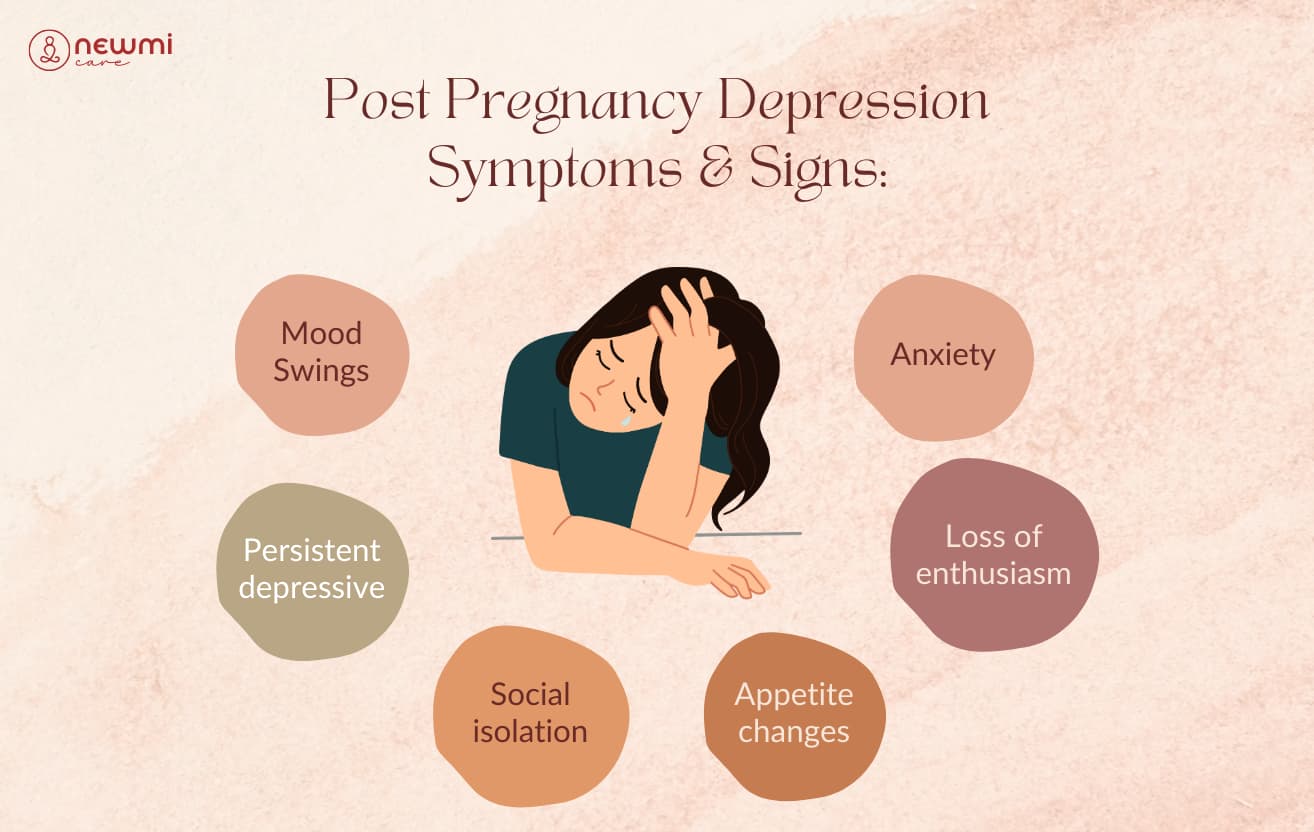
The “baby blues” affect up to 80% of new mothers. Tearfulness, mood swings, and emotional sensitivity in the first two weeks after birth are normal hormonal responses to the dramatic drop in estrogen and progesterone following delivery.
But here is the critical distinction: baby blues lift on their own within two weeks. Postpartum depression does not.
If you find yourself crying without knowing why, feeling a hollow sadness that sits in your chest like a stone, and noticing that two weeks have passed with no improvement, this is one of the most significant early postpartum depression signs. Do not wait for it to resolve on its own. It rarely does without support.
What this postpartum depression symptom feels like in real life:
- Crying at unexpected moments, often with no clear trigger
- Feeling like a glass wall separates you from normal life
- Describing yourself as “going through the motions”
- Finding no comfort in things that used to bring you joy
The sadness of PPD has a particular quality. It is not grief with a clear object. It is more like weather, a pervasive grey that follows you from room to room regardless of what is actually happening around you. If this description resonates, please keep reading.
Sign #2: Inability to Bond With Your Baby Is a Core Postpartum Depression Symptom
This is the sign that carries the most shame, and the one that most urgently needs to be talked about more openly.
Many mothers with PPD describe looking at their newborn and feeling nothing. Or feeling something closer to resentment or fear than the warm, tidal love they expected. They feed the baby, change the diapers, and perform all the right actions, but they feel like a caretaker rather than a mother.
This is not a character flaw. It is a neurochemical reality. Postpartum depression disrupts the very brain circuits responsible for attachment and reward. Serotonin, dopamine, and oxytocin systems are all affected, meaning the bond that “should” feel automatic simply does not fire the way it is supposed to.
The good news is that with proper treatment, this bond almost always forms. Mothers who receive timely care consistently report that the love eventually arrives, and that it is just as deep and genuine as any bond formed in the delivery room.
Important note: Feeling disconnected from your baby is not evidence that you are a bad mother. It is evidence that your brain needs medical support, the same way a broken leg means your bone needs medical support.
Sign #3: Intrusive Thoughts Are Among the Most Frightening Postpartum Depression Signs
Let’s talk about the symptom that almost no one admits to out loud, even to their doctor.
Many mothers with postpartum depression experience intrusive thoughts. These are unwanted, involuntary mental images or thoughts that feel shocking and deeply disturbing. Common examples include sudden mental images of dropping the baby, fears of something terrible happening to the child, or thoughts of harming oneself or the infant.
These thoughts are not desires. They are symptoms. There is a critical neurological difference between an intrusive thought (unwanted, distressing, ego-dystonic, meaning it feels foreign to who you are) and genuine intent. Mothers experiencing intrusive thoughts are typically horrified by them, which is itself the clearest evidence that these are PPD symptoms and not danger signs about their character.
That said, if thoughts feel persistent, controlled, or welcome in any way, that is a different clinical picture entirely and warrants an immediate call to your healthcare provider or a crisis line.
This postpartum depression symptom affects more new mothers than anyone acknowledges. A 2016 study published in the journal Pediatrics found that over 70% of new parents reported intrusive thoughts in the postpartum period. You are not broken. You are not dangerous. But you do need support, and you deserve to ask for it without shame.
Sign #4: Extreme Fatigue That Sleep Cannot Fix Is a Telling PPD Symptom
Every new parent is tired. That is simply the territory. But there is a particular kind of exhaustion that comes with postpartum depression, and it feels categorically different from ordinary sleep deprivation.
PPD fatigue is bone-deep. It persists even after a rare full night of sleep. It makes the simplest tasks feel insurmountable. Getting up to make coffee can feel like climbing a mountain. Responding to a text message can feel like writing a dissertation.
This is because depression physically alters energy metabolism at the cellular level. It is not laziness, and it cannot be solved by trying harder or pushing through.
Signs that postpartum fatigue has moved beyond normal tiredness:
- You feel just as exhausted after sleeping as before
- Tasks that used to be automatic now require enormous mental effort
- You feel physically heavy, as though gravity has doubled
- Even things you want to do feel emotionally and physically unreachable
Sign #5: Severe Anxiety and Panic Attacks Often Accompany Postpartum Depression Signs
Here is something that surprises many people: postpartum depression and postpartum anxiety often travel together. In fact, some researchers argue that postpartum anxiety is even more prevalent than depression, yet it receives far less clinical attention and public discussion.
Postpartum anxiety manifests as racing thoughts, an inability to stop worrying about the baby’s health and safety, physical symptoms like heart palpitations and shortness of breath, and a constant, hovering dread that something terrible is about to happen. Some mothers develop full panic attacks, sudden waves of overwhelming fear accompanied by chest tightness, dizziness, and a frightening sense of unreality.
The cruel irony is that anxiety often masquerades as “just being a careful mother.” Society validates hypervigilant mothering. So the woman who checks on her sleeping baby seventeen times a night out of sheer terror may be told she is “wonderfully attentive” when she is actually drowning in anxiety that deserves professional treatment.
If this sounds familiar, please bring it up with your provider at your next visit. You do not need to wait until it becomes unbearable.
Sign #6: Withdrawal From Family and Friends Is a Subtle but Important Postpartum Depression Sign
One of the most telling postpartum depression signs is social withdrawal. The new mother stops responding to texts. She declines visitors who were previously welcomed. She sits in the same room as her partner and feels utterly alone.
This withdrawal is not rudeness. It is a symptom of the way depression distorts social motivation. The brain’s reward system, which normally makes connection feel good, becomes dysregulated under the weight of PPD. Human contact begins to feel like an effort rather than a comfort.
Isolation, in turn, makes depression worse. It is a self-reinforcing spiral that can deepen quickly without intervention.
Signs of concerning postpartum withdrawal:
- Canceling plans consistently and feeling relieved rather than disappointed
- Not returning calls or messages for days at a time
- Feeling like a burden to everyone around you
- Preferring to be alone even when you previously craved company
- Putting on a performance of “fine” during brief social contact, then crashing afterward
Sign #7: Difficulty Concentrating and Making Decisions Are Recognized Postpartum Depression Symptoms
“Mom brain” is real, and it is partially explained by normal neurological changes during the postpartum period. But there is a version of cognitive fog that crosses into postpartum depression territory, and knowing the difference matters.
PPD-related cognitive impairment goes beyond forgetting where you put your keys. It includes an inability to make even simple decisions, difficulty following conversations or reading, a sense that your thoughts are moving through thick mud, and a disturbing feeling that you have lost some essential part of your intelligence.
This is sometimes called “depressive cognitive impairment,” and it is a documented neurological effect of depression’s impact on the prefrontal cortex. The brain regions responsible for planning, decision-making, and attention are all affected by the same neurochemical dysregulation driving the emotional symptoms.
The positive news: cognitive symptoms almost always resolve with treatment. Many women report that their mental sharpness returns fully after healing from PPD, sometimes feeling more resilient and self-aware than they were before.
Sign #8: Changes in Appetite and Eating Patterns Signal Postpartum Depression
Depression disrupts the hunger signals that ordinarily regulate eating. For some mothers with PPD, appetite disappears almost entirely. They forget to eat, feel no hunger, and lose weight without trying. For others, the pattern reverses, and food becomes one of the only available sources of comfort, leading to significant emotional eating.
Neither pattern is about willpower or discipline. Both reflect the same underlying disruption to the hypothalamic and reward systems in the brain.
What makes this particularly worth monitoring in the postpartum period is that poor nutrition can directly worsen both physical recovery from childbirth and mood symptoms. Nutrient deficiencies, especially in iron, omega-3 fatty acids, and B vitamins, are common postpartum and can independently worsen depressive symptoms, creating a difficult compounding cycle.
Signs your appetite changes may signal postpartum depression:
- Going half a day without eating and not noticing until prompted
- Eating large amounts without feeling satisfied or comforted
- Losing interest in foods you previously enjoyed
- Feeling nauseous at the thought of meals without a physical illness explanation
Sign #9: Irritability and Rage Are Often Overlooked Postpartum Depression Signs
When most people picture postpartum depression, they picture sadness. And while sadness is certainly present for many mothers, anger is often the more prominent and most socially misunderstood face of PPD.
Many mothers with postpartum depression describe feeling rage that seems wildly disproportionate to its trigger. Snapping at their partner over minor things. Feeling a hot, explosive irritability they barely recognize in themselves. Experiencing anger so intense it frightens them.
This is one of the postpartum depression signs most likely to go undiagnosed, because clinicians and family members tend to frame it as a relationship problem or a personality issue rather than a psychiatric symptom. But anger is a well-documented presentation of depression in both men and women, and in the postpartum period, it deserves the same clinical attention as sadness.
If you find yourself feeling angrier than you recognize yourself to be, please bring this to your provider’s attention. The anger is the depression speaking, not you. And it responds to treatment just as well as the sadness does.
Sign #10: Physical Symptoms With No Clear Medical Cause Can Indicate PPD
The mind-body connection is not metaphorical. It is anatomical. Depression is a whole-body illness, and postpartum depression regularly expresses itself through physical symptoms that have no other clear medical explanation.
These can include chronic headaches, persistent back pain, stomach discomfort, unexplained aching, and a general feeling of physical unwellness. Some mothers with PPD describe feeling as though they are “coming down with something” for weeks on end, without ever actually developing an illness.
When a new mother presents with these symptoms, the first clinical priority is rightly to rule out physical causes. But when workup comes back normal, postpartum depression belongs on the differential diagnosis list. Treating the depression frequently resolves the physical symptoms entirely, because the symptoms were always the depression in disguise.
Sign #11: Thoughts of Harming Yourself Are the Most Urgent Postpartum Depression Sign
This is the sign that requires the most immediate action, and the one most important to name clearly.
If you are having thoughts of suicide, self-harm, or thoughts that your baby or family would be better off without you, please stop reading and contact support right now. Call or text the 988 Suicide and Crisis Lifeline (call or text 988 in the US), go to your nearest emergency room, or call someone you trust immediately.
These thoughts are a medical emergency. They are not evidence of who you are as a mother or a person. They are a signal that your brain is in crisis and needs urgent help, exactly the way a heart in distress needs urgent help.
Postpartum depression, even in its most severe forms, is treatable. Women who receive appropriate care recover. The darkness lifts. And the mother on the other side of that darkness is fully capable of building a beautiful, present, loving relationship with her child.
You are not a burden. You are not beyond help. And you are not alone.
Postpartum Depression vs. Baby Blues vs. Postpartum Psychosis: A Critical Comparison
Understanding where your experience falls on this spectrum is one of the most important steps toward getting the right care. The table below summarizes the key distinctions clearly.
| Feature | Baby Blues | Postpartum Depression | Postpartum Psychosis |
|---|---|---|---|
| Onset | 2 to 5 days after birth | Within 4 weeks (can occur up to 1 year postpartum) | Within 2 weeks, often 24 to 72 hours after birth |
| Duration | Resolves within 2 weeks | Weeks to months without treatment | Days to weeks; requires immediate hospitalization |
| Mood symptoms | Mild tearfulness, mood swings | Persistent sadness, anxiety, anger, numbness | Extreme mood swings, mania, severe depression |
| Cognitive symptoms | Mild forgetfulness | Difficulty concentrating, decision fatigue | Confusion, disorientation, incoherence |
| Intrusive thoughts | Rarely present | Common | Severe; may include commands or delusions |
| Hallucinations | None | None | Present (auditory or visual) |
| Bond with baby | Intact | Often disrupted | Severely disrupted; may involve paranoid beliefs about baby |
| Treatment needed | Rest, support, monitoring | Yes: therapy, medication, or both | Emergency psychiatric care immediately |
| Prevalence | 50 to 80% of new mothers | 1 in 7 new mothers (~15%) | 1 to 2 in 1,000 new mothers |
| Prognosis with treatment | Resolves naturally | Excellent; full recovery common | Good with rapid intervention; higher recurrence risk |
Risk Factors That Make Postpartum Depression Signs More Likely
Not every new mother faces equal risk. While PPD can occur in any woman following any pregnancy, certain factors increase vulnerability significantly. Knowing your own risk profile is one of the most empowering things you can do before your baby arrives.
Biological risk factors:
- Personal history of depression or anxiety
- Family history of postpartum depression
- History of premenstrual dysphoric disorder (PMDD)
- Thyroid dysfunction (postpartum thyroiditis is common and mimics PPD symptoms closely)
- Nutritional deficiencies, particularly iron and omega-3 fatty acids
Psychological and social risk factors:
- High levels of stress during pregnancy
- Traumatic birth experience
- Lack of social support or practical help at home
- Relationship conflict or domestic instability
- Financial stress
- Perfectionism and high self-expectations around motherhood
Situational risk factors:
- Infant with health complications requiring extra care
- Multiple births (twins, triplets)
- Unplanned or unwanted pregnancy
- Previous pregnancy loss or infertility
- Breastfeeding difficulties or complications
Knowing your risk factors is not cause for panic. It is cause for preparation. Women with multiple risk factors benefit enormously from proactive screening, early conversations with their healthcare providers, and building a support network before delivery.
The Fastest Proven Path to Complete Postpartum Depression Healing
Here is the truth the mental health community broadly agrees on: postpartum depression is one of the most treatable psychiatric conditions in existence. With appropriate care, the vast majority of women experience full recovery. The key word is “appropriate,” because not all treatment approaches are equal, and timing matters.
Step One: Get Screened and Diagnosed Correctly
The Edinburgh Postnatal Depression Scale (EPDS) is a validated 10-item questionnaire used by OBGYNs, midwives, and pediatricians to screen for PPD. If you have not been screened, ask for it directly. If you have been screened but feel your results did not capture the full picture of what you are experiencing, say so explicitly.
An accurate diagnosis is the foundation of everything that follows. This also means ruling out thyroid dysfunction, anemia, and other postpartum physical conditions that can cause or worsen mood symptoms, sometimes dramatically.
Step Two: Understand Your Treatment Options Fully
Effective treatment for postpartum depression falls into several well-documented categories. The right combination depends on symptom severity, your personal history, breastfeeding status, and your preferences as an informed patient.
Psychotherapy:
Cognitive Behavioral Therapy (CBT) and Interpersonal Therapy (IPT) are the two most evidence-supported psychotherapy approaches for postpartum depression. Both have strong clinical trial data behind them. CBT helps mothers identify and restructure the thought patterns that maintain depression. IPT focuses specifically on relationship dynamics and role transitions, making it particularly well-suited to the enormous identity shift of new motherhood.
Research consistently shows that therapy alone is effective for mild to moderate PPD. For moderate to severe cases, it works best in combination with medication.
Medication:
Selective serotonin reuptake inhibitors (SSRIs) like sertraline and paroxetine are the first-line pharmacological treatment for PPD. Both are considered compatible with breastfeeding, though all medication decisions should be made in close consultation with your prescribing physician based on your individual situation.
In 2019, the FDA approved brexanolone (Zulresso), the first medication specifically developed and approved for postpartum depression. It works by targeting the neurosteroid system disrupted by the postpartum hormonal plunge. A newer oral version, zuranolone (Zurzuvae), was approved in 2023 and offers significant symptom improvement within days rather than the weeks typically needed for SSRIs. These options represent genuine medical advances, and many women do not know they exist.
Hormonal approaches:
Because PPD is substantially driven by the postpartum drop in estrogen and progesterone, hormonal strategies are an area of active ongoing research. Some practitioners offer progesterone supplementation in the immediate postpartum period for high-risk patients. This is not yet a universal standard of care but represents a promising frontier worth discussing with your provider if you have significant risk factors.
Step Three: Build Your Support Ecosystem Deliberately
No medication or therapy works in isolation. The research on postpartum depression recovery consistently identifies social support as one of the strongest protective and healing factors available.
According to research published by the National Institutes of Health on proven postpartum mental health recovery strategies, mothers with robust social support networks recover from PPD significantly faster than those who are isolated, even when controlling for treatment type and symptom severity.
Practical support building looks like this in action:
- Partner involvement: Educate your partner about PPD signs and enlist them as an active participant in recovery, not a concerned bystander. Their informed understanding alone reduces maternal shame and increases treatment adherence.
- Professional home support: Postpartum doulas and night nurses provide practical help that reduces the sleep deprivation and overwhelm that directly fuel PPD.
- Peer support groups: Connecting with other mothers who have experienced PPD is consistently reported as one of the most healing aspects of recovery. Organizations like Postpartum Support International (PSI) offer free peer support groups, both online and in-person.
- Family education: Family members who understand PPD are far less likely to offer unhelpful advice and far more likely to provide the kind of practical, non-judgmental support that actually helps.
Step Four: Prioritize Sleep Above Almost Everything Else
Sleep deprivation is not just a side effect of new parenthood. It is a direct physiological driver of postpartum depression. The neurobiological overlap between severe sleep deprivation and clinical depression is substantial, meaning that improving sleep is itself a meaningful treatment intervention, not just a nice-to-have.
This does not mean waiting until the baby sleeps through the night at four months. It means strategically protecting sleep in whatever form is currently possible. Taking shifts with a partner. Accepting help from family members for overnight care. Using safe sleep strategies that allow for more consolidated rest. Sometimes, temporarily supplementing breastfeeding with bottles to allow a longer sleep window for the mother.
The guilt many mothers feel about prioritizing their own sleep over constant availability to their infant is itself frequently a PPD symptom. A rested mother is a more present, more responsive, and healthier mother in every measurable way. This is not a compromise. It is an investment in her recovery.
Step Five: Address Postpartum Nutrition Strategically
The postpartum body is nutritionally depleted. Growing and sustaining a human being draws heavily on maternal stores of iron, iodine, choline, omega-3 fatty acids, vitamin D, and B vitamins. Many of these nutrients play direct roles in neurotransmitter synthesis and brain function, meaning their depletion can directly worsen PPD symptoms.
Continuing a prenatal vitamin through the postpartum period provides a basic foundation. But targeted supplementation may be warranted based on bloodwork, particularly for:
- Omega-3 fatty acids (EPA and DHA): Low omega-3 levels are associated with increased PPD risk, and supplementation has shown mood benefits in several clinical trials.
- Iron: Postpartum anemia is common after significant blood loss during delivery, and iron deficiency independently causes fatigue, brain fog, and mood disturbance that can be confused with or worsen PPD.
- Vitamin D: Deficiency is widespread, particularly in northern latitudes and winter months, and has been linked to depressive disorders across populations.
Discuss targeted testing and supplementation with your healthcare provider. A simple blood panel can identify deficiencies that, when corrected, may significantly improve mood symptoms and overall recovery.
Step Six: Move Your Body, Even a Little
Exercise is one of the most consistently supported non-pharmacological interventions for depression. For postpartum depression specifically, even gentle movement, a 20-minute walk with the stroller, postnatal yoga, or swimming, has been shown to meaningfully improve mood outcomes in clinical studies.
This is not about “bouncing back” or achieving a particular body shape. This is about the genuine neurochemical effects of physical movement: the release of endorphins, the reduction in cortisol, the improvement in sleep quality, and the simple psychological benefit of having done something intentional and self-caring.
Start very small. Even five minutes of intentional movement counts. And please, be genuinely gentle with yourself about what your postpartum body can and cannot do in the early weeks and months.
Step Seven: Know When to Escalate Care
Most women with postpartum depression respond well to outpatient care combining therapy, medication, and support. But some situations require more intensive intervention. Knowing the signs that more support is needed is itself part of a complete recovery plan.
Seek urgent or emergency care if you experience any of the following:
- Thoughts of suicide or self-harm
- Thoughts of harming your baby
- Hallucinations (seeing or hearing things others cannot)
- Paranoid thoughts about your baby or family members
- Rapidly worsening symptoms despite current treatment
- Inability to care for yourself or your baby
Intensive outpatient programs (IOPs), day treatment programs, and in rare cases inpatient psychiatric care exist specifically for these situations. Accessing them is not a failure. It is the appropriate level of care for the severity of the illness. Using them is a form of profound maternal strength, not weakness.
What Partners and Family Members Can Do Right Now
Postpartum depression does not only affect the mother. It affects everyone in her orbit. And the people closest to her have considerably more power to support her healing than most of them realize.
The single most important thing a support person can do is believe her. Not minimize. Not compare. Not offer unsolicited perspective about gratitude. Just believe that what she is experiencing is real, that it is not her fault, and that she deserves help without having to earn or justify it.
Practical support matters enormously: cooking real meals, doing laundry without being asked, taking overnight shifts with the baby, watching older children so she can rest or attend appointments. These acts are not just kindness. They are a direct clinical intervention in her recovery.
The World Health Organization’s guidance on proven maternal mental health support strategies emphasizes that social support and reduction of practical burden are among the most powerful modifiable factors in postpartum recovery outcomes. You do not need a medical degree to help. You need to show up consistently and without judgment.
Learn to recognize the signs of worsening symptoms. Know what to do if she expresses thoughts of self-harm. And resist the culturally ingrained impulse to celebrate her “getting back to normal” before she has actually healed. Recovery is not linear, and she needs the people around her to understand that.
The Cultural Silence That Makes Postpartum Depression Signs Harder to Recognize
Postpartum depression exists inside a culture that tells new mothers to perform joy. Birth announcements are celebrations. Baby showers are cheerful. Social media feeds are carefully curated. And a mother who is quietly falling apart inside a life that looks beautiful from the outside faces a particular kind of compounding loneliness.
There is also a persistent stigma around psychiatric treatment in the postpartum period, fed by misinformation and cultural narratives about “natural” motherhood. Some mothers fear that asking for help will lead to their children being taken away. Some fear judgment from their family or community. Some simply have never been told, clearly and directly, that what they are experiencing has a name, a diagnosis, and an effective treatment.
This article exists to say, clearly and directly: postpartum depression is a medical condition. Seeking treatment for it is no different from seeking treatment for a postpartum infection or a fractured bone. And the decision to get help is not a sign of weakness. It is the most courageous and loving thing you can do, for yourself and for the child who needs you to be well.
Quick Reference: Who to Call for Postpartum Depression Signs and Support
| Resource | Contact | What They Offer |
|---|---|---|
| 988 Suicide and Crisis Lifeline | Call or text 988 | 24/7 crisis support, including postpartum mental health |
| Postpartum Support International (PSI) Helpline | 1-800-944-4773 | Peer support, provider referrals, free online groups |
| Crisis Text Line | Text HOME to 741741 | Text-based 24/7 crisis support |
| Your OB, midwife, or family doctor | Use their office number | Screening, diagnosis, prescription, referral |
| PSI Online Support Groups | postpartum.net | Free weekly online peer support groups |
| NAMI Helpline | 1-800-950-6264 | Mental health education and referral support |
A Final Word to the Mother Reading This Right Now
If you have read this far, there is probably a reason.
Maybe you recognize yourself in these postpartum depression signs and are not sure what to do next. Maybe you are reading this for someone you love and are trying to understand how to help. Maybe you healed from PPD years ago and are still processing the weight of that experience. Wherever you are, something needs to be said directly to you.
You are not failing at motherhood. You are fighting something real and hard, with real biological weight behind it. The love you are capable of giving your child is not diminished by what your brain chemistry is doing right now. And the path back to yourself is not as long or as difficult as the depression is currently telling you it is.
The next step does not have to be enormous. It can be calling your OB tomorrow morning. It can be texting a friend and telling her something closer to the truth. It can be typing “postpartum depression therapist near me” into a search bar tonight. Small steps are real steps. Taking any one of them is proof of strength.
You deserve to feel well. Your child deserves a mother who gets the help she needs. And the future version of you, the one who has come through this and healed, is waiting on the other side of that first small step toward care.
CTA
If this article helped you or someone you love, please share it. Postpartum depression thrives in silence, and information is one of the most powerful tools we have against it. Forward this to a new mother, a father, a grandparent, or anyone in a new family’s orbit who might need it.
Read Next: How to Build a Postpartum Support Plan Before Your Baby Arrives | Postpartum Anxiety vs. PPD: How to Tell the Difference | The Partner’s Complete Guide to Supporting a Mother With Postpartum Depression
Drop a comment below: Did you experience postpartum depression? What was the first step that helped you most? Your story might be exactly what another mother needs to read today.
This article is intended for informational and educational purposes and does not constitute medical advice. If you believe you may be experiencing postpartum depression or any mental health crisis, please consult a qualified healthcare provider promptly. If you are in immediate danger, call emergency services or 988.