
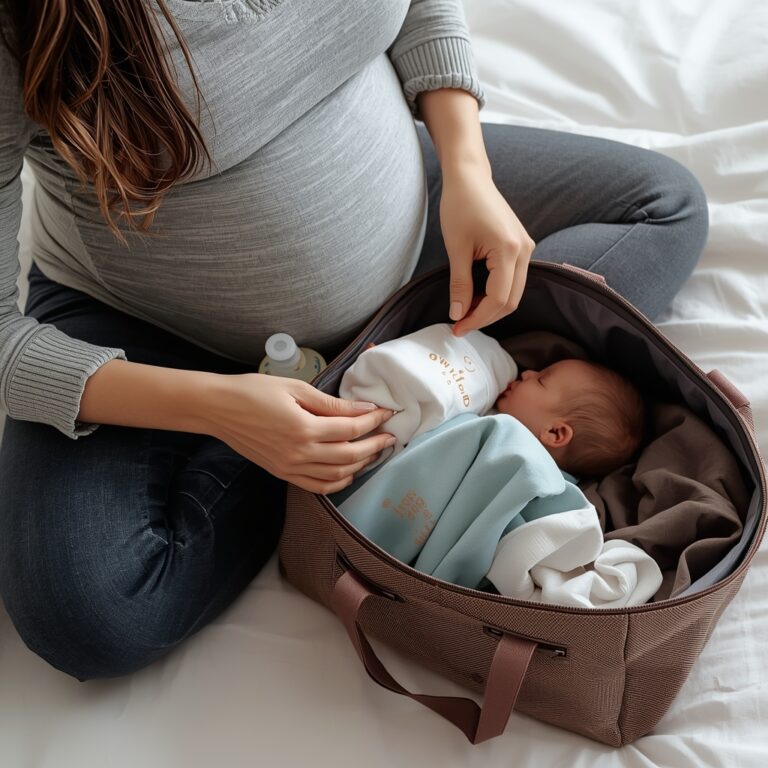
15 Essential Things to Pack in Your Hospital Bag for Labour and Delivery (The Ultimate Checklist for 2026)
By Dr. Naomi | webzalo.com | Fertility, Pregnancy & Postpartum Recovery
The Night You Finally Start Packing
It is two in the morning. You are 34 weeks pregnant, and you cannot sleep because your mind keeps cycling through the same question: what if I forget something important? You have opened seventeen browser tabs. One tells you to pack a diffuser. Another says bring a birthing ball. A third includes a foam roller and a waterproof Bluetooth speaker, and now you are standing in your hallway at midnight, staring at a suitcase that feels both completely empty and somehow already overwhelming.
You are not being dramatic. You are being a pregnant woman preparing for one of the most physically intense and emotionally profound experiences of your life, and you deserve a list that is actually useful.
Not every woman giving birth in 2026 has the same experience, the same birth plan, or the same body. But there are fifteen things that, after nearly two decades of supporting women through labour and delivery, I can tell you with complete confidence that you genuinely need in that hospital bag. Not nice to have. Need.
This is that list.

What a Hospital Bag for Labour and Delivery Actually Needs to Do
A hospital bag for labour and delivery is not a weekend travel bag. It is not a spa kit. It is a functional toolkit that needs to serve three distinct stages: active labour, immediate postpartum recovery, and your first days with a newborn.
Think of it like a surgical kit rather than a suitcase. Each item serves a specific clinical or comfort purpose for a specific moment in time. When you understand why each item matters, packing becomes far less overwhelming.
The reason so many hospital bag guides fail women is that they either over-pack with frivolous extras or under-explain why essentials actually matter. Mainstream advice rarely accounts for the physiological realities of postpartum recovery: the level of lochia (postnatal vaginal discharge) you can expect, how dramatically your hormone levels shift in the 24 hours after birth, or the fact that breastfeeding in those first hours is not instinctive for either you or your baby and requires specific support.
The short answer to “what should I pack in my hospital bag for labour and delivery”: pack for three people (you in labour, you postpartum, and your newborn), over approximately two to three days, prioritising clinical necessity over comfort extras. Everything else is supplementary.
Most NHS hospitals in the UK will provide some basics including a cot, basic nappies for the first day, and sterile delivery equipment. But they cannot provide everything you need for comfort, recovery, and feeding. That responsibility sits with you, and this checklist is here to make sure you are ready.
According to NHS guidance on preparing for labour, it is recommended that you have your hospital bag ready from around 36 weeks of pregnancy, which is earlier than many women realise.
15 Essential Things to Pack in Your Hospital Bag for Labour and Delivery
Using Format C: Evidence-Based Strategies and Solutions
For Mum: Labour Essentials
1. Your Maternity Notes, Birth Plan, and Photo ID
What it is and why it matters
Your maternity notes are the single most critical document in your hospital bag. They contain your entire pregnancy history, including blood type, any complications identified during antenatal care, your midwife’s observations, and results from all your routine blood tests and scans. Without them, the admitting team begins your care without full clinical context.
This matters more than most women realise. If you arrive in established labour, the team triaging you will not always have immediate electronic access to your full antenatal records, particularly in busy maternity units or if you are attending a hospital different from your usual antenatal clinic. Handing over your maternity notes gives them an immediate, comprehensive picture.
Your birth plan, though not a binding contract, is a communication tool. It signals your preferences for pain relief, delayed cord clamping, skin-to-skin contact, and other choices in a moment when you may not be in a position to advocate clearly for yourself. Keep it brief, clear, and realistic.
Bring your photo ID (driving licence or passport) and, if relevant, your NHS card or any private health insurance documentation. If you are a non-UK resident delivering in the UK, or vice versa, identity and insurance documents carry additional importance.
Practical implementation note: Keep all documents together in a waterproof zip wallet inside your bag, separated from everything else. In the intensity of early labour, you do not want to be rifling through nappies to find your blood group card.
2. A Comfortable Labour Gown or Front-Opening Nightdress
What it is and why it matters
Hospital gowns are functional but not comfortable. They are designed for clinical access, not for a woman in active labour who may be moving through various positions, using a birthing pool, or trying to remain calm through contractions that arrive every two to three minutes.
A front-opening or button-through nightdress or labour gown serves two important purposes. First, it allows continuous skin access for monitoring, IV placement, or epidural administration without requiring you to undress mid-contraction. Second, it supports immediate skin-to-skin contact with your baby after birth, which clinical consensus holds is critical for thermoregulation (regulating your newborn’s body temperature), early bonding, and the initiation of breastfeeding.
Research supports the significant hormonal benefit of uninterrupted skin-to-skin in the first hour after birth. Oxytocin (your bonding hormone) and prolactin (your milk-production hormone) are both stimulated through this physical contact, and a gown that allows you to open it from the front without disruption makes this far more achievable.
Pack two. One for labour, one for postpartum. Labour can be a messy, fluid-heavy experience, and having a clean gown to change into after delivery means you can be comfortable in those immediate recovery hours without needing to ask a midwife to source you a replacement.
Practical implementation note: Choose dark-coloured cotton or jersey fabric. Avoid white. Avoid synthetic fabrics, which trap heat and can make you feel significantly more uncomfortable during the physical intensity of active labour.
3. Non-Slip Socks and Comfortable Slippers
What it is and why it matters
This seems simple. It is not entirely simple.
Hospital floors are hard, cold, and frequently wet during a water birth or where amniotic fluid has been present. Walking barefoot increases the risk of slipping, particularly in the early postpartum period when you are physically exhausted and your centre of balance has shifted after delivery.
Non-slip socks also serve a clinical comfort function. During labour, many women experience significant temperature fluctuations. The body redirects blood flow to the uterus and core during active labour, which can leave extremities, particularly the feet, feeling cold even when the rest of the body is overheated. Warm socks address this without adding bulk or discomfort elsewhere.
For postpartum, a pair of easy-slip-on slippers or mule-style footwear is essential for those first trips to the bathroom. After a vaginal delivery, particularly if you have experienced perineal tearing or an episiotomy (a small surgical incision made to widen the vaginal opening during delivery), your movement will be cautious and tender. After a caesarean section, your core strength and mobility will be significantly reduced for the first 24 to 48 hours. Easy-access footwear removes one more obstacle from an already physically demanding recovery.
Practical implementation note: Pack two pairs of non-slip socks and one pair of soft, washable slippers. Keep the slippers in an outer pocket for quick access on arrival.
4. Snacks and Hydration Supplies for Labour
What it is and why it matters
Labour is physical work at a level most women have never experienced before. The energy demands of active labour are comparable to those of sustained moderate-intensity exercise, and yet many women arrive at hospital having eaten very little, either because early labour reduces appetite or because outdated advice suggested fasting.
Current clinical guidance from the Royal College of Obstetricians and Gynaecologists acknowledges that women in established labour who are at low risk of requiring general anaesthesia can eat and drink lightly. Light, easily digestible foods sustain your energy and help you manage the extraordinary physical output of pushing during the second stage of labour.
Pack snacks that are high in slow-release energy and easy to consume between contractions. Good options include oat-based cereal bars, dates (which have a small but growing body of research suggesting they may support cervical ripening and reduce the need for labour augmentation), crackers, and small amounts of nut butter. Avoid anything that requires significant preparation, chewing time, or is likely to cause nausea.
Hydration is equally important. Your birth partner should have a reusable water bottle with a straw, because drinking from a standard cup during an active contraction is genuinely difficult. Electrolyte-based drinks can help sustain you through a long labour, particularly if you are using a birthing pool, where you may be sweating without realising it.
Practical implementation note: Pack snacks for your birth partner too. A labour that stretches to twelve or more hours requires sustained support from your partner as well, and a hungry, low-energy birth partner is less helpful to you than a well-fuelled one.
5. A Portable Phone Charger, Headphones, and Your Entertainment Kit
What it is and why it matters
Early labour, particularly the latent phase (the period before you reach four centimetres dilation), can last many hours. It is not unusual for a first-time mother to experience twelve to eighteen hours of early labour before reaching active established labour. During this time, distraction, comfort, and mental engagement matter enormously for pain management.
Your phone is your primary communication device, your camera for those first photographs, your music player, and frequently your primary source of the guided meditation or hypnobirthing audio tracks that many women now incorporate into their birth preparation. A phone that dies during this period is a genuine practical problem.
Bring a portable power bank with sufficient charge capacity for at least two full phone charges. Bring a multi-socket adapter if you are delivering in a UK NHS hospital, as accessible plug sockets are not always positioned conveniently near the bed.
Wireless headphones allow you to listen to music, podcasts, or breathing scripts without being tethered by cables during movement. Many women find that familiar music, particularly pieces with a slow, steady beat between 60 and 80 BPM, helps activate the parasympathetic nervous system and supports a calmer physiological response to contractions.
A small notebook or printed hypnobirthing affirmations can serve as a focal point. Your entertainment kit does not need to be elaborate. It needs to work.
Practical implementation note: Download your playlists, podcasts, and any hypnobirthing or guided breathing content for offline use. Hospital WiFi is unreliable, and mobile data in certain delivery suite rooms can be limited.
6. Comfort Aids: TENS Machine, Massage Tools, and Your Focal Point Item
What it is and why it matters
A TENS machine (Transcutaneous Electrical Nerve Stimulation) is a small, battery-operated device that delivers mild electrical pulses through adhesive pads placed on the lower back. It works by stimulating the production of endorphins (your body’s natural pain-modulating hormones) and by a mechanism called gate control, which means the electrical signals effectively compete with and partially override the pain signals travelling to your brain.
Clinical evidence for TENS in labour is mixed, but a significant proportion of women report meaningful pain relief, particularly in the early and latent phases of labour. The device is most effective when used from the onset of contractions rather than once labour is well-established, which means you need to have it with you from the moment you leave for hospital.
Massage tools, including a small wooden roller or a smooth massage ball, allow your birth partner to apply counter-pressure to your lower back and sacrum during contractions. Counter-pressure on the sacro-iliac joint (where the sacrum meets the pelvis) is a well-established non-pharmacological pain-management technique that many women find provides significant relief during back labour, where baby is in an occiput posterior position (facing outward rather than toward your spine).
A focal point item, something visually meaningful and calming, such as a small photograph, a crystal, or a printed affirmation card, gives you a physical anchor during intense moments. It sounds simple, and it works.
Practical implementation note: Hire or buy your TENS machine in advance. Check that the pads and batteries are included. If you plan to use a birthing pool, remove the TENS pads before entering the water.
7. Toiletries, Skincare, and Oral Hygiene
What it is and why it matters
The physical and sensory experience of labour and early postpartum recovery involves sweating, fluid, and significant hormonal activity. Maintaining basic hygiene is not vanity. It is closely connected to your sense of dignity, comfort, and emotional wellbeing during an experience that can feel overwhelming.
Pack travel-sized versions of your essential toiletries to minimise weight and space. Essentials include: toothbrush and toothpaste (oral hygiene is deeply connected to sensory comfort and alertness), shampoo and conditioner, soap or gentle shower gel, deodorant, and a moisturiser or facial mist.
A facial mist is worth mentioning specifically. Many delivery suite rooms are warm and poorly ventilated. A simple water-based facial mist can provide immediate sensory relief during long labour, and the act of applying it gives your birth partner a tangible way to offer comfort.
Lip balm is non-negotiable. Active breathing patterns during labour, particularly panting and the controlled exhale techniques used in hypnobirthing, rapidly dry the lips. Cracked, uncomfortable lips during labour sounds minor. In the context of managing contractions, it becomes genuinely distracting.
For postpartum, pack your usual skincare and any medication you take regularly. If you are taking iron supplements, folate, or any prescription medication, bring enough supply for three days.
Practical implementation note: Pack everything in a single zipped bag that you can hand to your birth partner or lift out of your hospital bag easily. Label it clearly.
8. Maternity Bras and a Nursing Bra
What it is and why it matters
Your breasts begin producing colostrum (the concentrated, antibody-rich early milk that precedes your mature breast milk) from around 16 weeks of pregnancy, and by the time you deliver, breast changes are already significant. A standard underwired bra provides inadequate support and can compress breast tissue in ways that may contribute to engorgement (the uncomfortable overfilling of breast tissue as milk comes in) or blocked ducts in the early postpartum period.
Pack two well-fitting maternity bras and one nursing bra, which features drop-down cups that allow breastfeeding access without removing the bra. Even if you are unsure whether you intend to breastfeed or bottle-feed, a soft, supportive nursing bra provides comfort during the postpartum engorgement phase regardless of your feeding choice, because your milk will come in whether you feed from the breast or not.
Avoid bras with underwire. Avoid bras that are too tight. In the 24 to 72 hours after delivery, your breasts will change size rapidly as colostrum transitions to transitional milk, and a bra that fits on day one of postpartum may be uncomfortably tight by day two.
Clinical guidance from the Academy of Breastfeeding Medicine supports early, frequent skin-to-skin and feeding in the first hours after birth as the primary mechanism for establishing supply. A comfortable, accessible bra makes both of those things easier.
Practical implementation note: If you intend to breastfeed, pack nipple shields in a small, sterile case as a backup. Not every woman needs them, but latch difficulties in the first 24 hours are common, and having a shield available means you can continue attempting to feed without waiting for a lactation consultant to attend.
9. High-Absorbency Maternity Pads
What it is and why it matters
This is the item most first-time mothers underestimate. Significantly underestimate.
After delivery, whether vaginal or caesarean, you will experience lochia. Lochia is the postpartum uterine discharge that continues for four to six weeks after birth, beginning as heavy, bright red bleeding in the first days and gradually lightening to a pale discharge over subsequent weeks. In the first 24 to 48 hours, lochia is typically heavy, and standard sanitary pads are insufficient in both absorbency and coverage.
Maternity pads are larger, softer (important when the perineum is healing), and significantly more absorbent than standard period pads. Many women find that they need to change a maternity pad every one to two hours in the early postpartum period.
Pack a minimum of two to three packs of at least ten pads each. It is far better to take unused pads home than to run out and rely on hospital supplies, which vary in quality between NHS trusts.
Avoid tampons entirely in the postpartum period. Clinical consensus is clear: internal period products should not be used until your postpartum check, typically at six weeks, because the cervix (the lower opening of the uterus) remains partially dilated for several weeks after birth, increasing the risk of infection.
Practical implementation note: Keep one open pack of maternity pads at the top of your bag or in a separate, immediately accessible section. You will need one within the first hour after delivery.
10. Comfortable Postpartum Underwear
What it is and why it matters
You will not want to wear your regular underwear in the immediate postpartum period. You will want to wear something large, soft, high-waisted, and either disposable or dark enough that staining is irrelevant.
Disposable postpartum knickers are widely available and serve a practical purpose: they can hold a maternity pad securely in place, can be discarded without concern, and are soft enough not to aggravate perineal sutures or a caesarean scar. Pack at least six to ten pairs for a two- to three-day stay.
If you prefer reusable underwear, choose a large, soft, cotton brief in a dark colour. High-waisted styles are particularly useful after a caesarean section, where a waistband sitting across the incision site causes discomfort. There is growing clinical consensus that high-waisted, gentle compression underwear may also help with the sensation of uterine cramping, which is particularly strong in the first 24 hours as the uterus contracts back to its pre-pregnancy size. This process, known as involution, is intensified during breastfeeding due to the release of oxytocin.
Practical implementation note: Pack your postpartum underwear in a bag together with your maternity pads so that both are accessible at the same moment, rather than searching through your main bag with a newborn in your arms.
11. Your Going-Home Outfit
What it is and why it matters
What you wore to hospital at 36 weeks of pregnancy is unlikely to fit comfortably on your way home. This is something many women do not think through until they are preparing to discharge, at which point they realise that their pre-pregnancy jeans are not an option and their maternity clothes are in the laundry.
Your uterus will still be enlarged for several weeks after birth. Abdominal bloating, post-surgical swelling after a caesarean, and retained fluid are all normal features of early postpartum physiology. A comfortable, loose-fitting outfit with a stretchy waistband is not a concession. It is an appropriate response to where your body physically is.
For a vaginal delivery, high-waisted stretchy leggings or joggers with a loose top that provides easy breastfeeding access work well. For a caesarean section, avoid any waistband that sits at or below the bikini line for at least two weeks, as pressure on the incision site is painful and may impede healing.
Pack something that makes you feel like yourself. Not glamorous, not performatively put-together. Simply like a person who is comfortable and ready to take her baby home.
Practical implementation note: Pack a going-home outfit separately, in a small bag or at the very bottom of your main bag, so that it is not confused with your labour or postpartum supplies.
For Baby: Newborn Essentials
12. Newborn Clothing: Vests, Sleepsuits, and a Coming-Home Outfit
What it is and why it matters
Newborns cannot thermoregulate independently. This is one of the most important physiological facts about a newborn baby. Unlike adults, whose bodies automatically adjust to ambient temperature through sweating or shivering, a newborn’s thermoregulatory system is immature and highly dependent on the environment and on layering.
The general rule for newborn clothing is: one more layer than you are wearing yourself. In a warm hospital room, this typically means a short-sleeved vest as a base layer, covered with a sleepsuit, possibly with a light cotton hat.
Pack three to four short-sleeved vests and three to four sleepsuits in newborn or 0-3 month sizes. Do not pack only newborn size. A significant proportion of babies, particularly those born at or after 40 weeks, are already too large for newborn-specific clothing at birth. Having a range of sizes ensures you are not trying to dress a nine-pound baby in clothing designed for a six-pound baby.
For your coming-home outfit, choose something easy to put on, with either poppers or an envelope neckline (a design that widens and folds down over the baby’s shoulders rather than requiring you to pull fabric over the head). In those first hours, you will be learning everything simultaneously, and a complicated outfit adds unnecessary challenge.
Practical implementation note: Wash all newborn clothing before packing, in a non-biological, fragrance-free detergent suitable for sensitive newborn skin. Pre-fold or roll each item so they take up less space and can be located easily.
13. Nappies, Wipes, and a Muslin Cloth
What it is and why it matters
NHS hospitals will typically provide nappies for the first day, but the provision varies between trusts and is not always guaranteed after the initial 24 hours. Bringing your own ensures continuity and means you are not dependent on whatever brand the ward happens to stock.
Pack at least two packs of newborn-size nappies. In the first 24 hours, your baby will pass meconium, which is the thick, dark, sticky substance that has been collecting in the intestines throughout pregnancy. It is not like standard stool. It is dense, adhesive, and can require several wipes to remove thoroughly. Having your own supply of soft, fragrance-free baby wipes removes the uncertainty of relying on hospital supplies.
Cotton wool and warm water are often recommended for the first few weeks for nappy changes, particularly by NHS guidance, as neonatal skin is significantly more permeable and reactive than adult skin. If you prefer to use wipes, choose fragrance-free, alcohol-free, and preservative-free options. Pack these in a small zip bag alongside a travel-size nappy cream to protect against redness in the nappy area, which can develop quickly on sensitive newborn skin.
Muslin cloths are one of the most genuinely versatile items in the newborn toolkit. They function as a feeding cloth, a light blanket, a surface for nappy changes, and a comforting fabric layer. Pack at least four.
Practical implementation note: Create a small nappy-change kit within your main bag: nappies, wipes, muslin cloths, and nappy cream together in one zip compartment. When you are sleep-deprived and a nappy change is urgent, having everything in one location matters.
14. A Swaddle Blanket and a Baby Hat
What it is and why it matters
Swaddling, the practice of wrapping a newborn snugly in a breathable blanket, has a long history in neonatal care and a robust evidence base. Research suggests that appropriate swaddling can reduce newborn distress, decrease excessive crying, and support sleep quality in the early weeks.
The mechanism is well understood. In the womb, your baby has been in a contained, pressure-consistent environment for the entire duration of pregnancy. The sudden transition to an open, uncontained space triggers a startle reflex (known as the Moro reflex) that can jolt babies awake repeatedly. Swaddling replicates the sensation of containment, suppresses the Moro reflex, and supports longer, calmer sleep periods.
Bring one or two thin, breathable muslin swaddle blankets rather than heavier fabrics, particularly for a hospital birth where room temperature is typically maintained at a higher level. Overheating in swaddled babies is a recognised risk factor in safe sleep guidance, and a lighter fabric allows for appropriate warmth without heat retention.
A baby hat is essential for the delivery room. Newborns lose a significant proportion of their body heat through their heads immediately after birth, and placing a soft hat on your baby in those first minutes is a simple, evidence-supported action to support thermoregulation. NHS hospitals provide these, but bringing your own ensures a comfortable, well-fitting option.
Practical implementation note: Practise the basics of swaddling before you go into labour. There are clear video guides available from NHS-affiliated sources. The hospital midwives will show you, but having a baseline of familiarity reduces stress in those first hours.
15. Nipple Cream and Breastfeeding Support Items
What it is and why it matters
Whether you plan to breastfeed or not, your nipples will be subjected to significant contact, friction, and stimulation in the postpartum period. For breastfeeding women, the early days of establishing feeding are often associated with nipple soreness, which can range from mild sensitivity to, in cases of poor latch or tongue tie in the baby, significant pain that discourages continued feeding.
A purified lanolin nipple cream (widely used and recommended in lactation medicine) or a medical-grade nipple balm creates a protective, moisturising barrier that supports the integrity of nipple skin between feeds. Apply after each feed and allow to air dry for a moment before replacing your bra pad.
Disposable breast pads are equally important. As your milk comes in, typically between day two and day four postpartum, leaking is common and can be significant. Damp fabric against sensitive nipple skin increases the risk of soreness and, in some cases, thrush (a fungal infection common in the early breastfeeding period). Disposable, breathable breast pads absorb moisture and maintain a drier environment.
According to ACOG guidance on breastfeeding, the early postpartum period is the most critical window for establishing breastfeeding, and appropriate physical support, including the right feeding aids, directly influences whether women continue feeding beyond the first weeks.
Practical implementation note: Pack a small handout or printed guide to breastfeeding positions. When you are exhausted, holding a tiny, often fussing baby at two in the morning, having a quick visual reference for the cradle hold or the biological nurturing position can make an enormous practical difference.
Summary Checklist: All 15 Essentials at a Glance
| # | Item | Category | Priority |
|---|---|---|---|
| 1 | Maternity notes, birth plan, photo ID | Documents | Essential |
| 2 | Labour gown or front-opening nightdress (x2) | Labour clothing | Essential |
| 3 | Non-slip socks and slippers | Footwear | Essential |
| 4 | Snacks and hydration supplies | Nutrition | Essential |
| 5 | Portable phone charger, headphones, entertainment | Technology/comfort | Essential |
| 6 | TENS machine, massage tools, focal point item | Pain management | Recommended |
| 7 | Toiletries, skincare, oral hygiene | Personal care | Essential |
| 8 | Maternity bras and nursing bra (x2-3) | Postpartum clothing | Essential |
| 9 | High-absorbency maternity pads (x2-3 packs) | Postpartum care | Essential |
| 10 | Postpartum underwear (x6-10 pairs) | Postpartum care | Essential |
| 11 | Going-home outfit (loose, stretchy) | Postpartum clothing | Essential |
| 12 | Newborn vests, sleepsuits, coming-home outfit | Baby clothing | Essential |
| 13 | Nappies, wipes, muslin cloths | Baby care | Essential |
| 14 | Swaddle blanket and baby hat | Baby comfort/safety | Essential |
| 15 | Nipple cream and breast pads | Feeding support | Essential |
In My Clinical Practice: What I Have Seen Most Often
In my 19 years of clinical practice, what I have seen most often is women who packed their hospital bags with extraordinary care and attention to the labour experience, and almost nothing for the postpartum experience. The bag is full of carefully chosen snacks, a beautifully prepared birth plan, and a TENS machine with fresh batteries. It has one maternity pad and no disposable knickers, and the nursing bra they packed does not fit because their breasts have changed size in the final two weeks of pregnancy.
This is not a criticism. It reflects something real and understandable about how we prepare psychologically for birth. The labour is the event we can imagine. The postpartum is harder to visualise, particularly for first-time mothers who have not yet experienced it.
As I have seen with many patients, the items that make the biggest difference in how women feel in those first 24 to 48 hours are not the labour comfort aids. They are the things that manage the physical realities of immediate recovery: enough maternity pads, comfortable underwear, a clean nightgown that lets them hold their baby without restriction. These are the things that allow a woman to move from survival mode into presence. And presence, in those first hours with your newborn, is everything.
Pack for the labour. Pack harder for what comes after.
When to See a Specialist: Red Flags to Know Before You Pack
Understanding what is normal in postpartum recovery is as important as knowing what is not. Before you leave for hospital, make a note of these specific signs that warrant prompt medical attention.
Postpartum haemorrhage: If you are soaking through more than one maternity pad per hour for two consecutive hours after delivery, inform your midwife immediately. This is not a situation to wait and see. Excessive postpartum bleeding is a clinical concern that requires urgent assessment by the obstetric team on duty.
Wound infection: If your perineal sutures or caesarean incision become increasingly red, hot, swollen, or begin to produce discharge with an unusual colour or smell within the first two weeks postpartum, contact your GP or midwife the same day and request a wound review.
Signs of postnatal infection: A fever above 38 degrees Celsius in the first ten days after birth, combined with pelvic pain or offensive-smelling lochia, should prompt a same-day call to your maternity unit or GP. Endometritis (infection of the uterine lining) is treatable but requires prompt antibiotic intervention.
Breastfeeding concerns: If you experience a hard, red, wedge-shaped area on your breast combined with flu-like symptoms, this may indicate mastitis (inflammation of breast tissue, often associated with blocked milk ducts). See your GP within 24 hours. If left untreated, mastitis can progress to a breast abscess.
Mental health: If you feel persistently low, disconnected from your baby, or unable to sleep even when your baby sleeps, beyond the first two weeks, speak to your health visitor or GP. Postnatal depression affects approximately one in ten women and is highly treatable when identified early.
You Are More Ready Than You Think
Packing a hospital bag for labour and delivery is one of the last practical tasks of pregnancy. It is also one of the most tangible ways you can care for yourself before birth, and that matters.
You do not need a perfect bag. You do not need a matching set of travel bottles, a curated playlist of 400 songs, or colour-coded compartments. You need the fifteen items on this list, packed with intention, ready by week 36.
The most important thing this checklist gives you is not a perfectly stocked bag. It is the ability to arrive at hospital, hand your maternity notes to the midwife, and know that whatever happens in the next 24, 36, or 48 hours, you are prepared for all of it. Labour, recovery, and those first extraordinary hours with your baby.
You have done the hard work. You have grown a human being. A well-packed bag is the final, very achievable step.
Read next: Postpartum Recovery: What No One Tells You About the First Six Weeks or drop a comment below with what you wish someone had told you to pack before your own birth experience.
This article is for informational purposes only and does not constitute medical advice. Always consult a qualified healthcare provider before making any changes to your health or treatment plan.