
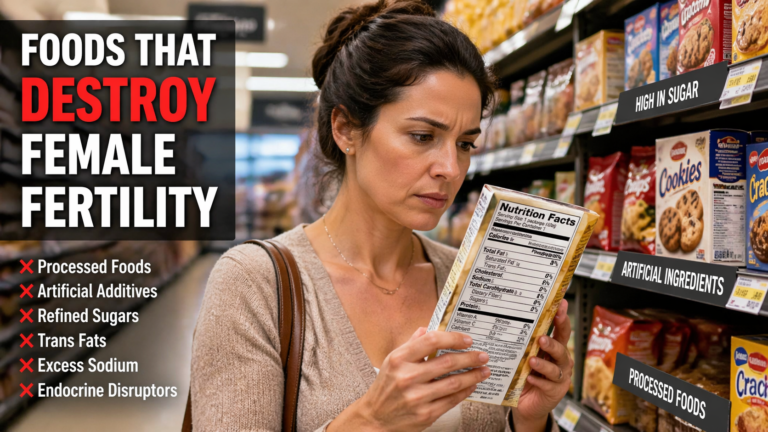
The Shocking Truth About 3 Foods That Secretly Destroy Female Fertility After 30
You’re Doing Everything “Right” — So Why Isn’t It Working?
You’ve deleted the dating apps, chosen your partner, mapped your cycle, and started taking folic acid three months ago like every fertility article told you to. You’ve cut back on alcohol, started going to bed earlier, and even bought a basal body temperature thermometer you dutifully check every morning before you swing your legs out of bed.
And yet, here you are at 32 or 37 or 41, watching the months pass, wondering what you’re missing.
The frustrating truth is that mainstream fertility advice spends enormous energy telling you what to add — supplements, yoga, acupuncture, tracking apps — and almost no time telling you what to remove. Specifically, what you are eating every single day that may be quietly, systematically working against your reproductive biology in ways that won’t show up on a basic blood panel until the damage has been accumulating for years.
You are not imagining it. You are not being dramatic. And you are definitely not alone.
What follows is a clinical breakdown of three foods — not exotic poisons, not obscure additives, but everyday staples that millions of women consume without a second thought — that research increasingly links to impaired ovarian function, disrupted hormonal signalling, and reduced egg quality. After 30, when your reproductive reserves are naturally beginning to shift, these foods carry a disproportionate biological cost. And most doctors will never bring them up at your appointment.
Let’s change that.
What “Fertility” Really Means After 30, and Why Diet Matters More Than You Think
The Biological Context You Deserve
Before we get into the specific foods that destroy female fertility, it helps to understand what we actually mean when we talk about fertility at a cellular and hormonal level — because the conversation is far more nuanced than “are my eggs good or not?”
Fertility after 30 hinges on several interconnected systems working in concert. First, there is ovarian reserve: the quantity of eggs remaining in your ovaries. This declines naturally with age and cannot be significantly reversed. But reserve is only half the picture.
The other half is egg quality — and this is where nutrition plays a profound, underappreciated role.
Egg quality refers to the chromosomal integrity and mitochondrial health of your oocytes (eggs). Mitochondria are the energy-producing structures inside cells; they power the process by which a fertilised egg divides and implants. Mitochondrial function in eggs is exquisitely sensitive to oxidative stress, inflammation, and hormonal disruption — three conditions directly worsened by specific dietary patterns.
Think of your eggs like seeds stored in a greenhouse. The number of seeds you have is fixed. But the conditions inside that greenhouse — the temperature, the light, the quality of the soil — determine how many of those seeds will germinate successfully. Diet is a significant part of those greenhouse conditions.
Beyond egg quality, fertility also depends on ovulation — specifically, whether you are releasing a mature, viable egg each cycle — and on a finely calibrated hormonal axis that regulates the entire process. The hypothalamic-pituitary-ovarian axis, or HPO axis, is the communication highway between your brain and your ovaries. Disruptions anywhere along this highway can delay or suppress ovulation entirely, without causing periods to stop completely. You can have regular-seeming cycles and still not be ovulating optimally.
This is why the foods that destroy female fertility are so insidious. They don’t announce themselves with dramatic symptoms. They simply interfere — quietly, consistently — with the biological processes that make conception possible.
Mainstream medicine tends to address fertility through diagnostics (hormone panels, ultrasounds, semen analysis) and interventions (Clomid, IUI, IVF) without spending meaningful clinical time on the dietary foundations that either support or undermine those interventions. As I will explain, that is a significant gap in standard care.
The 3 Foods That Destroy Female Fertility After 30
A Note on Mechanism
Every item in this section is backed by a plausible and increasingly well-documented clinical mechanism. This is not fear-mongering about foods you’ve eaten once at a dinner party. These are patterns — consistent, repeated consumption of specific food categories — that, according to published research including large-scale prospective cohort studies, carry a measurable reproductive cost.
Food One: Industrial Trans Fats and Ultra-Processed Vegetable Oils
What They Are and Where You’re Eating Them
When people hear “trans fats,” they often think of the partially hydrogenated oils that were formally banned from food products in many countries. And while those have largely been removed from packaging, the picture is more complicated than it appears on a nutrition label.
Industrial trans fats are created through a manufacturing process called partial hydrogenation, in which liquid vegetable oils are treated with hydrogen gas to make them solid at room temperature. This process extends shelf life and creates the dense, satisfying texture you find in many packaged biscuits, ready-made pastries, fried fast foods, and many cheap margarines.
In countries where partially hydrogenated oils have been restricted, manufacturers have in some cases shifted to refined, high-heat-processed vegetable oils that, while not technically trans fats, undergo similar oxidative damage during processing and behave in similarly disruptive ways in the body.
You will find these fats in:
- Commercially produced biscuits, crackers, and pastry products
- Many fried foods from fast-food chains and takeaways
- Microwave popcorn and packaged snack foods
- Cheap shortenings and some margarine spreads
- Pre-packaged ready meals and processed cheese products
The relevant term on a food label is “partially hydrogenated oil.” If you see it anywhere in the ingredients list, that product contains trans fats regardless of what the front-of-pack label claims.
The Clinical Mechanism: How Trans Fats Disrupt Ovulation
This is where it gets clinically significant.
Research from the landmark Harvard Nurses’ Health Study II, one of the most comprehensive long-term studies of female reproductive health ever conducted, found that women with the highest dietary intake of trans fats had a substantially increased risk of ovulatory infertility compared to women with the lowest intake. The effect was measurable even at relatively modest levels of consumption — we are not talking about women eating nothing but fried food.
The biological mechanism is multi-pronged.
First, trans fats disrupt insulin sensitivity. Even short-term consumption of industrial trans fats has been shown to impair the body’s response to insulin at the cellular level. When your cells become less responsive to insulin, your pancreas compensates by producing more of it. Chronically elevated insulin directly stimulates the ovaries to produce excess androgens — male hormones such as testosterone — which interfere with normal follicular development and can prevent the mature follicle from releasing an egg. This is one of the central hormonal disruptions in polycystic ovary syndrome (PCOS), and dietary trans fats can produce a similar hormonal environment even in women who do not have a PCOS diagnosis.
Second, trans fats promote systemic inflammation. Inflammation is not simply a response to injury or illness. At a low-grade, chronic level, it functions as a background signal that alters gene expression, disrupts hormonal receptor sensitivity, and impairs the microenvironment inside the ovary. The follicular fluid that surrounds developing eggs is directly affected by the inflammatory mediators produced in response to trans fat consumption. Eggs develop inside this fluid for several months before ovulation. A consistently pro-inflammatory follicular environment is associated with poorer egg quality and reduced fertilisation rates.
Third, trans fats replace beneficial fatty acids in cell membranes. Your body incorporates dietary fats directly into cell membranes, including the membranes of oocytes (eggs). Healthy cell membranes, built from beneficial fats such as omega-3 fatty acids, are fluid, flexible, and receptive to hormonal signals. When trans fats are incorporated instead, cell membranes become rigid and less responsive. This affects everything from the egg’s ability to be fertilised to the developing embryo’s capacity to divide normally.
The Harvard T.H. Chan School of Public Health’s research on the fertility diet documents this relationship in detail, drawing on data from thousands of women tracked over years of follow-up. The conclusion is consistent: dietary fat quality, not simply dietary fat quantity, has a measurable impact on ovulatory fertility.
After 30: Why This Matters More Now
Before your mid-thirties, your reproductive system has a degree of resilience that buffers the impact of occasional dietary insults. After 30, particularly after 35, this buffer diminishes.
Your eggs have been in your ovaries since before you were born. The older they are, the more accumulated oxidative damage they carry, and the less metabolic reserve their mitochondria have. Trans fats, by increasing oxidative stress and inflammation, accelerate this process. They add an environmental stressor on top of the biological one.
Additionally, insulin sensitivity naturally declines slightly with age for most women, even without significant weight changes. A diet high in trans fats pushes an already shifting metabolic landscape further in the wrong direction, making ovulatory irregularities more likely precisely at the stage of life when you can least afford them.
What to Do Instead
Replacing industrial trans fats does not require radical dietary overhaul. The practical shift is straightforward.
Replace packaged, commercially processed baked goods and fried foods with home-prepared versions using olive oil, avocado oil, or butter. These fats — particularly extra virgin olive oil — are associated in the research with better fertility outcomes. The Mediterranean dietary pattern, which is rich in olive oil, legumes, whole grains, vegetables, and oily fish, consistently outperforms Western dietary patterns across reproductive health outcomes in large cohort studies.
Read ingredient labels. “Partially hydrogenated oil” anywhere in the list means trans fats are present. Full stop.
And when in doubt, cook from whole food ingredients. The further a food is from its original state, the more likely it is to contain processed fats you would not choose if you could see them being manufactured.
Food Two: Refined Sugar and High-Glycaemic Carbohydrates
The Everyday Fertility Saboteur You Haven’t Considered
This is the one that tends to generate the most resistance, because sugar is woven into the fabric of modern food culture in a way that feels almost impossible to address.
Refined sugar — meaning sugar that has been extracted, purified, and added to foods and drinks during processing — is metabolically distinct from the natural sugars found in whole fruits, vegetables, and legumes. The distinction matters enormously for fertility, and it comes down to glycaemic response.
Glycaemic index (GI) is a measure of how quickly a food raises blood glucose (blood sugar) levels. High-GI foods cause rapid, pronounced spikes in blood glucose; low-GI foods produce slower, more gradual rises. The reproductive system is acutely sensitive to these fluctuations, for reasons that are now well-documented in the clinical literature.
High-glycaemic foods you may be consuming daily include:
- White bread, white rice, and refined pasta
- Breakfast cereals with added sugar (including many marketed as “healthy”)
- Fizzy drinks, fruit juices, and sweetened coffees
- Confectionery, biscuits, cakes, and pastries
- Many flavoured yoghurts and plant-based milks with added sugar
- Sports drinks and energy drinks
- Processed sauces and condiments with added sugars (ketchup, BBQ sauce, many salad dressings)
The insidious quality of this list is that several of these items are routinely recommended as part of a “balanced diet.” White rice is a global staple. Orange juice is considered a morning health ritual. The idea that these foods could be silently disrupting ovulatory function is genuinely counter-intuitive for many women — and for many clinicians.
The Clinical Mechanism: Insulin, Androgens, and the Ovulation Loop
The pathway from refined sugar consumption to fertility disruption is one of the most well-established in reproductive endocrinology, and it runs through insulin.
When you consume high-glycaemic foods, your blood glucose rises rapidly. Your pancreas responds by secreting insulin, the hormone responsible for shuttling glucose into cells for energy. In a healthy metabolic state, this is a tightly regulated, temporary response. Blood glucose rises, insulin spikes, glucose is cleared, insulin returns to baseline.
The problem arises with chronically elevated insulin levels, a condition known as hyperinsulinaemia.
Step one: Hyperinsulinaemia reaches the ovaries.
Your ovarian cells have insulin receptors. When insulin levels are persistently elevated, these receptors are chronically stimulated. The ovaries respond by producing excess androgens — specifically testosterone and androstenedione. This is not incidental. The mechanism is direct: elevated insulin up-regulates the enzymes in ovarian theca cells that produce androgens.
Step two: Excess androgens disrupt follicular development.
Your ovarian follicles (the fluid-filled sacs in which eggs develop) are supposed to mature sequentially, with one dominant follicle growing to full size and releasing a viable egg each cycle. Excess androgens disrupt this process. They interfere with the normal feedback signalling between the pituitary gland and the ovary, suppress the LH (luteinising hormone) surge that triggers ovulation, and promote follicular arrest — a state in which multiple small follicles begin to develop but none reach full maturity or release.
This is, biochemically speaking, what happens in polycystic ovary syndrome (PCOS). And while a high-sugar diet alone does not cause PCOS in women without a genetic predisposition, it can produce a similar hormonal environment in women who are metabolically susceptible. Anovulatory cycles — cycles in which no egg is released — can occur in women with entirely normal-looking menstrual cycles, and chronic insulin elevation is one of their most common dietary drivers.
Step three: High glycaemic load increases sex hormone-binding globulin suppression.
Sex hormone-binding globulin (SHBG) is a protein produced by the liver that binds to oestrogen and testosterone, regulating how much of each is available in free, active form in the bloodstream. Chronically high insulin suppresses SHBG production, which means more free testosterone circulates unchecked. In the ovarian environment, this amplifies the androgen-excess problem described above.
Step four: Glycaemic load impairs mitochondrial function in developing eggs.
This is a more recently characterised mechanism and one with significant clinical implications. Oxidative stress generated by high-glycaemic eating creates reactive oxygen species (ROS) — unstable molecules that damage cellular structures including mitochondrial DNA. Eggs are among the most mitochondria-rich cells in the human body; they require vast amounts of mitochondrial energy to complete the final stages of maturation, survive fertilisation, and support early embryonic division.
When mitochondrial DNA in oocytes is damaged by oxidative stress — including the sustained oxidative stress produced by regular high-sugar consumption — egg quality declines. Chromosomal errors become more likely. Fertilisation rates decrease. Even when fertilisation occurs, early embryo development may be compromised.
After 30, this matters more acutely because your eggs have fewer mitochondria per cell than the eggs of women in their twenties, and those mitochondria carry more accumulated damage. Adding a dietary source of oxidative stress on top of this biological reality is genuinely counterproductive.
The Glycaemic Load Nuance: It’s Not Just Sugar
It is worth clarifying that the research on fertility and diet focuses not just on refined sugar in isolation, but on the overall glycaemic load of the diet — the cumulative blood glucose impact of everything you eat across a day.
A diet high in white bread, pasta, rice, and low-fibre breakfast cereals can produce persistent insulin elevation even in the complete absence of obvious sweets or confectionery. Many women who consider themselves to be eating “healthily” because they avoid chocolate and cakes are still consuming a high-glycaemic diet through refined grain staples.
The key variable is fibre. Whole foods with their fibre intact — legumes, vegetables, whole grains such as oats, barley, and quinoa — raise blood glucose slowly and predictably. Refined versions of the same foods, with their fibre stripped away during processing, do not. Choosing whole food sources over their refined counterparts, and building meals around a balance of fibre, protein, and healthy fat, is the single most effective dietary adjustment for stabilising insulin and supporting ovulatory function.
What the Research Supports
The Nurses’ Health Study II specifically examined the relationship between glycaemic load and ovulatory infertility. Women in the highest quartile for glycaemic load had a significantly greater risk of anovulatory infertility compared to women in the lowest quartile. The association held after adjusting for body mass index, physical activity, and other confounding variables, suggesting the glycaemic quality of the diet is an independent predictor of ovulatory function.
Further evidence comes from intervention studies in women with PCOS, where low-glycaemic dietary approaches consistently improve hormonal profiles, regularise ovulation, and improve metabolic markers compared to standard dietary advice.
Food Three: Artificial Sweeteners and “Diet” Processed Foods
The Substitution That Backfires
If you have been reading the previous two sections and thinking “I already avoid sugar — I use sweeteners instead,” this section is specifically for you.
Artificial sweeteners — including aspartame, sucralose, saccharin, and acesulfame potassium — are ubiquitous in the products marketed to health-conscious women. They appear in diet soft drinks, flavoured sparkling waters, protein bars, low-calorie yoghurts, “sugar-free” syrups, meal-replacement shakes, and a wide range of processed foods branded as light, lean, or diet.
The premise behind them is simple: they provide sweetness without calories, and without the blood glucose spike associated with refined sugar. On both counts, this is technically accurate. But the full picture of what artificial sweeteners do in the body — particularly in relation to the gut microbiome, oestrogen metabolism, and endocrine signalling — is considerably more complex, and the emerging research is raising legitimate clinical questions about their impact on female reproductive health.
This is an area where it is important to be precise about the evidence base. Large-scale randomised controlled trials specifically examining artificial sweeteners and fertility outcomes in humans do not yet exist in sufficient number to draw firm conclusions. What we have is a converging body of mechanistic studies, animal research, observational data, and gut microbiome science that paints a coherent picture of plausible reproductive harm, and that has led several reproductive health researchers to recommend caution.
There is growing evidence that artificial sweeteners may affect female fertility through at least three distinct pathways. Each warrants careful attention.
Pathway One: Gut Microbiome Disruption and Oestrogen Metabolism
Your gut microbiome — the trillions of bacteria, fungi, and other microorganisms living in your digestive tract — plays a role in reproductive health that most women have never been told about at a standard gynaecology appointment.
One of the microbiome’s less-celebrated functions is regulating oestrogen metabolism through a process called the enterohepatic circulation of oestrogen. Here is how it works.
Oestrogen is produced in the ovaries and other tissues, performs its functions in the body, and is then processed in the liver, which attaches a molecular “tag” to used oestrogen to prepare it for excretion. These tagged oestrogen compounds are excreted into the gut via bile. Under healthy gut microbiome conditions, they proceed through the digestive tract and exit the body in stool.
However, a specific subset of gut bacteria produce an enzyme called beta-glucuronidase, which removes the molecular tag from processed oestrogen and reactivates it, allowing it to be reabsorbed through the gut wall and returned to circulation. The collection of microbiome bacteria that manage this process is called the “oestrobolome.”
When the oestrobolome is healthy and well-balanced, oestrogen recycling occurs at appropriate rates, contributing to healthy oestrogen levels. When the gut microbiome is disrupted — a condition called dysbiosis — oestrogen metabolism becomes dysregulated. This can result in either oestrogen excess (if too much is being reactivated and recycled) or oestrogen deficiency (if disruption impairs the beneficial recycling that occurs in a healthy gut). Both states have reproductive consequences.
Multiple peer-reviewed studies have demonstrated that several commonly used artificial sweeteners, including sucralose and saccharin, alter the composition of the gut microbiome in meaningful ways after relatively short periods of consumption. A 2022 study published in the journal Cell found that four commonly used non-nutritive sweeteners — including sucralose and saccharin — altered participants’ gut microbiome composition and glucose tolerance within just two weeks.
What this means for the oestrobolome specifically is an area of active research. But the mechanistic plausibility is well-established: disrupt the microbiome, and you risk disrupting the gut-based regulation of oestrogen that supports normal ovulatory function.
Pathway Two: Compensatory Eating and Insulin Paradox
This is the pathway that most women encounter first, even if they do not realise they are experiencing it.
Research consistently demonstrates that artificial sweeteners, despite containing no calories, trigger the same cephalic phase insulin response as regular sugar in many individuals. The cephalic phase insulin response is a preparatory insulin release triggered by the taste of sweetness — the body effectively “anticipates” incoming glucose and releases insulin in preparation.
When that glucose does not arrive — because the sweetener has zero calories — the insulin spike occurs without a corresponding rise in blood glucose. The result is a brief period of relative hypoglycaemia (low blood sugar) which triggers hunger, carbohydrate craving, and frequently leads to overconsumption at the next meal.
More significantly, regular artificial sweetener consumption appears to blunt the body’s sensitivity to sweet taste over time, requiring greater quantities of sweet foods to achieve the same level of satisfaction. This is particularly problematic in the context of fertility nutrition, because it makes it harder to shift dietary patterns away from the high-glycaemic eating that, as described in the previous section, directly disrupts ovulatory function.
The “diet” label is, in practice, frequently counter-productive.
Pathway Three: Potential Endocrine-Disrupting Properties
The most contested but increasingly discussed area concerns the potential endocrine-disrupting properties of certain artificial sweeteners and the plasticisers, preservatives, and additives that frequently accompany them in ultra-processed diet products.
Endocrine disruptors are chemical compounds that interfere with hormonal signalling by mimicking, blocking, or altering the activity of the body’s own hormones. They affect the oestrogen receptor, the androgen receptor, thyroid signalling, and other aspects of the endocrine system.
Several studies conducted in cell cultures and animal models have raised questions about whether certain artificial sweetener compounds interact with oestrogen receptors or alter hormonal signalling at the cellular level. The relevance of these findings to human consumption levels is debated, and regulatory bodies in most countries have concluded that approved artificial sweeteners are safe for general consumption at recommended levels.
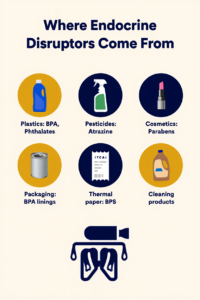
However, the “diet product” category involves more than just sweeteners in isolation. It involves the full matrix of additives, emulsifiers, preservatives, and packaging chemicals that are part of the ultra-processed food environment. Several of these compounds — including bisphenol A (BPA) from plastics, phthalates from food packaging, and certain emulsifiers — have more substantial evidence for endocrine disruption, and they are disproportionately present in processed diet and low-calorie products.
A 2023 review published in the journal Environmental Health Perspectives noted that women with higher urinary concentrations of certain phthalates — compounds used extensively in food packaging — had reduced ovarian reserve markers, including lower antral follicle counts and anti-Müllerian hormone (AMH) levels, compared to women with lower exposure levels.
The practical implication is this: choosing “diet” processed foods does not avoid the reproductive risk associated with ultra-processed food categories. It may simply exchange one set of concerns for another.
What to Reach for Instead
The goal is not to find a perfect sweetener. It is to recalibrate the overall sweetness threshold of your diet downward, which becomes genuinely easier within a few weeks of reducing sweet tastes in general.
For beverages, still or sparkling water with fresh fruit, cucumber, or herbs provides flavour without sweetness training. Unsweetened herbal teas, particularly spearmint (which has some early evidence for anti-androgenic properties relevant to PCOS), and plain coffee without added syrups are practical daily choices.
For the occasional sweet food, whole fruit provides natural sugars buffered by fibre, water, and phytonutrients that blunt the glycaemic response and add antioxidant benefit rather than oxidative burden. A piece of fruit is not metabolically equivalent to a glass of fruit juice, and it is substantially better for fertility than a “diet” yoghurt packed with artificial sweeteners, emulsifiers, and preservatives.
The Mayo Clinic’s guidance on fertility and healthy lifestyle consistently emphasises whole food dietary patterns over processed alternatives — a position that reproductive endocrinologists are increasingly echoing.
The Compounding Effect: When All Three Work Together
It would be almost artificially reassuring to treat each of these three food categories in isolation. In practice, they are not consumed in isolation. They are part of a broader dietary pattern.
A woman who regularly eats ultra-processed packaged foods is likely consuming trans fats and refined grains in the same meal. She may be washing that meal down with a diet soft drink sweetened with aspartame. Her gut microbiome is being shaped by that dietary pattern as a whole, not by individual ingredients in separate contexts.
This is what makes the cumulative picture important. Each of these three food categories contributes independently to reproductive disruption through different but sometimes overlapping mechanisms. Trans fats increase inflammation and impair insulin sensitivity; refined sugar drives hyperinsulinaemia and androgen excess; artificial sweeteners disrupt microbiome-mediated oestrogen regulation and perpetuate sweet cravings.
Together, they create a dietary environment that is consistently and multiply hostile to ovulatory function, egg quality, and hormonal balance.
And after 30, when your eggs are older, your ovarian reserve is beginning its natural decline, and your metabolic resilience has narrowed, the compounding impact of this dietary pattern is felt more acutely than it would have been a decade earlier.
A Fertility-Supportive Dietary Framework to Replace What You’re Removing
Removing three food categories without a clear sense of what to put in their place is not a strategy — it is a recipe for stress, which is itself hormonally disruptive. So here, briefly and practically, is the broad direction the research points toward.
The dietary pattern most consistently associated with better fertility outcomes in large cohort studies is a Mediterranean-style eating pattern characterised by:
Whole, minimally processed foods as the foundation. Vegetables, legumes, whole grains, nuts, seeds, and fruit in their natural or minimally processed state. These foods are fibre-rich, nutrient-dense, and low in glycaemic load.
Quality protein sources. Research from the Nurses’ Health Study II found that replacing some animal protein with plant protein sources — particularly legumes and nuts — was associated with lower risk of ovulatory infertility. Full-fat dairy, interestingly, appeared more protective than low-fat dairy in the same study, which challenges conventional nutritional wisdom and suggests the full-fat fermented dairy category may have specific benefits for ovulatory function.
Omega-3 rich fats. Oily fish, walnuts, flaxseed, and chia seeds provide the omega-3 fatty acids that are incorporated into egg cell membranes, supporting their fluidity and fertilisation capacity.
Antioxidant-rich foods. Berries, leafy greens, colourful vegetables, green tea, and extra virgin olive oil are rich in antioxidant compounds that counteract the oxidative stress your eggs accumulate with age and dietary exposure. This is not a supplement recommendation — it is a food-first, whole-diet approach.
Iron from plant sources. The same Nurses’ Health Study II data found that non-haem iron (from plant sources such as lentils, spinach, and tofu) was associated with lower risk of ovulatory infertility compared to haem iron from red meat. The mechanism is not fully established, but the association is consistent across multiple analyses.
The goal is not dietary perfection. It is a consistent shift in the overall dietary pattern — away from processed, refined, and artificially sweetened foods, and toward whole, nutrient-dense, anti-inflammatory eating.
In My 19 Years of Clinical Practice, What I’ve Seen Most Often Is…
In my 19 years of clinical practice, what I’ve seen most often is a woman who arrives at a fertility consultation having already done everything she was told to do — the supplements, the ovulation kits, the reduced alcohol — but who has never once been asked what she actually eats from day to day. She has been given a referral, a prescription, or a reassurance, but she has not been given the dietary conversation that might change her outcome without a single medical intervention.
I have watched women spend months taking folic acid while eating lunch from a vending machine five days a week. I have seen women tracking their cycles with extraordinary precision while drinking three diet cola drinks every afternoon. And I have seen, repeatedly, the way that addressing dietary foundations alongside clinical treatment produces outcomes that feel almost disproportionate to the effort involved — more regular cycles, improved AMH levels at follow-up, IVF cycles that produce better-quality embryos than the previous attempt.
What I find most striking is the gap between how much women want to be given this information and how rarely it is offered. Every woman sitting across from me in that consultation room wants to do something. She is motivated, she is determined, and she is looking for something concrete she can begin today. The dietary conversation is not a replacement for medical investigation. It is, however, an irreplaceable piece of the puzzle that medicine has historically been far too quick to gloss over.
As I’ve seen with many patients, the moment you give a woman a clear, evidence-based, actionable framework for her diet, something shifts. She stops feeling like a passive passenger in her own fertility journey and starts feeling like an active participant in her biology. That shift matters clinically, not just psychologically. The body responds differently when the conditions are right.
When to See a Specialist
Diet is a meaningful lever. But it is not the only one, and it is not a substitute for proper clinical investigation. There are specific circumstances in which you should stop relying on dietary adjustment alone and seek specialist input promptly.
If your menstrual cycles are shorter than 24 days or longer than 35 days for three or more consecutive cycles, you should consult a reproductive endocrinologist. Cycle length variability of this magnitude can indicate anovulatory cycles, diminished ovarian reserve, or thyroid dysfunction — all of which require investigation beyond dietary change.
If you have not conceived after six months of regular unprotected intercourse and you are aged 35 or over, the standard clinical guidance recommends seeking a fertility evaluation rather than waiting the conventional 12-month threshold. For women over 38, the threshold is even shorter: three to four months of trying warrants an early referral.
If you experience mid-cycle pain that is severe enough to interrupt your daily activities, alongside heavy or very painful periods, this may indicate endometriosis, a condition that has an independent and significant impact on fertility. A consultation with a gynaecologist, ideally one with subspecialty interest in endometriosis, should not be delayed in favour of dietary experimentation.
If you have been told your AMH (anti-Müllerian hormone) is below the normal range for your age, this is a signal to seek a reproductive endocrinologist evaluation. AMH is a marker of ovarian reserve, and low levels at any age warrant proactive planning rather than passive waiting.
If you have signs of androgen excess — including new facial or chin hair growth, significant acne appearing for the first time, or thinning hair at the crown — alongside irregular cycles, this pattern warrants investigation for PCOS or other hormonal conditions by an endocrinologist or reproductive gynaecologist.
If you have experienced two or more pregnancy losses, please pursue a consultation with a reproductive immunologist or specialist in recurrent pregnancy loss. This is a distinct clinical pathway from general fertility investigation and requires targeted expertise.
You Have More Agency Than You’ve Been Led to Believe
Here is the most important thing I want you to take from this article.
The research on diet and fertility is not about perfection. It is not about guilt. And it is certainly not about telling you that your food choices are the sole reason you are not yet pregnant, because fertility is complex and multifactorial, and no honest clinician would suggest otherwise.
What the research does tell you — clearly, consistently, and with increasing confidence — is that the quality of your diet is a modifiable variable that has a measurable impact on hormonal balance, egg quality, and ovulatory function. In a landscape where so much about fertility feels outside your control, that is actually a remarkable thing.
The three food categories covered in this article are not irreversible poisons. Removing them from your regular eating pattern, and replacing them with whole, minimally processed, anti-inflammatory foods, is something you can begin at your next meal.
Your most powerful next step is this: for one week, read the ingredients list on every packaged food you buy. Look for partially hydrogenated oils. Look for added sugars listed under any of their fifty-six names. Look for artificial sweeteners in anything labelled “diet,” “light,” or “sugar-free.” Just observe, without judgement, where these ingredients appear in your current diet. Awareness is always the first clinical step.
If this article resonated with you, share it with a friend who is navigating her own fertility journey. And drop a comment below with your questions — I read them all.
Read Next: How Stress Hormones Affect Ovulation (And What You Can Do About It)
Medical Disclaimer
This article is for informational purposes only and does not constitute medical advice. Always consult a qualified healthcare provider before making any changes to your health or treatment plan.
3. SUGGESTED INTERNAL LINKS
- “How Cortisol Affects Female Fertility: The Stress-Hormone Connection” — Natural crosslink from the compounding effects section and the closing CTA.
- “The PCOS Diet Guide: What to Eat and Avoid for Hormonal Balance” — Directly relevant to the insulin-androgen mechanism discussed in Food Two; high audience overlap.
- “AMH Levels by Age: What Your Results Actually Mean for Your Fertility” — Relevant crosslink from the When to See a Specialist section, for women who have received AMH test results.