
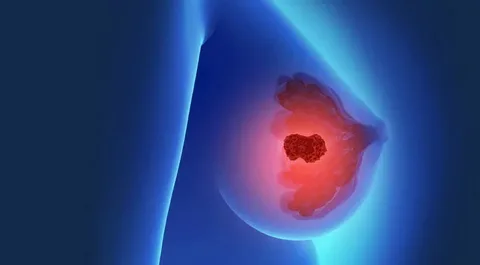
10 Early Signs of Breast Cancer Every Woman Needs to Know
You Noticed Something. Your Doctor Said It Was Fine. But You’re Still Not Sure.
You are standing in front of the bathroom mirror on a Tuesday morning, arm raised, fingers pressing gently against the side of your breast. Something feels different. Not obviously wrong. Just… different. Maybe it is a thickening you have not felt before. Maybe it is the way the skin seems to pucker slightly near your nipple. Maybe it is nothing.
You book an appointment. The doctor examines you briefly, tells you it is probably hormonal, and sends you home. But the feeling does not leave with you.
Here is what I want to say to you before we go any further: that instinct matters. The knowledge gap between what breast cancer actually looks and feels like in its earliest stages, and what most women have been told to watch for, is real. It is wide. And it costs lives.
Most women know to check for a lump. But breast cancer rarely announces itself quite so plainly. It arrives in subtler ways. Quiet changes. Easy to dismiss. Completely recognisable to a trained eye.
This article exists to give you that trained eye.

What Breast Cancer Actually Is, and Why Early Detection Changes Everything
Breast cancer occurs when cells in the breast tissue begin to divide and grow in an uncontrolled way, forming a mass or spreading through nearby tissue. The breast is made up of lobules (the glands that produce milk), ducts (the channels that carry milk to the nipple), and fatty and connective tissue. Cancer can develop in any of these structures, which is why it can present so differently from person to person.
Think of the breast as a complex ecosystem. When one part of that ecosystem undergoes a change, even a small one, it can alter the appearance, texture, or sensation of the surrounding tissue. That is why breast cancer’s early signals are often not a dramatic lump, but a shift. A subtle difference in symmetry. A skin change. A discharge. A sensation.
The single most important thing to understand about breast cancer is this: when detected at stage one, before it has spread to lymph nodes or other tissue, the five-year survival rate exceeds 99 per cent, according to the American Cancer Society. When detected at stage four, that figure drops to around 28 per cent. The difference, in many cases, is not the tumour itself. It is how early someone recognised that something had changed.
Breast cancer is persistently underserved in one critical way: women are taught to look for one sign, and one sign only. The lump. But the most dangerous cancers are sometimes the ones that do not form a palpable mass at all.
10 Early Signs of Breast Cancer That Are Frequently Missed
1. A Thickening or Hardening That Is Not Quite a Lump
Most women imagine a breast cancer lump as a distinct, round ball sitting clearly beneath the skin. In reality, early tumours can feel more like a subtle thickening, a slight firmness in one area, or a region that does not have the same give as the surrounding tissue.
This distinction matters enormously. Women who have been told to check for a “lump” may run their fingers over a thickened area and dismiss it because it does not match the mental image they have been given. If you notice any area that feels firmer, denser, or less yielding than the tissue around it, even without a clearly defined edge, that warrants attention. Asymmetry between the two breasts is always worth noting.
2. Changes to the Skin Texture: Dimpling, Puckering, or an Orange-Peel Appearance
One of the more visually distinctive early signs of breast cancer is a change in how the skin of the breast looks and feels. Dimpling, puckering, or a roughened texture that resembles the skin of an orange (clinically referred to as peau d’orange) can indicate that a tumour is tethering the skin from beneath.
This happens because cancer cells can infiltrate the lymphatic channels of the skin, causing fluid to back up and create that characteristic dimpled appearance. It tends to be most visible when the arm is raised or the breast is compressed gently. It is not caused by anything topical. If the skin over any part of your breast begins to look uneven, textured, or dimpled without explanation, this is a sign that warrants prompt clinical evaluation.
3. Nipple Changes: Inversion, Retraction, or a Deviation in Direction
A nipple that has recently changed direction, pulled inward, or flattened when it was previously protruding is a sign that too many women attribute to ageing or weight fluctuation. In clinical terms, a newly inverted nipple is a red flag, particularly when it is unilateral (affecting only one side).
It is worth noting that some women have naturally inverted nipples from birth, which is entirely normal. The concern arises when a nipple that was previously pointing outward begins to retract, or when a nipple changes its angle without an obvious cause. This can happen because a growing mass is pulling on the ducts or surrounding tissue. If you notice this change, even if it seems minor, mention it to your clinician.
4. Nipple Discharge That Is Spontaneous or Unusual in Character
Nipple discharge in women who are not breastfeeding is always worth investigating. The characteristics of the discharge matter. A clear or milky discharge can sometimes be hormonal and benign. But a discharge that is bloody, rust-coloured, or clear and watery, and that occurs spontaneously (without squeezing), is more clinically significant.
Intraductal papillomas, which are benign growths in the milk ducts, are a common cause of bloody discharge. However, certain types of breast cancer, including ductal carcinoma in situ (DCIS), the earliest and most treatable form of breast cancer, can also present this way. DCIS refers to abnormal cells that are contained within the milk ducts and have not yet spread into surrounding breast tissue. Any spontaneous nipple discharge, especially from a single duct opening, should be assessed by a clinician without delay.
5. Persistent or Unexplained Breast Pain in One Location
Breast pain is extremely common. Cyclical breast pain that fluctuates with your menstrual cycle is almost never associated with breast cancer. However, a persistent, non-cyclical pain in a specific location, one that does not come and go with your cycle but instead remains fixed in one spot, is a different matter.
This type of localised, constant breast pain can sometimes be the earliest symptom a woman notices before any visible or palpable change is detectable. It is frequently attributed to a pulled muscle, a poorly fitting bra, or stress. While those causes are far more likely, a breast pain that has persisted for more than a few weeks in the same location, without any obvious musculoskeletal explanation, deserves clinical assessment rather than reassurance alone.
6. Changes in Breast Size or Shape That Are Not Explained by Weight or Hormones
Breasts change throughout life: with weight fluctuation, with hormonal shifts across the menstrual cycle, with pregnancy and breastfeeding, and with age. These changes are expected, and they tend to affect both breasts together. The change worth noting is one that affects only one breast, is unexplained by any obvious life event, and persists beyond a single menstrual cycle.
If one breast appears visibly larger, different in shape, or is sitting differently on the chest wall without explanation, this asymmetry can be an early sign. Inflammatory breast cancer, a rare but aggressive form of the disease, in particular can present as sudden swelling, warmth, and redness rather than a lump, and is sometimes initially mistaken for mastitis (a breast infection). If your breast suddenly becomes swollen, tender, red, and warm and you are not breastfeeding, and it does not resolve within two weeks of antibiotic treatment, request urgent specialist review.
7. A Visible Change in the Veins on the Surface of the Breast
This is one of the signs that women almost never think to mention, partly because it sounds so innocuous. A network of veins visible through the skin is normal. But a new or suddenly prominent vein pattern on one breast, particularly when the other breast does not show the same, can occasionally signal a developing tumour.
Growing tumours require a blood supply, a process called angiogenesis (the formation of new blood vessels). As new vessels form and existing ones are recruited to feed the tumour, they can become more prominent and visible beneath the skin’s surface. On its own, visible veins are rarely a red flag. Combined with any other symptom on this list, they become more significant.
8. A Swelling or Lump in the Armpit or Collarbone Area
The lymph nodes in the axilla (underarm) and around the collarbone are the first places breast cancer tends to spread once it has moved beyond the breast tissue itself. A swelling, firmness, or pea-like lump in the armpit, even in the absence of any breast symptom, can be an early indicator.
Many women notice an armpit lump and assume it is a swollen gland from a recent infection. That is often correct. However, if the swelling persists beyond three weeks without any sign of illness, or if it feels firm, fixed, or painless, this warrants investigation. Cancerous lymph nodes tend to feel firmer and less tender than infected ones, though this is not a reliable rule for self-assessment.
9. Redness, Warmth, or Irritation of the Breast Skin
Skin redness over the breast that is not explained by a skin condition, an insect bite, or a visible injury is worth taking seriously, particularly in women who are not breastfeeding. As mentioned with inflammatory breast cancer, this form of the disease can mimic an infection almost perfectly: presenting with redness, warmth, swelling, and sometimes a thickened, ridged texture to the skin.
The critical distinction is timeline and response. An infection treated with antibiotics should begin to improve within 48 to 72 hours. Inflammatory breast cancer will not respond to antibiotics. If redness and warmth over the breast persist or worsen after a course of antibiotics, a breast specialist must see you without delay. Inflammatory breast cancer is rare but accounts for a disproportionately high number of breast cancer deaths, largely because it is misdiagnosed for weeks or months at first presentation.
10. Flaking, Crusting, or Scaly Changes to the Nipple or Areola
Paget’s disease of the breast is a rare but important condition that begins in the nipple and typically indicates an underlying breast cancer elsewhere in the same breast. It presents as a scaly, crusty, or inflamed patch on the nipple or areola (the pigmented ring around the nipple) that can itch, burn, or ooze.
It is almost universally misdiagnosed as eczema or dermatitis at first, because that is precisely what it looks like. The difference is that true eczema on the nipple will respond to steroid cream. Paget’s disease will not. According to the National Health Service, any persistent skin change on the nipple or areola that does not improve with standard dermatological treatment should be biopsied. If you have been given topical steroids for a nipple rash that is not clearing, return to your GP and ask specifically whether Paget’s disease has been excluded.
In My 19 Years of Clinical Practice, What I Have Seen Most Often Is…
In my 19 years of clinical practice, what I have seen most often is not the textbook presentation. It is the woman who has been dismissed twice. Who noticed a change in her nipple eight months ago and was told it was hormonal. Who has been treating a “rash” on her areola with cortisone cream for six weeks because nobody thought to biopsy it. What strikes me, time after time, is the gap between the moment a woman first noticed something and the moment she was finally believed.
There is also a deeply ingrained cultural pattern around breast symptoms: women minimise them. They wait to see if the symptom resolves. They feel embarrassed about raising something they cannot quite describe. They do not want to be seen as alarmist. And so an early-stage change that could have been caught and treated with a focused surgical procedure becomes something more complex, simply because time passed.
What I want you to take from this is not anxiety, but clarity. The body communicates early. Most of the time, what you notice will be entirely benign. But the women who come to me with a diagnosis that could have been caught sooner are not women who were unlucky. They are women who were not given the right information to act on what their bodies were already telling them.
When to See a Specialist: Specific Red Flags With Timeframes
The following situations require prompt clinical action. Do not wait for your next routine check.
Any new, firm, or fixed breast lump or thickening: Book an appointment with your GP within one week. Request an urgent referral to a breast specialist if you are aged 30 or over with a palpable mass.
A newly inverted nipple or nipple that has changed direction: See your GP within two weeks. A same-week appointment is appropriate if the change has occurred rapidly.
Spontaneous nipple discharge, particularly if it is bloody, rust-coloured, or clear and watery: Do not wait for a routine appointment. Request an urgent assessment with a breast surgeon, who may request ductoscopy (examination of the milk ducts) or a duct excision to determine the cause.
Persistent breast redness, warmth, or swelling that has not responded to antibiotics within 72 hours: Return to your GP immediately and ask whether inflammatory breast cancer has been excluded. You may need an urgent referral to a breast oncologist.
Nipple or areolar skin changes, including scaling, crusting, or ulceration, that have not improved after two to three weeks of topical treatment: Return to your GP and specifically request that Paget’s disease of the nipple be excluded via punch biopsy.
A swelling or painless lump in the armpit or along the collarbone that persists beyond three weeks: Request an urgent breast clinic referral from your GP.
Any family history of BRCA1 or BRCA2 mutations combined with new breast symptoms: Book an urgent appointment with a clinical genetics specialist or breast oncologist.
You Noticed Something. That Was the Most Important Step.
The fact that you are reading this, that you are paying attention to your body with the seriousness it deserves, already puts you ahead. That is not a small thing. The women who catch breast cancer early are not the ones who were lucky. They are the ones who kept asking questions until they were answered.
The single most important thing you can do right now is to start a monthly breast self-awareness practice, not a fearful examination, but a calm, regular habit of getting to know how your breasts look and feel throughout your cycle. When you know your normal, you will recognise your not-normal.
If something has changed, say so. Say it clearly. Say it again if you are not heard. Ask for a breast clinic referral if your GP is not reassured. You are not being dramatic. You are being thorough.
Read next: How to Perform a Breast Self-Examination at Home: A Step-by-Step Clinical Guide
Or share this article with a woman in your life who needs it today.
This article is for informational purposes only and does not constitute medical advice. Always consult a qualified healthcare provider before making any changes to your health or treatment plan.