

Heavy Periods Getting Older: The Complete Guide to Why It Happens and What to Do
You used to get through your period on two or three regular pads a day. Now you’re setting a phone alarm to wake yourself at 3am so you don’t bleed through the sheets. You’ve started carrying spare underwear in your bag, leaving early from meetings you’d normally run, and quietly cancelling plans on the heaviest days. And when you mention it to your GP, they hand you a leaflet about iron supplements and suggest it might just be “one of those things.”
You know it isn’t one of those things.
You know your body. You know this is different. And you are absolutely right to trust that instinct, because heavy menstrual bleeding that worsens with age is not something to shrug off, wait out, or manage alone with paracetamol and willpower. It has real, identifiable causes. It has real, evidence-based treatments. And it deserves to be taken seriously, because you deserve to be taken seriously.
This guide is for you: the woman in her late thirties, forties, or early fifties who is watching her periods change and wants answers, not platitudes.
What Heavy Menstrual Bleeding Actually Means — And Why It’s So Often Dismissed
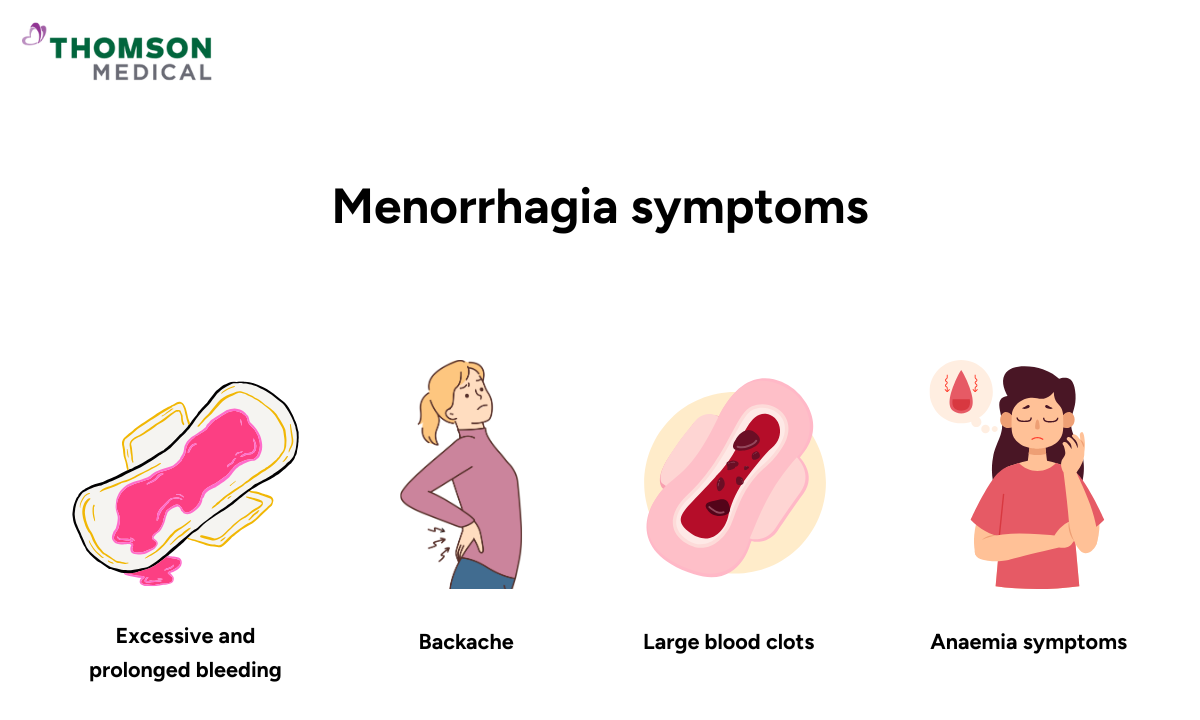
Heavy menstrual bleeding, known clinically as menorrhagia (pronounced men-or-AY-jee-ah), is defined as losing more than 80 millilitres of blood per menstrual cycle, or having periods that last longer than seven days. In practical terms, that translates to soaking through a pad or tampon every hour or two for several consecutive hours, passing clots larger than a 50-pence coin, or feeling so fatigued during your period that daily functioning becomes genuinely difficult.
Think of your monthly cycle as a finely calibrated thermostat. When the hormonal system is balanced, your uterine lining builds up to a predictable thickness, then sheds in a controlled, timed way. When that calibration starts to drift, as it naturally can with age, the lining can grow thicker, shed more heavily, and take longer to complete. The thermostat hasn’t broken, exactly. But it has started to overshoot.
This is a clinically recognised and extensively studied condition. Yet it remains one of the most under-investigated symptoms in women’s health, largely because heavy periods have long been normalised as an inevitable feature of female biology rather than a signal worth investigating. Research published in medical literature consistently shows that women wait an average of several years before seeking clinical help for heavy bleeding, and that even then, their concerns are frequently minimised.
Featured Snippet Answer: Heavy periods that worsen with age are most commonly caused by hormonal changes, particularly rising oestrogen levels relative to progesterone, that cause the uterine lining to thicken. Structural changes such as fibroids and adenomyosis also become more common in the thirties and forties, and can significantly increase bleeding. In many cases, more than one cause is present simultaneously.
That single-sentence explanation is useful, but it barely scratches the surface. Let’s go deeper.
The Biology Behind It: How Your Cycle Changes As You Age
To understand why your periods are getting heavier, it helps to understand what is happening hormonally across your thirties and forties.
Your reproductive years are not a flat, unchanging plateau. They are a gradual arc. In your twenties, oestrogen and progesterone typically work in close partnership: oestrogen builds the uterine lining during the first half of your cycle, and progesterone arrives after ovulation to stabilise that lining and ensure it sheds cleanly. The two hormones act as counterweights. When one moves, the other follows.
By your mid-thirties, the relationship begins to shift. Your ovarian reserve, the number of eggs remaining in your ovaries, starts to decline. This matters not just for fertility, but for hormone production. Each egg is housed in a follicle, and it is the follicle itself that produces progesterone after ovulation. As ovulation becomes less consistent, progesterone production becomes less reliable. Oestrogen, meanwhile, continues to be produced at relatively robust levels, particularly in the perimenopause transition when it can actually spike unpredictably before declining.
The result is a state clinicians call oestrogen dominance, where oestrogen activity is disproportionately high relative to progesterone. This imbalance has direct consequences for the uterine lining: more oestrogen means more proliferation, more thickening, more lining to shed each month. And more lining means heavier bleeding.
This is why heavy periods are not simply “normal” for older women. They are a signal, and a measurable one, of hormonal and sometimes structural changes that can be identified, investigated, and addressed.
8 Reasons Your Periods Are Getting Heavier As You Get Older
Format B: Root Causes and Clinical Mechanisms
Understanding why something is happening gives you the power to respond to it clearly and effectively. Below are eight of the most clinically significant reasons why periods tend to worsen with age, each explained at the level of mechanism so that you understand not just what is happening in your body, but why.
1. Oestrogen Dominance and Progesterone Decline
As explained above, this is the most common hormonal driver of heavy periods in women aged 35 and over. When ovulation becomes less regular, the corpus luteum, the temporary structure that forms in the ovary after an egg is released and produces progesterone, either forms less reliably or produces progesterone in insufficient quantities.
Without adequate progesterone to act as a counterweight, oestrogen continues to stimulate the growth of the endometrium (the uterine lining) unchecked. The lining becomes thicker than usual, and when it finally sheds, the bleed is heavier, longer, and often more painful. This mechanism is well-established in reproductive endocrinology and forms the basis for many hormonal treatment approaches to menorrhagia.
What makes this particularly confusing for many women is that their oestrogen levels may not show as “high” on a standard blood test. Oestrogen dominance is a relative state, meaning it is the ratio of oestrogen to progesterone that matters, not the absolute level of either hormone in isolation. A GP looking only at oestrogen levels may miss this imbalance entirely.
2. Perimenopause: The Transition Nobody Warned You About
Perimenopause, the years leading up to your final period, can begin as early as the mid-thirties, though it most commonly starts in the early to mid-forties. It is not the same as menopause, which is defined as twelve consecutive months without a period. Perimenopause is the transition phase, and it can last anywhere from two to twelve years.
During perimenopause, hormone levels do not decline steadily and predictably. They fluctuate, sometimes dramatically, from cycle to cycle and even week to week. Oestrogen can spike to unusually high levels before dropping, then spike again. Progesterone tends to decline more consistently. This hormonal volatility can cause cycles to become irregular, longer, shorter, or unpredictable, and it can cause the volume of bleeding to increase significantly.
Many women in their early forties are surprised to learn they may already be in perimenopause, particularly because the popular understanding of menopause tends to focus on hot flushes and missed periods rather than heavy, flooding bleeds. Heavy bleeding can be one of the earliest signs that the perimenopausal transition has begun. According to clinical consensus, it is also one of the most common reasons women in this age group seek gynaecological care.
3. Uterine Fibroids: Benign, But Not Without Consequence
Uterine fibroids are non-cancerous (benign) growths that develop in or around the muscular wall of the uterus. They are extraordinarily common: research suggests that up to 70 to 80 percent of women will develop fibroids by the age of 50, though many will never know because smaller fibroids often cause no symptoms at all.
The fibroids most likely to cause heavy bleeding are those that grow into the uterine cavity, known as submucosal fibroids. These growths increase the surface area of the endometrium, meaning there is more lining to shed each month. They can also interfere with the uterus’s ability to contract properly after shedding, which normally helps to slow and stop the bleed. When the uterus cannot contract as it should, bleeding can become prolonged, heavier, and harder to control.
Fibroids tend to grow in response to oestrogen, which is why they most commonly develop and become symptomatic during the reproductive years, particularly in the thirties and forties. After menopause, when oestrogen levels fall, fibroids typically shrink. The interaction between fibroid growth and the oestrogen dominance described above can create a self-reinforcing cycle of increasingly heavy periods that worsens over time if left uninvestigated.
4. Adenomyosis: The Hidden Cause Most Women Have Never Heard Of
Adenomyosis occurs when the tissue that normally lines the inside of the uterus (endometrial tissue) grows into the muscular wall of the uterus itself. Think of it as the lining migrating inward, embedding into the very muscle it is supposed to sit on top of. The result is a uterus that is often enlarged, tender, and significantly less able to function efficiently.
Because the displaced tissue still responds to hormonal signals, it bleeds during menstruation, but with nowhere to go, the blood is trapped within the muscle wall. This causes the uterus to contract more forcefully in an attempt to expel the bleed, leading to severe cramping and significantly heavier, often more prolonged periods. Many women with adenomyosis describe a feeling of pelvic heaviness, a bloated or “boggy” sensation in the lower abdomen, and periods that seem to have a life of their own in terms of volume and unpredictability.
Adenomyosis is frequently underdiagnosed, partly because it can only be confirmed definitively by examining uterine tissue (historically at hysterectomy), though transvaginal ultrasound and MRI have become increasingly useful diagnostic tools in skilled hands. Growing evidence suggests that adenomyosis may affect up to 20 to 35 percent of women, with symptoms typically peaking in the thirties and forties.
5. Endometrial Polyps: Small Growths, Significant Bleeding
Endometrial polyps are soft, finger-like growths that develop on the inner wall of the uterus. They are typically small, ranging from a few millimetres to several centimetres in size, and are nearly always benign. However, their presence on the endometrial surface can disrupt the normal, orderly shedding of the uterine lining during menstruation.
The mechanism here is both structural and vascular. Polyps have their own blood supply and disrupt the smooth architecture of the endometrial surface. This disruption means that the lining cannot shed in its usual organised, controlled way. Instead, shedding becomes irregular and incomplete, which can produce heavier, longer, and more unpredictable periods, as well as spotting between cycles.
Polyps become more common with age, and their growth is stimulated by oestrogen, meaning they tend to develop and enlarge in the hormonal environment of the thirties and forties when oestrogen exposure has been accumulative. They are also more common in women who have used unopposed oestrogen therapy (oestrogen without progesterone). A saline infusion sonogram or a hysteroscopy, a procedure in which a thin camera is passed into the uterine cavity, is the most reliable way to identify polyps.
6. Thyroid Dysfunction: The Hormone Connection Your GP May Not Have Made
Your thyroid gland produces hormones that regulate your metabolism, energy production, and a remarkably wide range of body functions, including menstrual regulation. When the thyroid is underactive, a condition called hypothyroidism, it disrupts the normal hormonal feedback loops that govern your cycle.
Specifically, low thyroid hormone levels can reduce sex hormone binding globulin (SHBG), a protein that helps regulate oestrogen activity in the blood. When SHBG falls, more oestrogen is biologically active, which can lead to thickening of the uterine lining and heavier periods. Hypothyroidism can also impair the production of clotting factors, making it harder for the body to slow bleeding once it has started.
Thyroid conditions are significantly more common in women than in men, and their prevalence increases with age. Symptoms of hypothyroidism, including fatigue, weight gain, low mood, cold intolerance, and hair thinning, can overlap with the symptoms of perimenopause so closely that thyroid dysfunction is frequently missed or attributed to “hormonal changes.” Requesting a thyroid-stimulating hormone (TSH) test, along with free T3 and free T4 levels, is an essential step in any thorough investigation of heavy periods.
7. Blood Clotting Disorders: An Under-Recognised Cause in Younger Women
Conditions that affect the blood’s ability to clot properly can cause menorrhagia at any age, but they are particularly likely to be overlooked as a cause of heavy periods in women who have simply grown accustomed to heavy bleeding as their “normal.” Von Willebrand disease, the most common inherited bleeding disorder in women, is one of the most underdiagnosed causes of heavy menstrual bleeding globally.
In the normal menstrual cycle, the body relies on clotting mechanisms to control the volume of the bleed. When those mechanisms are impaired, whether due to an inherited condition like Von Willebrand disease or to acquired factors such as low platelet counts or liver dysfunction, the usual physiological “brakes” on bleeding do not function as they should. The result can be flooding, the passing of large clots, and periods that extend well beyond a week.
Research suggests that a clinically significant proportion of women with menorrhagia have an underlying coagulation disorder that has never been investigated. This is a gap in standard care that is slowly being addressed by updated gynaecological guidelines, which now increasingly recommend haematological screening in women with severe or lifelong heavy periods.
8. Chronic Inflammation and Insulin Resistance
This cause is perhaps the least intuitive, but growing evidence suggests it plays a meaningful role in hormonal disruption and heavy menstrual bleeding. Chronic low-grade inflammation, whether from dietary patterns, metabolic dysfunction, autoimmune conditions, or persistent stress, interferes with normal hormonal signalling at a cellular level.
Insulin resistance, a state in which cells become less responsive to insulin and blood sugar regulation becomes impaired, is closely linked to both elevated oestrogen levels and reduced progesterone production. This is because insulin resistance affects the way the ovaries produce hormones, often driving up androgen (male hormone) production and disrupting ovulation. As noted earlier, disrupted ovulation means less progesterone, and less progesterone means less counterbalance to oestrogen’s stimulating effect on the uterine lining.
Insulin resistance is more common in women with polycystic ovary syndrome (PCOS), but it is not exclusive to that diagnosis. It can develop gradually in the thirties and forties in the context of sedentary lifestyles, dietary changes, stress, and sleep disruption, and its hormonal downstream effects can quietly worsen menstrual symptoms over years without ever being formally identified as the driver.
What Mainstream Medicine Often Gets Wrong About Heavy Periods
The standard medical response to heavy periods in women over 35 is often a predictable one: a prescription for the combined oral contraceptive pill, a referral for a Mirena coil (a hormonal intrauterine device), or a suggestion to wait and see whether things settle after menopause. In many cases, these are genuinely helpful interventions. The Mirena coil, for example, is well-supported by clinical evidence as an effective first-line treatment for menorrhagia and is now recommended by ACOG and other major gynaecological bodies as a non-surgical option.
But there is a critical problem with reaching for these solutions before doing the diagnostic work. Hormonal treatments suppress symptoms. They do not investigate causes. If you have a submucosal fibroid distorting your uterine cavity, a hormonal coil may reduce bleeding without ever identifying the fibroid. If you have adenomyosis, oral contraceptives may control your cycle without ever naming the condition. And if you have an underlying thyroid disorder or a coagulation issue, treating the symptom while ignoring the mechanism means that the root cause continues, unaddressed.
This is not a criticism of individual clinicians, who are working within genuine time constraints and resource limitations. It is, however, a pattern worth knowing about, because it affects the quality of the questions you ask and the investigations you push for.
Heavy menstrual bleeding deserves a structured, investigative approach. That means blood tests to assess hormone levels, thyroid function, iron stores, and haematological markers. It means imaging, typically a transvaginal ultrasound, to assess the uterine architecture and look for fibroids, polyps, or signs of adenomyosis. It means a detailed menstrual history. And in some cases, it means onward referral for hysteroscopy or specialist input.
You are entitled to all of this. If your GP does not offer it, you are well within your rights to request it.
Evidence-Based Approaches to Managing Heavy Periods
Understanding what is causing your heavy periods shapes everything about how they can be treated. Below are the approaches most supported by current clinical evidence, along with a note on how each one works.
Hormonal Management
The levonorgestrel intrauterine system (the hormonal coil, most commonly the Mirena) is widely considered the most effective non-surgical treatment for menorrhagia by current clinical consensus. It releases a small, localised dose of synthetic progesterone directly into the uterine cavity, which suppresses the growth of the endometrium and reduces bleeding by an average of 90 percent in clinical studies. It works locally rather than systemically, meaning it does not have the full-body hormonal effects of the contraceptive pill.
For women whose heavy periods are driven by oestrogen dominance or perimenopausal hormonal fluctuation, cyclical progesterone therapy is sometimes prescribed, typically as a course of progesterone taken in the second half of each cycle to compensate for the progesterone shortfall that anovulatory cycles create. There is growing evidence that bioidentical progesterone, a form of progesterone chemically identical to that produced by the body, may offer some advantages in terms of tolerability, though prescribing practices vary between clinicians.
The combined oral contraceptive pill can reduce bleeding and regulate cycles, but it is not appropriate for all women, particularly those over 35 who smoke, have a history of migraines with aura, or certain cardiovascular risk factors. Your GP or gynaecologist will discuss suitability based on your individual history.
Non-Hormonal Medical Options
Tranexamic acid is a non-hormonal tablet that works by stabilising blood clots and reducing the breakdown of clotting factors during menstruation. It is taken only on heavy bleeding days and does not affect hormones. Clinical evidence supports a reduction in menstrual blood loss of around 50 percent with regular use. It is a particularly useful option for women who cannot or prefer not to use hormonal treatments.
Non-steroidal anti-inflammatory drugs (NSAIDs) such as mefenamic acid reduce the production of prostaglandins, hormone-like chemicals that play a role in uterine contractions and the inflammatory component of menstruation. They reduce both pain and bleeding volume, and like tranexamic acid, they are taken only during the period rather than continuously.
Iron supplementation is almost always necessary in women with heavy periods, as sustained heavy bleeding causes iron deficiency even when it does not progress to frank anaemia. Fatigue, brain fog, breathlessness, and heart palpitations during your period may all reflect iron deficiency, and addressing this can significantly improve quality of life even while other treatments are being investigated.
Lifestyle Factors With Emerging Evidence
Dietary and lifestyle factors do not replace medical treatment, but they can meaningfully support it. There is growing evidence that reducing dietary patterns associated with chronic inflammation, high sugar intake, ultra-processed foods, and excess saturated fat, supports more stable hormonal regulation and may reduce the severity of oestrogenic symptoms over time.
Supporting liver function matters here too. The liver is responsible for metabolising and clearing oestrogen from the body. When liver function is impaired, whether through alcohol, certain medications, or metabolic stress, oestrogen clearance is reduced, contributing to the oestrogen excess described earlier. Adequate fibre intake supports oestrogen excretion via the gut.
Stress management is not a vague lifestyle recommendation. It is a specific physiological one. Chronic psychological stress elevates cortisol, which competes with progesterone at the cellular receptor level and can effectively reduce progesterone’s ability to do its job. This mechanism is well-described in the reproductive endocrinology literature, and it means that managing stress, through whatever approach works for you, has direct hormonal relevance.
Surgical Options
For women with specific structural causes of heavy bleeding, such as fibroids or polyps, surgical or minimally invasive procedures may be the most effective route.
Hysteroscopic polypectomy, the removal of endometrial polyps using a camera passed through the cervix, is a well-tolerated day procedure that can significantly reduce or resolve heavy bleeding caused by polyps.
Fibroid treatment options range from hysteroscopic myomectomy (removal of fibroids within the uterine cavity via hysteroscope) to laparoscopic or open myomectomy for larger fibroids within the uterine wall. Uterine artery embolisation (UAE) is a radiological procedure that cuts off the blood supply to fibroids, causing them to shrink. It preserves the uterus and is a recognised alternative to surgery for women who wish to avoid an operation.
Endometrial ablation, a procedure that destroys the uterine lining, significantly reduces or eliminates periods in many women. It is not suitable for women who wish to conceive in future, and it is not appropriate in the presence of certain uterine conditions, including adenomyosis. A thorough assessment before ablation is essential.
Hysterectomy remains the most definitive treatment for heavy periods caused by structural or hormonal causes and carries a high satisfaction rate among women who choose it following full investigation and exploration of alternatives. It is not, however, a first resort, and the availability of effective medical and minimally invasive options means that most women will not need to consider it.
The Clinical Insight Paragraph
In my 19 years of clinical practice, what I’ve seen most often is a woman who has been bleeding heavily for three, four, sometimes seven years before anyone treats it as a diagnostic question rather than an inconvenience to manage. She has often tried two or three hormonal preparations, experienced side effects that led her to stop, and arrived at my door convinced that this is simply what her body does. What I want to tell you, and what I tell every patient in this position, is that heavy bleeding is not a personality trait. It is a symptom. And symptoms have causes. The single most important shift I see in outcomes is when a woman stops framing her periods as something to endure and starts framing them as something to investigate. As I’ve seen with many patients, the combination of a thorough hormonal profile, a well-performed pelvic ultrasound, and a clinician who actually listens can produce answers within a single appointment cycle that years of symptom management never could. You do not have to choose between your quality of life and a uterus. You do not have to choose between fertility and bleeding management. You simply have to be seen properly.
When to See a Specialist
Knowing when to seek specialist input is just as important as knowing what to ask for. Here are specific signals to act on.
If you are soaking through more than one pad or tampon per hour for two or more consecutive hours, book an urgent appointment with your GP that day. Acute flooding of this level can indicate a rapid-onset cause, including miscarriage, submucous fibroid, or a clotting disorder, and warrants same-day or next-day assessment.
If you are passing clots larger than a 50-pence coin regularly, request a referral to a gynaecologist within one to two cycles. Ask specifically for a transvaginal ultrasound and a full blood count including iron studies and haematinics.
If your periods have been heavy for three or more consecutive cycles and standard prescriptions such as the pill or tranexamic acid have not reduced them, push for a referral to a gynaecologist rather than cycling through more prescriptions. Ask about hysteroscopy to directly visualise the uterine cavity.
If your periods are accompanied by severe pelvic pain, a sensation of pressure or heaviness in your pelvis, or pain during intercourse, request evaluation specifically for adenomyosis or endometriosis by a gynaecologist with a specialist interest in these conditions. These symptoms together warrant more than a standard scan.
If you have a family history of bleeding disorders or have had heavy periods since adolescence, ask your GP to refer you to a haematologist for assessment of Von Willebrand disease and related coagulation conditions, as these are significantly underdiagnosed in women.
If you are experiencing fatigue, palpitations, or breathlessness during or after your period, request a full blood count and ferritin level to assess for iron deficiency anaemia, and discuss iron replacement with your GP or haematologist as a priority alongside any other investigation.
You are not being demanding. You are being an informed patient. There is a considerable difference.
You Have the Right to Answers
Heavy periods that worsen with age are not something to simply endure. They are a signal from your body that something in your hormonal or structural landscape has shifted, and that shift can be named, investigated, and treated.
The most important takeaway from everything in this guide is this: heavy menstrual bleeding in your thirties or forties is not the inevitable cost of getting older. It has causes. Those causes have names. And those names have treatments.
Your next step is clear: request a thorough investigation. That means blood tests for hormones, thyroid function, iron levels, and clotting factors. It means a transvaginal ultrasound performed by someone experienced in women’s pelvic health. It means a clinician who listens to your history, not just your most recent blood result.
You have lived in this body for decades. You know when something has changed. Trust that knowledge, bring it to a consultation, and expect it to be taken seriously.
Read Next: [How to Talk to Your Doctor About Hormonal Symptoms Without Being Dismissed] or drop a comment below with your experience. Other women are reading this too, and your story matters.
Medical Disclaimer
This article is for informational purposes only and does not constitute medical advice. Always consult a qualified healthcare provider before making any changes to your health or treatment plan.
Article by Dr. Naomi, Board-Certified Women’s Health Physician. Published on webzalo.com.